

A Safe and Effective Guide to Cleaning a Faux Leather Couch
Faux leather couches have become a popular choice in many homes, and for good reason. They offer the stylish look of real leather, cost significantly less, and generally stand up well to everyday use. The problem is that many people clean them the wrong way, which can lead to cracking, peeling, staining, or a permanently dull finish.
The good news is that cleaning a faux leather couch safely is much easier than most people think once you understand the material.
What Is Faux Leather?
Faux leather, also known as synthetic or artificial leather, is made from man-made materials designed to imitate genuine leather. The most common types are polyurethane (PU) and polyvinyl chloride (PVC). Unlike natural leather, which is porous, faux leather has a protective coating that repels moisture. However, that coating can break down when exposed to harsh chemicals or abrasive cleaning methods.
Because of this, the products that work on fabric upholstery or other household surfaces are not always suitable for faux leather. A gentler approach is essential.
What to Avoid
Before cleaning, it helps to know what not to use.
- Bleach can strip the protective coating and cause peeling or cracking.
- Abrasive brushes and scouring pads can scratch the surface and reduce its shine.
- Strong solvent-based cleaners may damage the PU or PVC layer, especially on older furniture.
Whenever you try a new cleaning product, test it first on a small, hidden area.
How to Clean a Faux Leather Couch Properly
Step 1 – Remove Loose Dirt
Start by vacuuming the couch with an upholstery attachment. Remove dust, crumbs, pet hair, and other debris, paying close attention to seams and creases where dirt tends to collect.
For wiping the surface, use a microfiber cloth. It is soft enough to avoid scratching and effective at lifting dirt without leaving excess moisture behind.
Step 2 – Make a Gentle Cleaning Solution
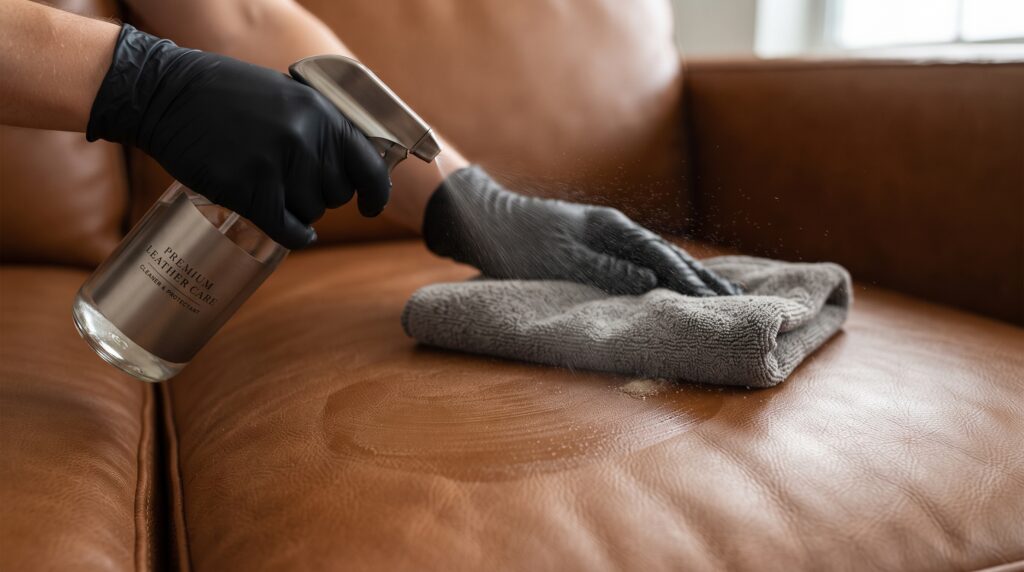
Routine cleaning requires only a mild solution. Mix a few drops of dish soap with warm water. Dampen a microfiber cloth with the solution, wring it out well, and wipe the couch gently using small circular motions. The cloth should be damp, not dripping wet.
For stubborn marks, a small amount of isopropyl alcohol on a cloth can help remove residue. Use it sparingly and wipe the area afterward with a clean damp cloth.
Step 3 – Treat Stains Carefully
Different stains need different treatment.
- Grease stains: Sprinkle cornstarch or baking soda over the stain and let it sit for 15–20 minutes to absorb the oil. Gently brush away the powder and wipe the area clean.
- Ink stains: Dab the stain lightly with rubbing alcohol on a cotton ball or soft cloth. Do not scrub, as scrubbing can spread the stain and damage the surface.
- General discoloration: Use a cleaner specifically designed for faux leather or synthetic upholstery and follow the manufacturer’s instructions.
Step 4 – Remove Residue and Dry
After cleaning, wipe the couch with a clean, dry microfiber cloth to remove any remaining soap residue. Residue can leave the surface sticky and attract more dirt.
Let the couch air dry completely before using it. Avoid hair dryers, heaters, or direct heat, which can cause the material to warp or crack.
Step 5 – Protect the Finish
Occasional conditioning helps keep faux leather looking its best. Use a conditioner labeled safe for faux leather, vinyl, PU leather, or synthetic upholstery. Apply a thin layer with a soft cloth and buff away any excess after a few minutes.
When Professional Cleaning Is Worth It
Some problems cannot be solved with routine home cleaning. Consider professional upholstery cleaning if you notice:
- Deep or set-in stains
- Persistent odors
- Extensive peeling or cracking
- Heavy buildup in seams and cushions
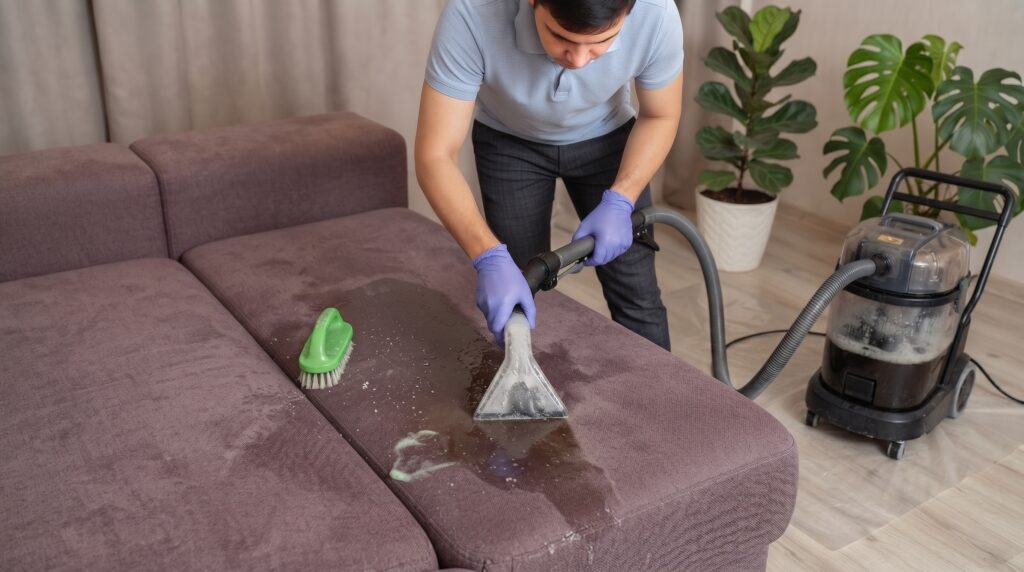
Professional couch cleaning uses upholstery-safe products and specialized equipment to clean more thoroughly without damaging synthetic materials. It can also help remove allergens and bacteria that are difficult to eliminate with surface cleaning alone.
If your couch is one of the main seating pieces in your home, occasional professional cleaning can help preserve its appearance, hygiene, and lifespan.