
The Safe Way to Clean Vinyl Upholstery Without Cracks, Stains, or Damage
Vinyl upholstery is found in many modern homes. From dining chairs and bar stools to sofas and decorative cushions, it remains popular because it is durable, budget-friendly, and relatively easy to maintain. However, using the wrong cleaning method can leave the surface cracked, stained, discolored, or sticky.
If you are looking for a safe way to clean vinyl upholstery fabric, you are not alone. Many Los Angeles homeowners try household cleaners at random and later discover that certain products can permanently damage vinyl. The key is understanding how vinyl is made and choosing gentle cleaning methods that protect the surface rather than strip it.
What Makes Vinyl Upholstery Different?
Vinyl, or polyvinyl chloride (PVC), is a synthetic material designed to resemble leather. It is commonly sold as faux leather or artificial leather. Unlike genuine leather, vinyl has a protective outer coating that resists moisture and helps prevent spills from soaking in.
That protective layer is one of vinyl’s biggest advantages, but it is also what makes harsh cleaning products risky. Strong chemicals and abrasive scrubbing can wear away the coating, causing the material to dry out, harden, and crack over time.
Understanding this protective surface is the foundation of proper vinyl care.
The Safest Way to Clean Vinyl Upholstery
For routine cleaning, simple is usually best.
-
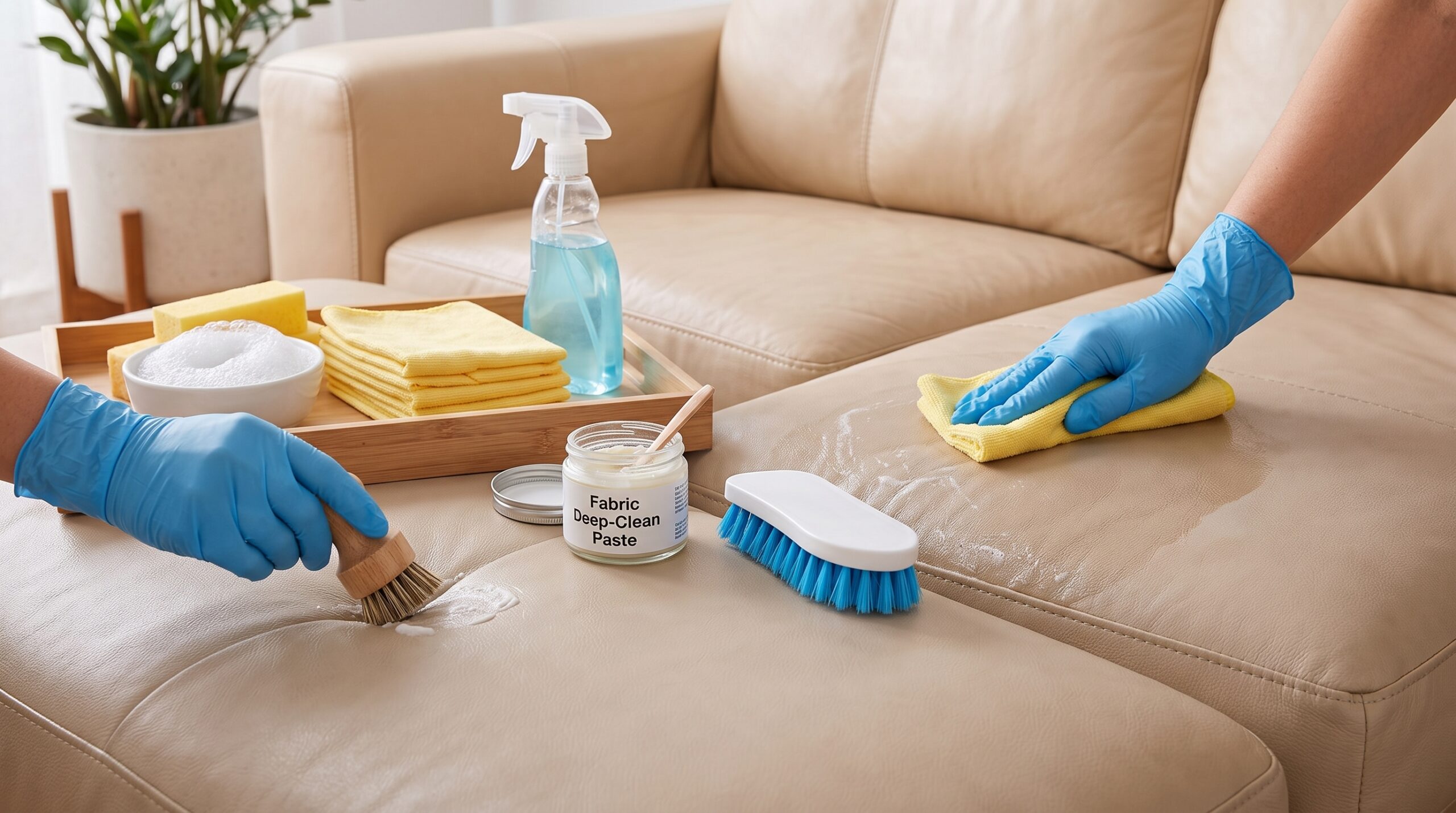
Mix warm water with a small amount of mild dish soap or gentle detergent.
-
Dampen a soft sponge or cloth with the solution and wring out excess water.
-
Wipe the vinyl surface gently to remove dirt and everyday grime.
-
Dry the area immediately with a clean, soft towel.
Vinyl does not need to be soaked, and aggressive scrubbing is unnecessary. In most cases, mild soap and water clean vinyl more effectively than heavy-duty cleaners while reducing the risk of damage.
Cleaning Products to Avoid
Many vinyl problems begin with the wrong cleaner. Avoid:
-
Steel wool or abrasive scrubbing pads
-
Undiluted bleach
-
Acetone or solvent-based products
-
Ammonia-based cleaners
-
Heavy-duty degreasers and multipurpose sprays
-
Pressure washers or high-pressure cleaning equipment
Abrasive tools can scratch the surface, while strong solvents may break down the PVC coating. Excessive heat or pressure can also warp vinyl and force moisture beneath the surface.
When cleaning vinyl, gentle methods consistently produce better long-term results than aggressive ones.
Removing Stubborn Stains Safely
Spills from food, ink, or dirt should be treated promptly before they set.
-
Start with warm water and mild soap.
-
If the stain remains, use a vinyl-safe cleaner diluted according to the manufacturer’s instructions.
-
Gently work the area with a soft brush or cloth, avoiding repeated scrubbing.
For mold or mildew on outdoor cushions, marine vinyl, or boat covers, a mild bleach solution can help. A mixture of 10% bleach and 90% water is often sufficient to kill mildew without severely damaging the material.
Never use bleach at full strength, and never mix bleach with ammonia, as this creates dangerous fumes. After cleaning, wipe the surface with clean water and dry it thoroughly.
Protecting Vinyl from Sun Damage
In sunny climates such as Los Angeles, ultraviolet (UV) exposure is one of the leading causes of fading and cracking. Over time, sunlight breaks down the vinyl coating and weakens the material.
To reduce UV damage:
-
Keep furniture out of direct sunlight whenever possible.
-
Use curtains, blinds, or shades during the brightest part of the day.
-
Apply a vinyl protectant designed for upholstery, avoiding products that leave a heavy silicone residue.
-
Cover outdoor cushions and marine vinyl items when not in use.
Consistent UV protection can significantly extend the life of vinyl upholstery.
Preventing Mold and Mildew
Although vinyl resists moisture, trapped humidity can still allow mold and mildew to develop, especially on outdoor furniture, cushions, or items stored in damp areas.
If mildew appears:
-
Clean with a diluted bleach solution.
-
Rinse with clean water.
-
Dry the item completely before use or storage.
Good airflow and ventilation are essential. If mildew returns repeatedly, antimicrobial treatments or professional cleaning may be worth considering.
Easy Maintenance Habits
Regular upkeep keeps vinyl looking fresh and reduces the need for deep cleaning.
-
Wipe surfaces with a damp cloth every few weeks.
-
Clean spills immediately.
-
Avoid dry-cleaning services unless they specifically handle vinyl upholstery.
-
Do not machine-wash removable vinyl covers unless the manufacturer approves it.
-
Avoid waxes or heavy coatings that can trap dirt and dull the finish.
Gentle, consistent care is the simplest way to prevent cracks, fading, and discoloration.
Marine Vinyl and High-Traffic Furniture
Marine vinyl is formulated to handle greater moisture exposure, but it still benefits from regular cleaning. Salt, sand, sunscreen, and outdoor debris can accumulate quickly.
Use mild soap-and-water cleaning and avoid silicone-heavy products that may attract dirt over time.
Indoor pieces that receive heavy daily use, such as dining chairs and family-room sofas, should be cleaned more frequently to prevent grime buildup and premature wear.
When Professional Cleaning Is the Better Option
DIY cleaning may not be enough if your vinyl upholstery has:
-
Deep-set stains
-
Persistent mildew odors
-
Embedded dirt and oils
-
Early signs of cracking
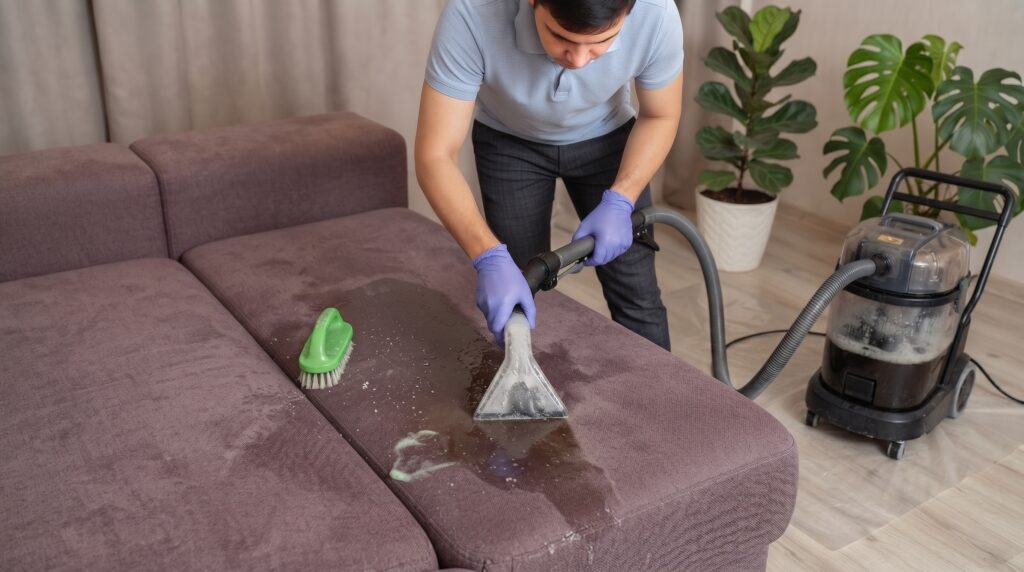
In those situations, professional deep cleaning can help restore the surface without causing additional damage.
At Go4Cleaning. in Los Angeles, California, we use professional equipment and eco-friendly products that are safe for vinyl and leather-like upholstery. Our technicians know which cleaning solutions preserve the protective coating and which products can shorten the lifespan of the material.
The goal is not aggressive cleaning—it is safe, effective cleaning that keeps your upholstery looking fresh for as long as possible.
If you are unsure whether a piece is genuine leather or vinyl, it is always safer to confirm before experimenting with household cleaners.