
-
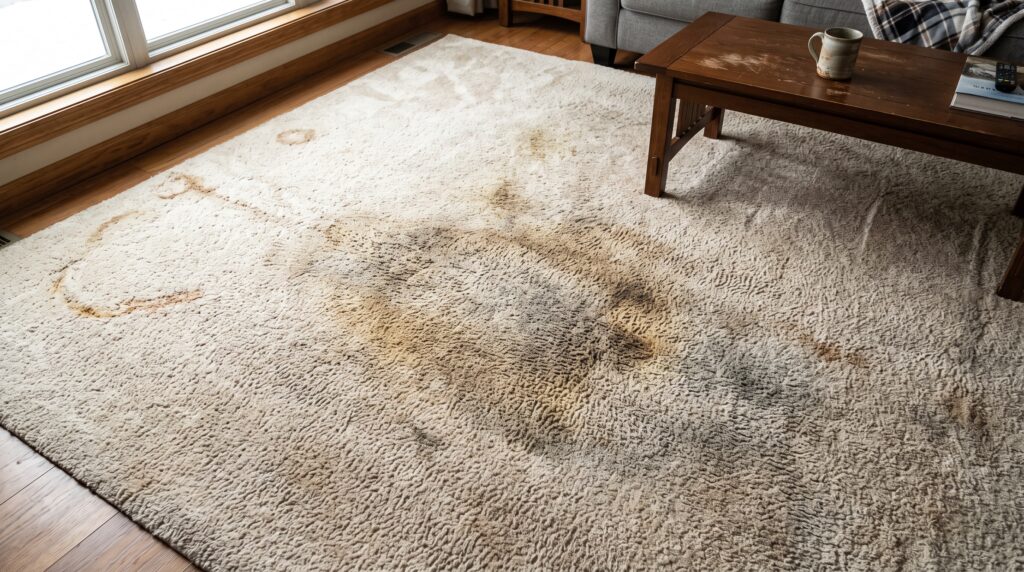
If your carpet has developed strange patches of color, such as yellowing, graying, or dark staining that just will not budge, you’re not alone. Carpet discoloration is one of the most common and most misunderstood problems homeowners deal with, especially in coastal areas like Santa Monica, where humidity, salt air, and high foot traffic all play a role.
The good news is that most discoloration can be treated. The key is understanding what caused it in the first place, because the wrong treatment can actually make things worse.
Why Does Carpet Discoloration Happen in Santa Monica?
Santa Monica’s coastal climate is beautiful, but it’s not always kind to your floors. The combination of ocean humidity, heavy sunlight exposure through west-facing windows, and sandy foot traffic creates conditions where carpet fibers break down faster than in inland areas.
There are several reasons your carpet might be losing its original color. Some of the most common causes include:
- Sun bleaching. Prolonged UV exposure through large windows or sliding glass doors fades carpet fibers unevenly, leaving patchy, washed-out areas.
- Moisture and mold. Santa Monica’s coastal air can introduce dampness into carpet padding, which causes dark staining or mildewy discoloration from below.
- Chemical reactions. Cleaning products, fertilizers tracked in from outside, or even certain types of furniture polish can chemically alter carpet dye.
- Pet accidents. Urine and vomit don’t just stain the surface. They seep into the fibers and padding, creating yellow or brown discoloration that deepens over time.
- Filtration soiling. This one surprises a lot of homeowners. It’s the dark, grimy line that forms along baseboards or under doors as air pushes through carpet over years.
Understanding the cause matters because it changes the solution entirely.Can You Remove Carpet Discoloration Yourself?
Honestly, it depends on the type and age of the discoloration. Light surface staining from coffee, juice, or tracked-in dirt is often manageable with the right DIY approach. But deep chemical staining, bleach spots, or discoloration from mold or prolonged moisture exposure typically needs professional attention.
That said, if you want to start at home, here’s what actually works, and what to avoid.
Start by Identifying the Stain Type
Before you pour anything on your carpet, figure out what you’re dealing with. Is the discoloration a single spot or a widespread fade? Does it smell? Is it only in high-traffic areas? Answering these questions will save you a lot of trial and error.
DIY Methods That Actually Help
- For general yellowing or light brown staining: Mix one tablespoon of dish soap with two cups of warm water. Apply it lightly to the area using a clean white cloth. Do not scrub. Blot gently instead. Work from the outside of the stain inward to prevent spreading. Rinse with cold water and blot dry. Repeat as needed.
- For pet stain discoloration: An enzyme-based cleaner is your best friend here. Enzyme cleaners break down the organic compounds in pet waste that regular soap can’t touch. Apply generously, let it sit for 10–15 minutes, then blot up the excess. Avoid steam cleaning a pet stain before treating it with enzymes. The heat can set the stain permanently.
- For mild mildew or moisture-related discoloration: A diluted solution of white vinegar and water, mixed in equal parts, can help neutralize mild mold-related odors and surface discoloration. Apply, let sit for a few minutes, blot clean, and make sure the area dries completely. Ventilation is critical. A damp carpet in Santa Monica’s climate will just develop the problem again.