

-
A coffee spill on a light sectional, pet accidents on a favorite cushion, or a dark mark that appeared after an at-home cleaning attempt can change how an entire room feels. Professional sofa stain removal is designed to address those problems without treating every fabric, stain, or couch construction the same way. The goal is not simply to make a spot look lighter. It is to safely restore the upholstery, reduce odors, and help your furniture look cared for again.
For Los Angeles homeowners, renters, and business owners, a sofa is often one of the most used pieces in the space. It collects body oils, food residue, dust, pet dander, and everyday soil long before it starts looking obviously dirty. A professional cleaning can make a visible difference, but the right process matters just as much as the result.
Why Sofa Stains Need a Different Approach
A couch is not a carpet, and it should not be cleaned like one. Upholstery comes in a wide range of materials, including natural fibers, synthetic blends, microfiber, velvet, linen, cotton, leather, and delicate designer fabrics. Each material reacts differently to moisture, heat, agitation, and cleaning solutions.
The stain itself also matters. Red wine, coffee, grease, ink, makeup, urine, and food stains do not respond to one universal product. Some need enzyme treatment to break down organic residue. Others need specialized spotters that lift oils or dyes. Using the wrong cleaner may spread the stain, set it deeper into the fibers, leave a water ring, or damage the fabric’s color and texture.
This is where professional sofa stain removal offers value beyond a rental machine or a spray bottle. A trained technician begins by identifying the fabric and the likely source of the stain. From there, the cleaning method is matched to the material, condition, and level of soiling.
What Professional Sofa Stain Removal Includes
A quality upholstery cleaning appointment should feel clear and organized from the start. Before treatment begins, the technician should inspect the sofa, discuss any known spills or odor concerns, and point out areas where complete removal may not be realistic. Honest expectations are part of good service, especially with old stains, sun-faded fabric, or permanent dye damage.
Fabric Testing and Stain Assessment
Cleaning starts with a fabric evaluation. The technician checks the upholstery type, manufacturer care code when available, dye stability, and the condition of the cushions and frame. A discreet test area helps confirm that the selected solution is safe for the fabric.
This step protects furniture that cannot tolerate heavy moisture or aggressive cleaning. Delicate fabrics may require low-moisture methods, while durable synthetic upholstery may benefit from hot-water extraction. There is no single best method for every sofa.
Targeted Treatment Before Deep Cleaning
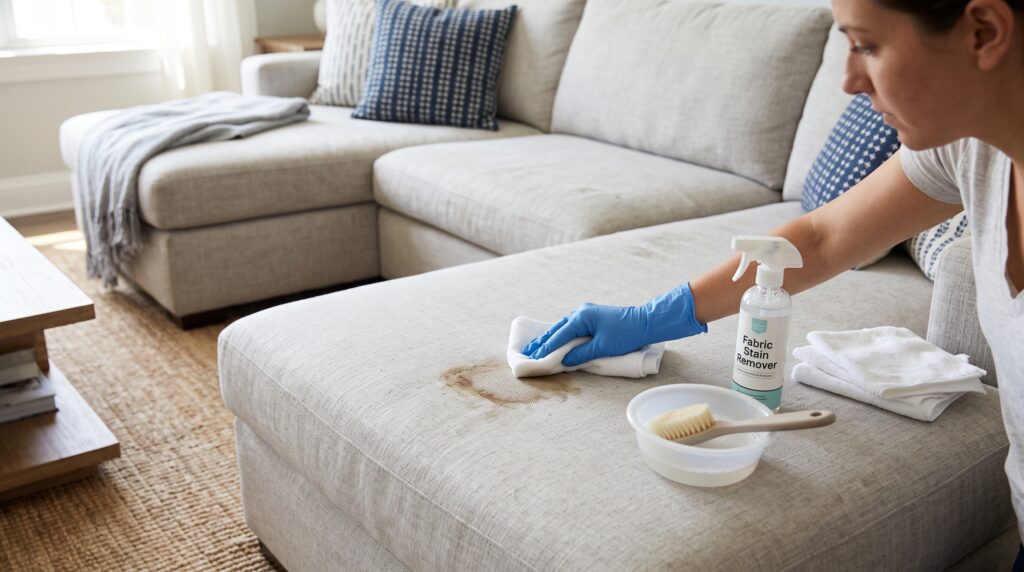
Visible spots are usually pre-treated before the full sofa is cleaned. This gives the appropriate solution time to work on the residue instead of relying on excessive scrubbing. Gentle agitation may be used where appropriate, but forceful rubbing is avoided because it can distort fibers and make a spot look fuzzy or worn.
For pet accidents, treatment should address both the stain and the odor source. Surface cleaning alone may make the area look better temporarily while odor-causing residue remains below the fabric. Enzyme-based treatments can help break down organic material when used correctly.
Extraction, Rinsing, and Controlled Drying
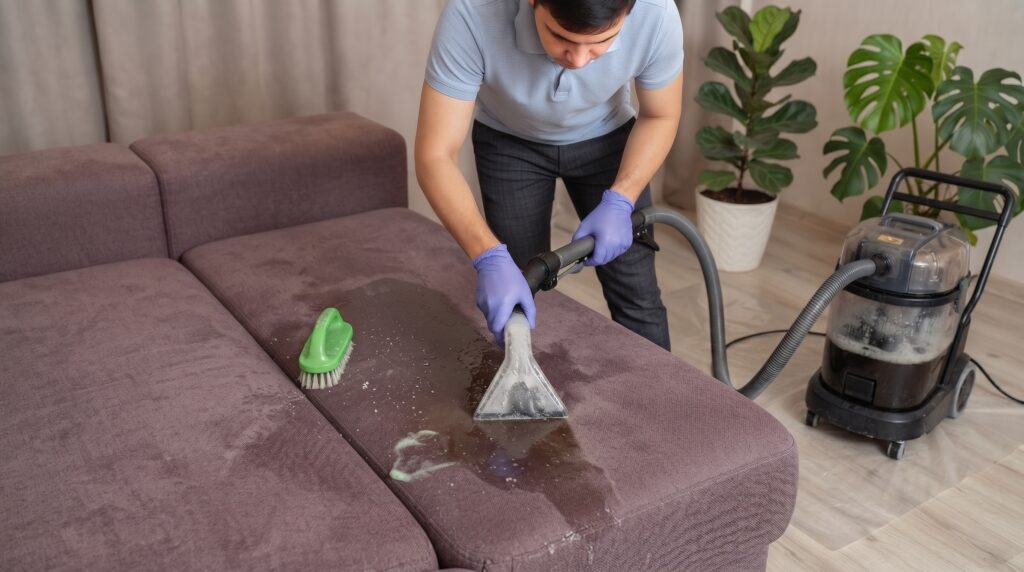
After treatment, industry-grade equipment removes loosened soil, cleaning residue, and moisture from the upholstery. Steam cleaning or hot-water extraction can be highly effective on fabrics that can safely handle it. Low-moisture extraction is often the better choice for delicate materials or situations where quicker drying is a priority.
A proper rinse is important. Leaving too much cleaning product behind can attract fresh soil and cause the fabric to feel stiff. Controlled extraction also limits over-wetting, which helps reduce drying time and protects the cushion filling.
Stains That Respond Well to Professional Cleaning
Many fresh and moderately set stains improve significantly with prompt treatment. Coffee, tea, food spills, tracked-in dirt, body oils, pet accidents, makeup, and general discoloration are common upholstery concerns that professionals handle regularly.
Grease and oil stains can be especially frustrating because they often darken fabric without looking like a typical spill. They may come from snacks, hair products, lotion, or frequent contact with arms and headrests. These areas need a product that breaks down oily residue before extraction can remove it.
Red wine, juice, and colored beverages are more time-sensitive because dyes can bond with fibers. Ink, paint, bleach marks, and some hair dye stains are among the toughest cases. In these situations, cleaning may reduce the appearance of the damage, but no reputable company should promise complete removal before inspecting the fabric.