
Sanitize Your Couch Like a Pro: Safe and Effective Methods That Work
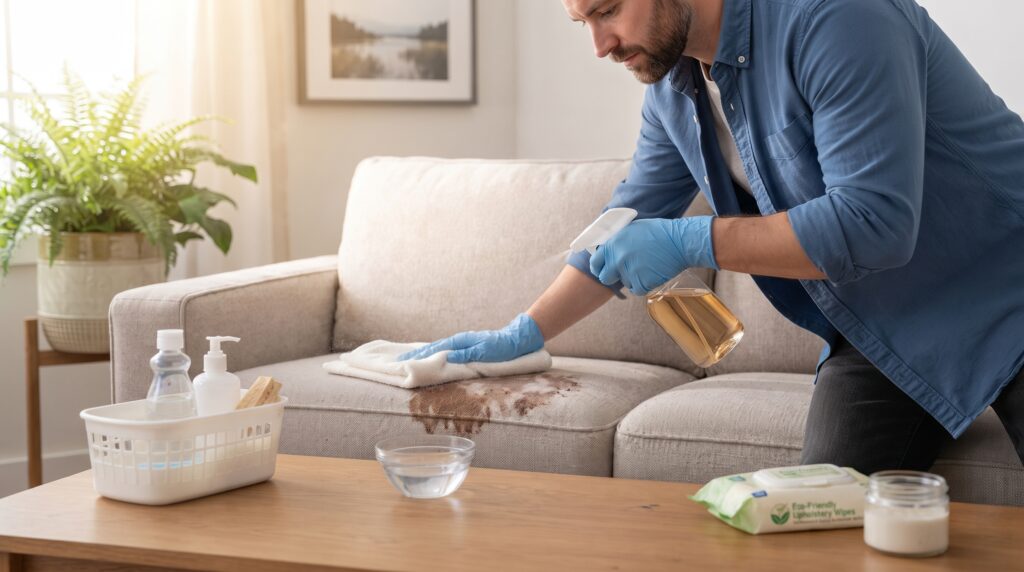
Your couch probably gets more daily use than almost any other piece of furniture in your home. It catches crumbs, absorbs body oils and sweat, traps pet hair, and quietly collects dust mites, bacteria, and allergens that often go unnoticed. If you have children or pets, those layers build up even faster.
The good news is that you do not need to replace your sofa or schedule professional cleaning every week. With the right approach and a little patience, you can clean and sanitize your couch at home safely and effectively without damaging the fabric or leaving it overly wet.
Here is the step-by-step process professionals use.
Start by Identifying the Fabric Type
Before using any cleaner or disinfectant, check the tag attached to the underside of a cushion or frame. This cleaning code tells you which products are safe for your upholstery.
- W – Water-based cleaners are safe
- S – Use solvent-based cleaners only; avoid water
- W/S – Either water-based or solvent-based cleaners may be used
- X – Vacuum only; do not use liquids
Skipping this step is one of the most common causes of upholstery damage. Fabrics such as microfiber, linen, chenille, suede, and faux leather react differently to moisture and cleaning products, so identifying the material first can prevent costly mistakes.
Step 1 – Vacuum Thoroughly First
Vacuuming is essential. Sanitizing a couch without removing loose dirt first can push debris deeper into the fabric.
Use a vacuum with an upholstery attachment and work slowly across every surface. Pay special attention to seams, cushion gaps, armrests, and underneath removable cushions and pillows.
If pet hair is heavy, remove as much as possible with a lint roller or a slightly damp rubber glove before vacuuming. The goal is to clear away surface dirt so your cleaning solution can reach the fabric fibers effectively.
Regular vacuuming between deep cleanings helps prevent buildup and keeps the couch fresher longer.
Step 2 – Treat Stains Before Sanitizing
Visible stains should be addressed before you disinfect the sofa. Fresh stains are much easier to remove than stains that have had time to set.
For many fabric couches, mix a small amount of mild dish soap with warm water. Apply it with a microfiber cloth and blot gently rather than scrubbing. Work from the outer edge of the stain toward the center, then wipe with a lightly damp cloth and blot dry.
For stubborn spots, use an upholstery-safe stain remover instead of bleach. Bleach can fade colors and weaken fabric fibers.
A diluted white vinegar solution can also help with light stains and odor-causing residue. Test it on a hidden area first to make sure the fabric reacts well.
Step 3 – Sanitize the Couch
Once the couch is clean, you can sanitize the surface.
For most fabric sofas, a simple mixture of equal parts white vinegar and water in a spray bottle works well. Lightly mist the fabric; avoid soaking it. Vinegar has natural disinfecting properties and is generally safe for many upholstery fabrics.
If you prefer a stronger disinfectant, choose a fabric-safe upholstery sanitizer labeled for soft surfaces. Follow the manufacturer’s directions carefully.
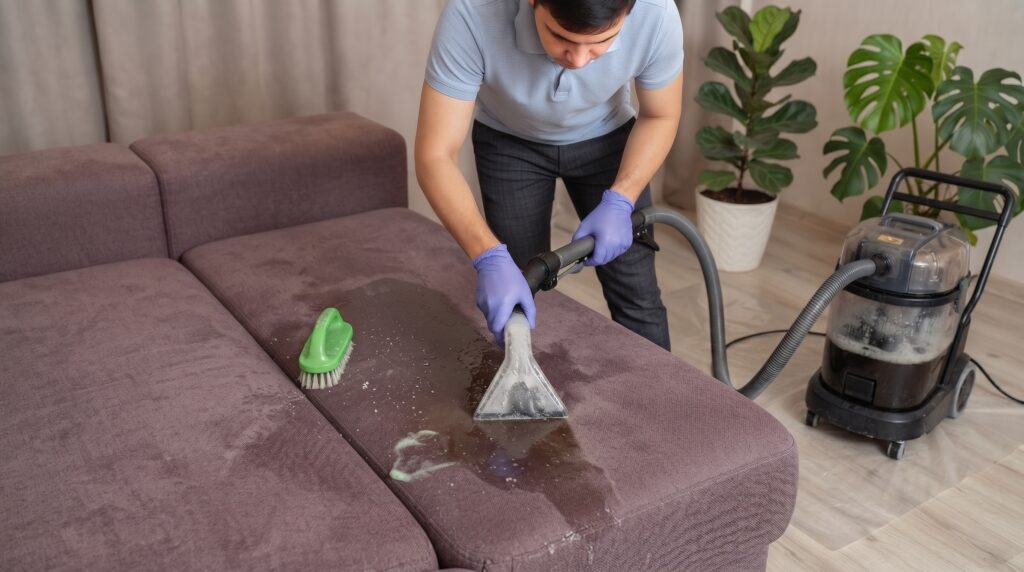
A steam cleaner is one of the most effective options because it penetrates the fabric and helps eliminate bacteria, dust mites, mold spores, and other allergens without harsh chemicals. Steam cleaning is especially useful in homes with allergy or asthma sufferers.
Step 4 – Deodorize the Fabric
Even after cleaning, odors can linger in upholstery.
Sprinkle a light layer of baking soda over the couch, let it sit for 15–20 minutes, and vacuum it away thoroughly. Baking soda naturally absorbs odors and is safe for most fabrics.
For a fresher scent, add a few drops of lavender essential oil to your spray solution before lightly misting the couch.
Step 5 – Allow the Couch to Dry Completely
Proper drying is critical. Damp upholstery can develop mildew and unpleasant odors.
After cleaning, open windows, run a fan, or use air conditioning to speed up drying. Wait until the couch is completely dry before replacing cushions, blankets, or pillows or allowing anyone to sit on it.
When Professional Cleaning Is the Better Option
Some sofas need more than a DIY treatment. Consider professional upholstery cleaning if you notice deep-set stains, persistent odors that seem to come from inside the cushions, heavy pet contamination, or fabric that has become delicate after repeated home cleanings.
Professional equipment can remove embedded soil and moisture more effectively and often extends the life of the furniture.