

How to Safely Clean Fabric Headboards Without Causing Damage
COntact US
Your bedroom should feel clean, calm, and comfortable. Yet upholstered headboards often collect dust, body oils, hair products, and everyday grime without us noticing until the fabric starts to look dull or stained. The good news is that you can clean most upholstered headboards safely at home without damaging the fabric or the structure underneath.
This guide explains exactly how to refresh your upholstered headboard step by step using gentle methods that protect the material.
Why Upholstered Headboards Get Dirty So Quickly
An upholstered headboard sits directly behind your head and shoulders, so it absorbs oils from skin and hair night after night. Hair products, sweat, and everyday dust gradually build up on the surface and within the fibers.
Because upholstery traps particles more easily than hard surfaces, a quick dusting is rarely enough. Over time, that buildup can leave the fabric looking flat, discolored, or less fresh than the rest of the bedroom.
Supplies You’ll Need
Before you begin, gather these items:
- Vacuum cleaner with a brush attachment
- Two or more microfiber cloths
- Soft-bristled brush
- Mild dish soap
- Warm water
- Baking soda (sodium bicarbonate) for odors
- Clean spray bottle
Avoid strong chemical cleaners unless the manufacturer’s care label specifically recommends them. Gentle cleaning is usually the safest approach.
Step-by-Step Cleaning Instructions
1. Start With a Spot Test
Before cleaning the entire headboard, test your solution on a hidden area such as the back or lower corner. Apply a small amount, wait a few minutes, and check for discoloration, fading, or texture changes.
A quick spot test can prevent permanent damage.
2. Vacuum the Entire Surface
Use the vacuum’s brush attachment to remove loose dust and dirt. Work slowly in overlapping strokes and pay special attention to seams, buttons, tufting, and edges where debris tends to collect.
Removing dry soil first prevents it from turning into mud when moisture is added.
3. Prepare a Gentle Cleaning Solution
Mix a few drops of mild dish soap with warm water in a spray bottle or bowl. The solution should be lightly soapy, not heavily concentrated.
For greasy spots, place a tiny drop of dish soap directly on the stain and then dilute it with a damp cloth.
4. Clean With a Damp Microfiber Cloth
Lightly dampen a microfiber cloth with the solution. Do not soak the cloth. Wipe the headboard in small sections using gentle blotting or wiping motions.
Avoid vigorous scrubbing, which can distort the fabric weave and push stains deeper into the upholstery.
For stubborn spots, apply a little solution and gently work the area with a soft brush using light circular motions, then blot with a clean cloth.
5. Remove Odors Naturally
If the headboard smells musty, sprinkle a light layer of baking soda over the fabric and let it sit for 15–20 minutes. Vacuum it thoroughly afterward.
Baking soda is a simple, fabric-friendly way to absorb odors without adding fragrance.
6. Dry Thoroughly
Blot any remaining moisture with a dry microfiber cloth. Allow the headboard to air dry completely before placing pillows against it again. Good airflow, an open window, or a fan will help speed drying.
Cleaning Leather Headboards
If your headboard is leather rather than fabric, do not use the soap-and-water method described above. Leather should be cleaned with a product specifically made for leather and conditioned afterward to help prevent drying and cracking.
Can You Use Steam?
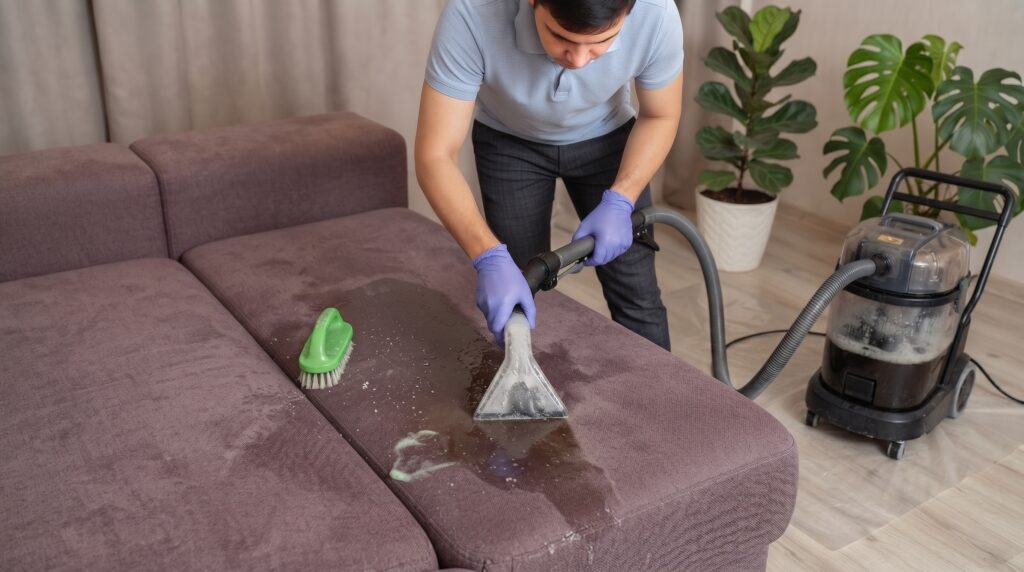
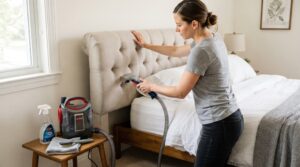
Steam can loosen embedded dirt and sanitize fabric upholstery, but it should be used carefully. Excessive heat or moisture may damage delicate fabrics, adhesives, or padding.
A handheld steamer held at a safe distance may work for some upholstery types, but professional upholstery cleaning is usually the safest option for deep steam cleaning.
Keep Your Headboard Looking Fresh Longer
A few simple habits can reduce future buildup:
- Vacuum the headboard monthly.
- Keep hair products from contacting the fabric when possible.
- Wash pillowcases regularly.
- Address spills or spots as soon as they happen.
- Avoid leaning against the headboard with wet hair.
Consistent light maintenance is much easier on the fabric than infrequent heavy cleaning.
A Cleaner Headboard, A Fresher Bedroom
An upholstered headboard quietly collects dust, oils, and everyday grime, but cleaning it does not have to be difficult. By vacuuming regularly, using a mild cleaning solution, blotting gently, and drying the fabric thoroughly, you can restore a cleaner, fresher appearance without damaging the upholstery.
When stains are extensive, odors persist, or the fabric is delicate, professional upholstery cleaning is the safest way to protect your headboard and keep your bedroom feeling truly refreshed.