
-
Poor air quality and smoke exposure are growing concerns for Santa Monica residents. Wildfires throughout Southern California, nearby brush fires, and even prolonged smog events can push smoke and fine particles into homes. Even when flames are far away, airborne pollutants can settle indoors and linger long after the air outside clears.
If your home has been exposed to smoke or poor air quality, a basic surface cleaning is not enough. Smoke particles are small, sticky, and capable of embedding themselves into fabrics, HVAC systems, and porous materials. Deep cleaning is essential to protect indoor air quality, remove odors, and reduce potential health risks. This guide explains how to properly deep clean your Santa Monica home after smoke exposure and when professional help may be necessary.
Why Smoke and Poor Air Quality Affect Homes So Deeply
Smoke contains fine particulate matter known as PM2.5, along with gases and chemical residues. These particles are small enough to travel through open windows, doors, vents, and even tiny gaps in building structures.
Once inside, smoke particles cling to surfaces and absorb into soft materials such as carpets, upholstery, curtains, and mattresses. Santa Monica’s coastal air can also increase moisture levels indoors, making it easier for smoke residue to stick and harder to remove if not addressed quickly.
Even if your home does not smell strongly of smoke, lingering particles can still affect air quality and trigger respiratory symptoms.
Step 1: Improve Ventilation Safely
Before cleaning, improve indoor air circulation, but only if outdoor air quality has returned to safe levels. Check local air quality reports to confirm conditions.
Once safe:
- Open windows and doors to allow fresh air inside
- Use box fans or ceiling fans to push stale air out
- Run air purifiers with HEPA filters to capture fine particles
Do not ventilate while outdoor air quality is still poor, as this can worsen indoor contamination.
Step 2: Replace or Clean Air Filters
One of the most important steps after smoke exposure is addressing your HVAC system. Smoke particles are easily pulled into air conditioning and heating systems and redistributed throughout the home.
- Replace HVAC filters with high-quality HEPA or high-MERV-rated filters
- Clean or replace filters in portable air purifiers
- Consider professional HVAC inspection and duct cleaning if smoke exposure was prolonged or severe
Dirty filters can continue releasing trapped particles back into the air.
Step 3: Clean Hard Surfaces Thoroughly
Smoke residue leaves behind a thin, often invisible film on hard surfaces. This film can carry odors and irritants.
Focus on:
- Walls and ceilings
- Floors and baseboards
- Cabinets, shelves, and countertops
- Doors, door frames, and window sills
Use a mild detergent mixed with warm water. Avoid harsh chemicals that may react with smoke residue or release strong fumes. Microfiber cloths work well because they trap fine particles rather than spreading them around.
Rinse surfaces with clean water and dry thoroughly to prevent residue buildup.
Step 4: Deep Clean Carpets and Rugs
Carpets and area rugs are some of the biggest collectors of smoke particles. Vacuuming alone does not remove embedded residue.
Start with:
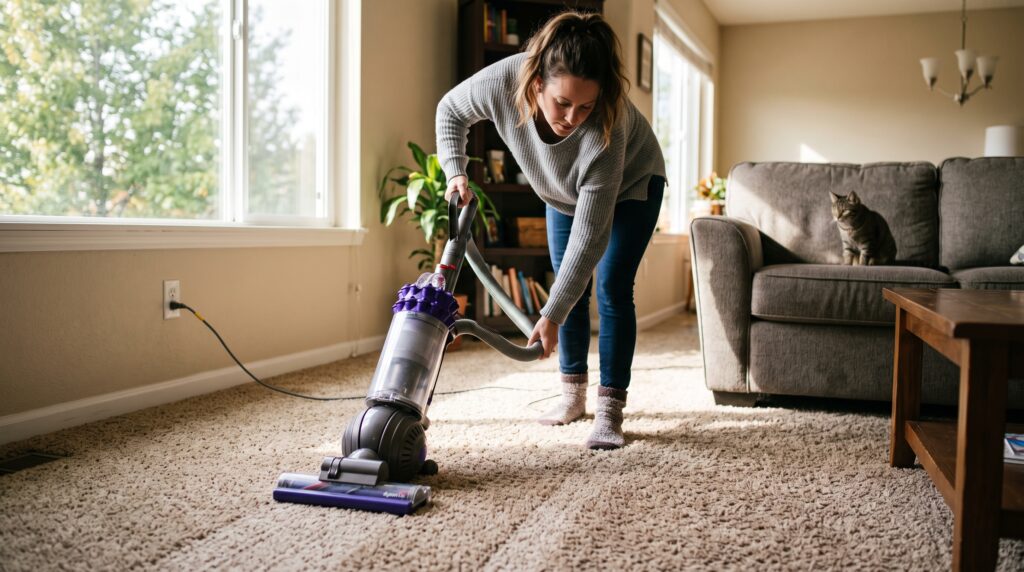
- Vacuuming slowly using a vacuum with a HEPA filter
- Making multiple passes over high-traffic areas
Follow up with professional-grade deep cleaning if possible. Hot water extraction is often the most effective method for removing smoke residue and odors from carpet fibers. Avoid DIY machines that leave carpets overly wet, as moisture can trap odors and cause secondary issues.
Step 5: Address Upholstery and Soft Furnishings
Smoke penetrates sofas, chairs, mattresses, pillows, and curtains easily. These items often hold onto odors long after surfaces appear clean.
Recommended steps include:
- Vacuuming upholstery with a HEPA-filtered vacuum
- Washing removable covers according to the manufacturer’s instructions
- Dry cleaning items labeled as such
- Steam cleaning where appropriate and safe for the fabric
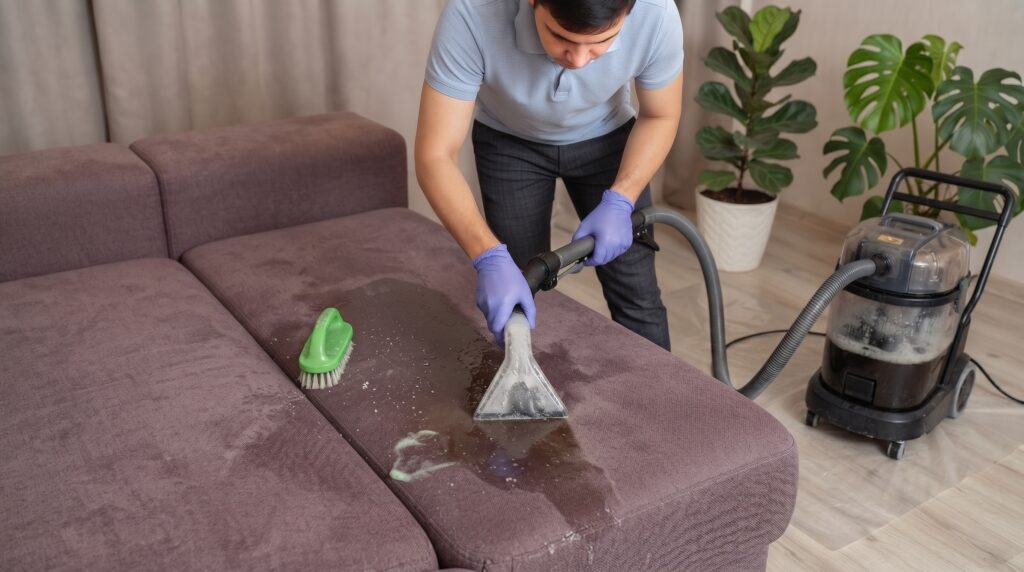
For heavily affected furniture, professional upholstery cleaning in Santa Monica from Local Cleaning Services Inc can help remove smoke particles from internal padding and fabric layers that vacuuming cannot reach.
Step 6: Launder All Washable Fabrics
Clothing, bedding, towels, and curtains can absorb smoke quickly, even when stored in closets or drawers.
Wash all exposed fabrics using:
- Warm water if fabric allows
- Unscented or low-fragrance detergent
- An extra rinse cycle to remove residue
Avoid masking smoke odors with strong fragrances. Odors that return after washing usually indicate that residue remains embedded in the fabric.
Step 7: Clean Walls, Paint, and Painted Surfaces
Painted walls can absorb smoke residue, especially flat or matte finishes. Cleaning walls may be time-consuming, but it makes a noticeable difference in air quality and odor.
Use a soft sponge or microfiber cloth and a gentle cleaner. Work from top to bottom to avoid streaks. For persistent smoke odors that do not improve, repainting with a stain-blocking primer may be necessary.
Step 8: Don’t Forget Hidden Areas
Smoke residue settles in places that are easy to overlook. These areas can continue to release odors and particles over time.
Be sure to clean:
- Inside closets and cabinets
- Behind appliances
- Ceiling fans and light fixtures
- Air vents and registers
- Window screens
Even small amounts of residue in these areas can affect overall indoor air quality.
Step 9: Neutralize Odors the Right Way
Smoke odors are not just smells. They are airborne particles. Sprays and candles only cover them temporarily.
Effective odor control methods include:
- HEPA air purifiers running continuously for several days
- Activated charcoal or baking soda placed in affected rooms
- Professional deodorization treatments for severe cases
Avoid ozone generators for home use, as ozone can be harmful to health when misused.
When Professional Smoke Cleaning Is Necessary
In some situations, professional smoke damage cleaning is strongly recommended. This includes:
- Heavy or prolonged smoke exposure
- Persistent odors after thorough cleaning
- Visible soot or residue
- Respiratory symptoms worsening indoors
- Homes with children, elderly residents, or individuals with asthma
Professionals use specialized equipment such as commercial air scrubbers, deep extraction systems, and safe deodorization techniques that are more effective than household tools. You can contact Local Cleaning Services Inc directly through their contact page to learn about customized deep cleaning options.