Carpet care
How to Clean Carpet on Stairs Without Damaging the Fibers
Stairs take more abuse per square foot than anywhere else in a home. Every step lands on the same narrow strip of the nose, the pile gets crushed in one direction, and the vertical risers collect dust that a vacuum head never reaches. Cleaning them well is mostly about hand work and restraint with water.
By Go4Cleaning Team · Updated August 26, 2026 · 7 min read
Quick answer
Vacuum with a hand tool from top to bottom, working the nose, the riser crease and the risers themselves. Blot any spill onto a cloth rather than the carpet, working from the outside in, since liquid runs downhill onto the next tread. Deep cleaning stairs needs low water volume and hand agitation, which is why they are priced per step.
Why stairs wear out first
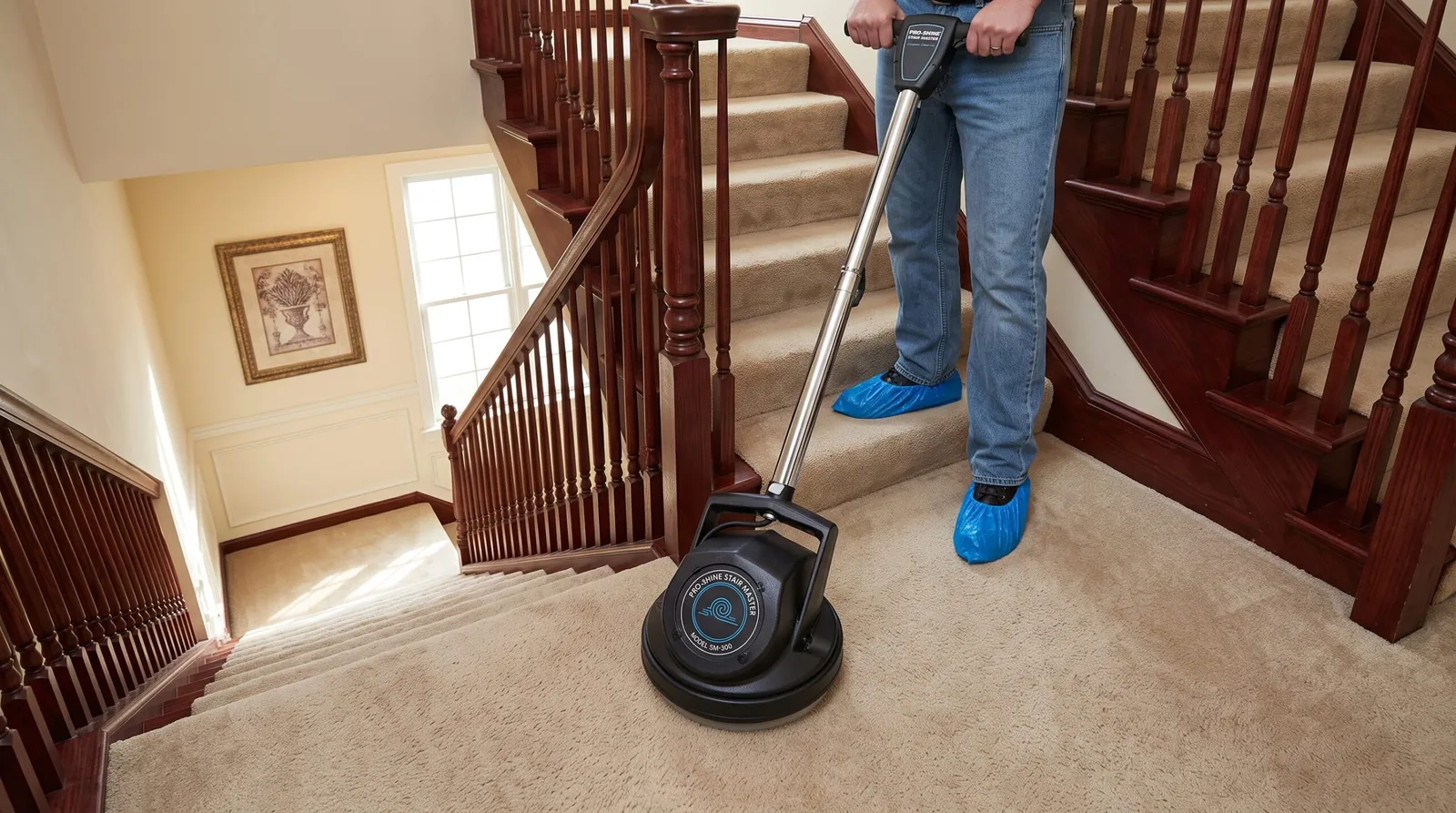
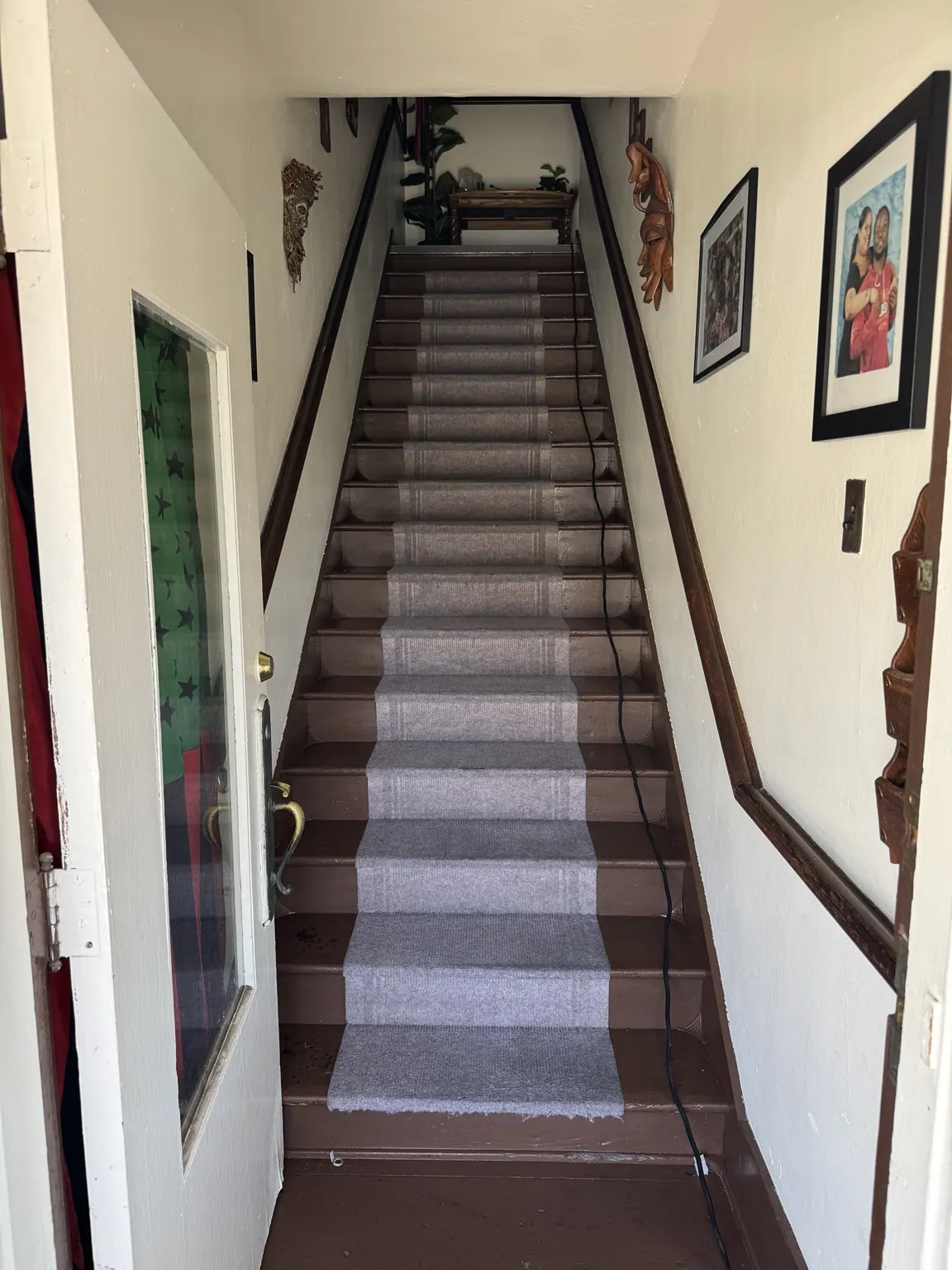
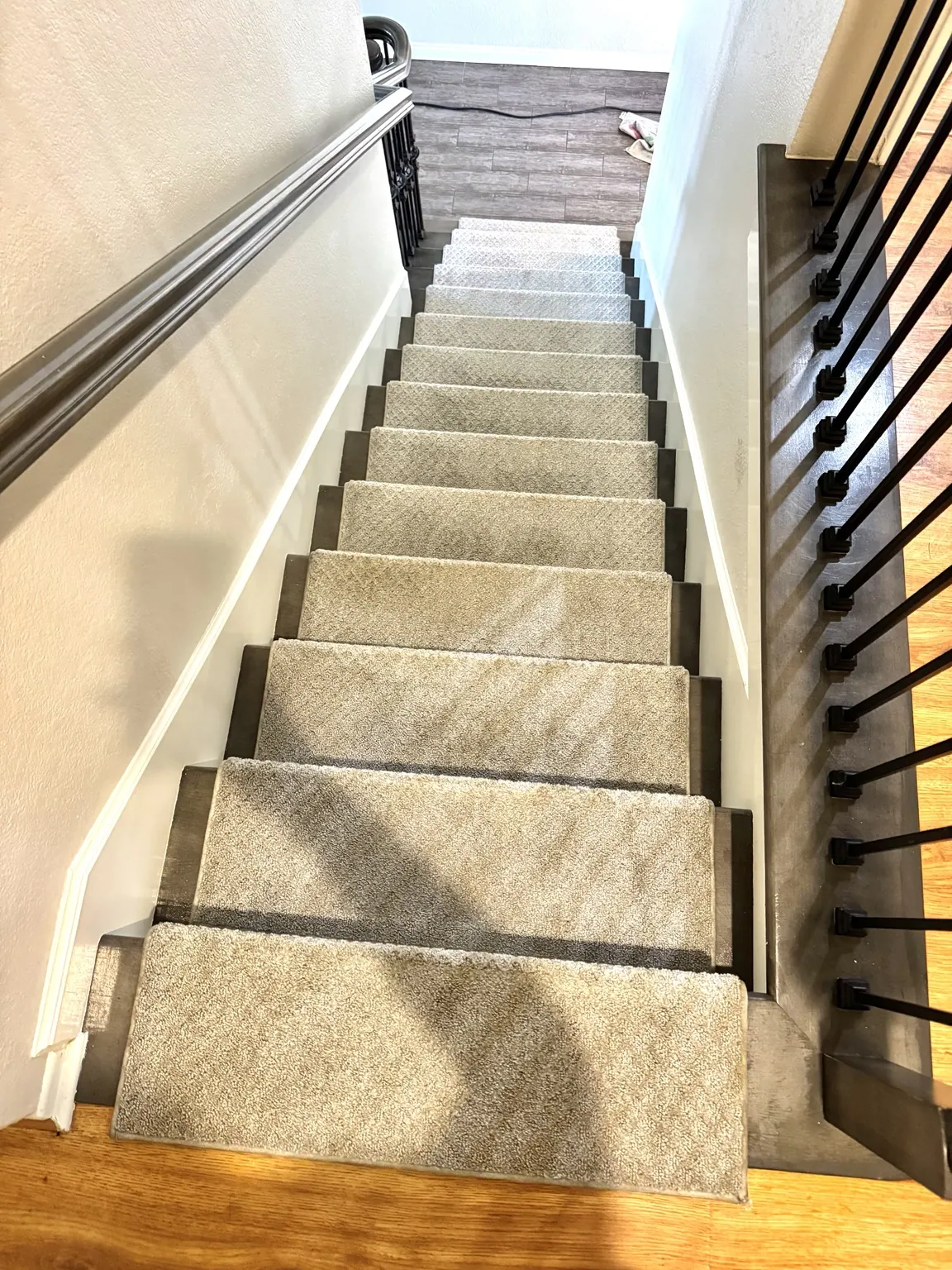
The bullnose — the rounded front edge of each tread — carries almost all of the traffic. Fibers there are compressed and abraded thousands of times more than the carpet two feet away, so the pile flattens and the colour reads darker even when it is clean.
Because the tread is angled, dry soil migrates to the back corner of each step and sits there. Missing that corner is the single most common reason freshly vacuumed stairs still look tired.
Vacuum them properly
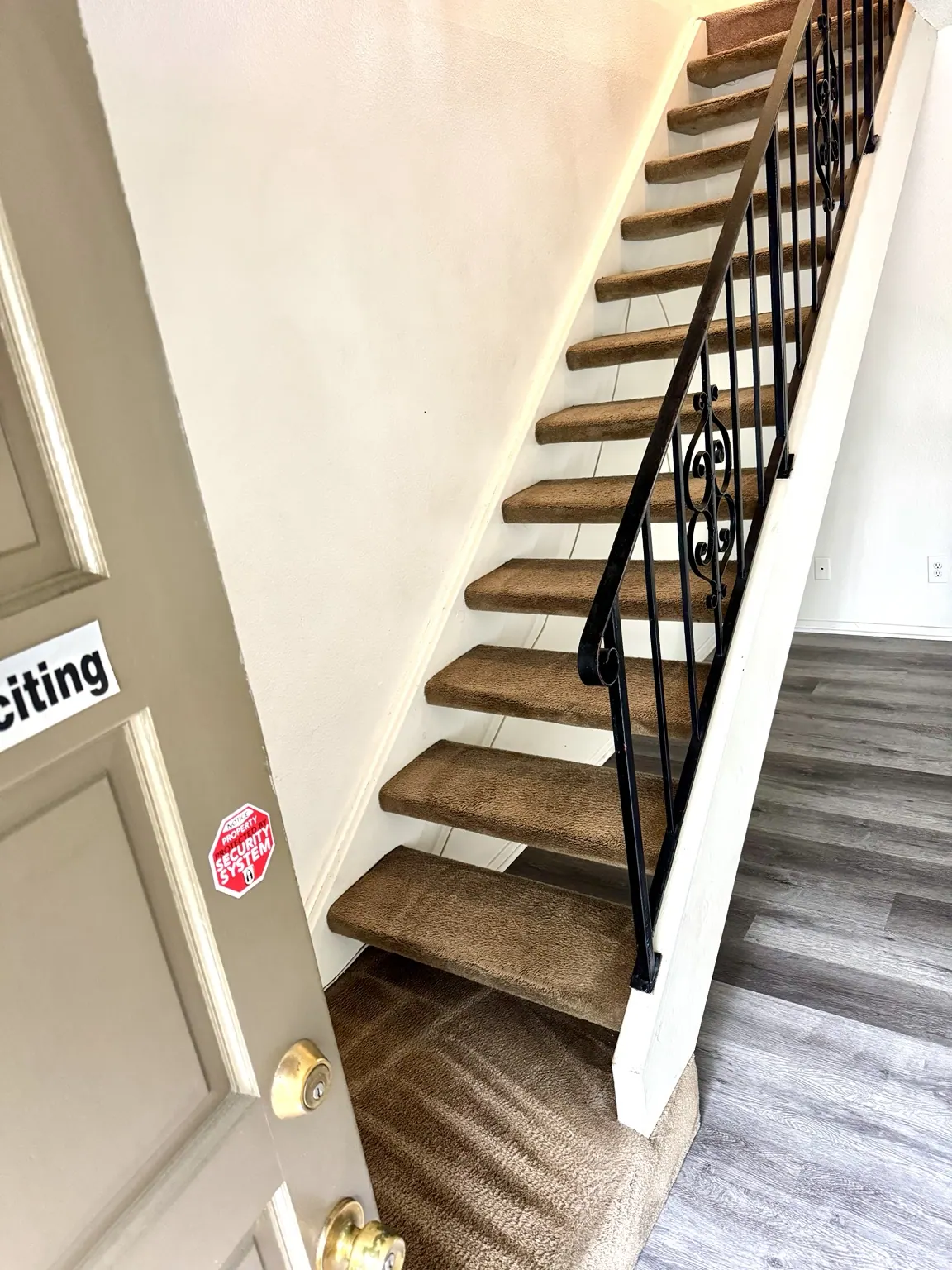
- Use a hand tool or crevice attachment rather than dragging a full upright across the treads.
- Work top to bottom so loosened soil falls onto steps you have not finished yet.
- Pull the tool toward you across the nose, then along the crease where tread meets riser.
- Do the risers too — they hold a surprising amount of fine dust and pet hair.
- A stiff brush across the nose before vacuuming lifts crushed pile so the suction can reach the soil under it.
Spot-treating on a slope
Gravity is against you on a staircase: liquid runs down the riser and into the next tread, spreading a small spot across three steps. Apply any cleaner to the cloth, not to the carpet, and blot from the outside of the spot inward.
Blot, never scrub. Scrubbing pushes material deeper into the pile and can permanently distort the fibers, which is a far harder problem than the original spot.
Deep cleaning without soaking the structure
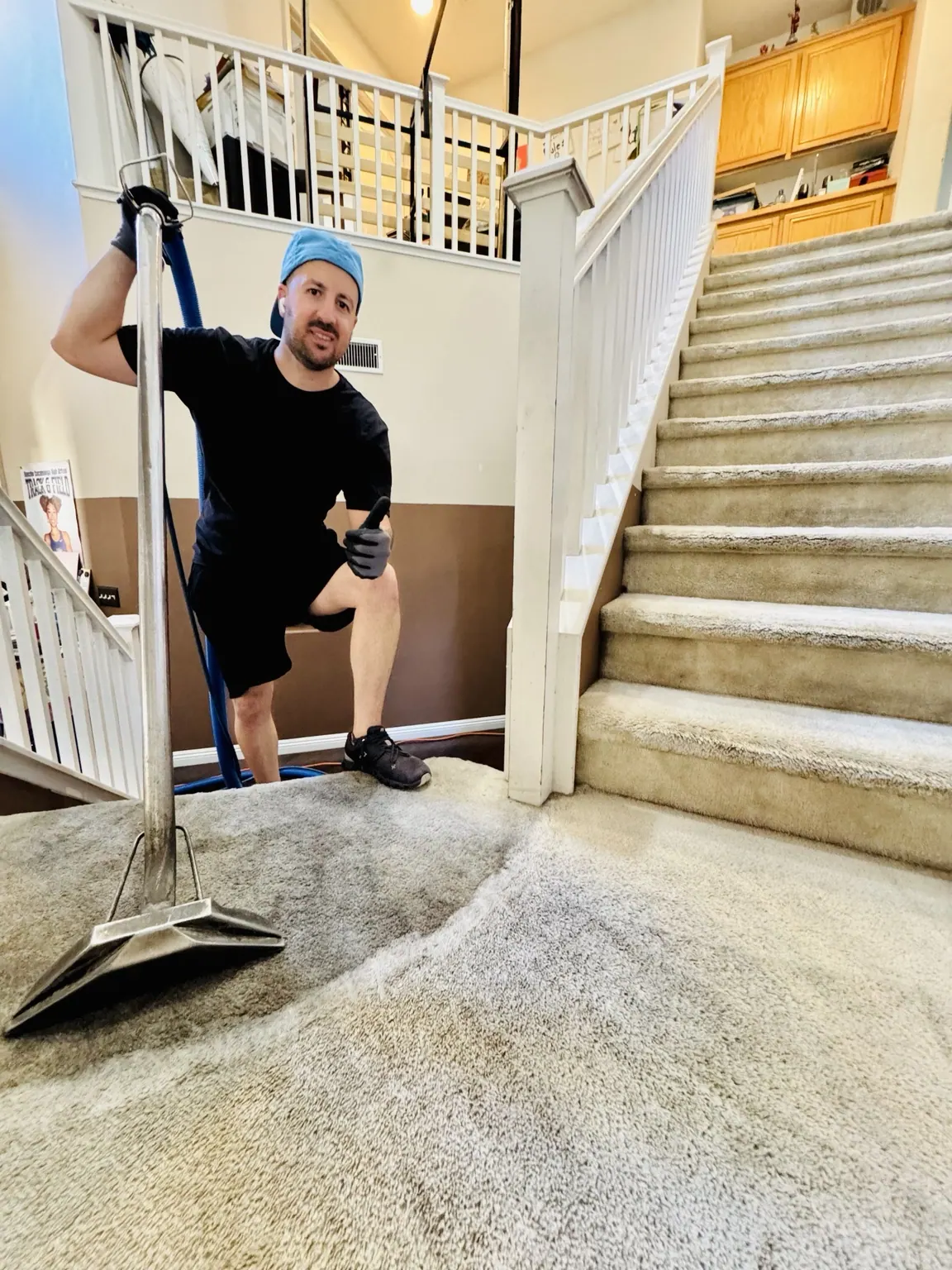
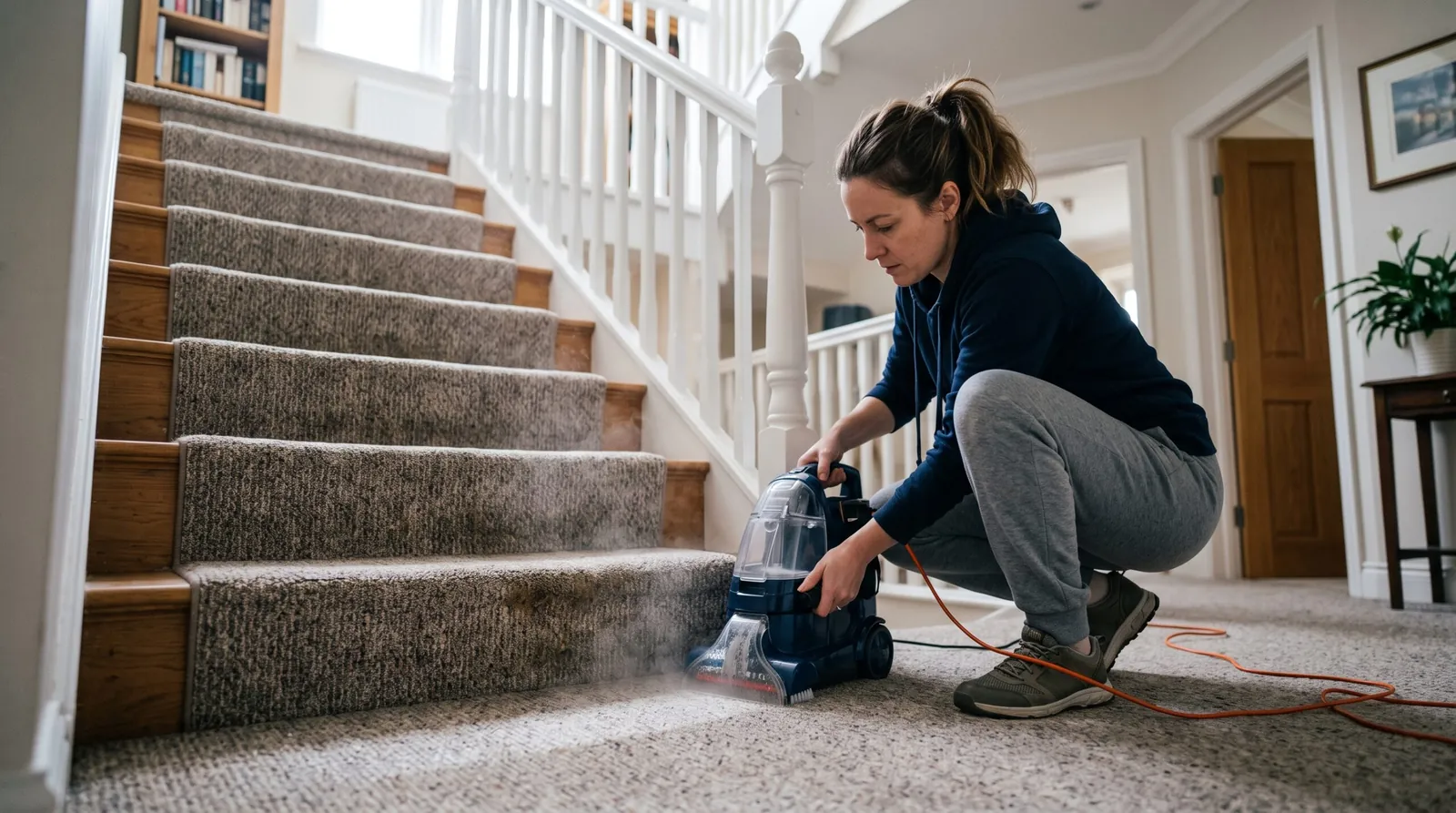
Stairs sit over wood, and water that gets past the pad into the tread is a problem you cannot see until it squeaks or the carpet smells. This is where a rental machine gets people into trouble — too much water in, not enough back out.
We work stairs by hand with a small upholstery-style tool: controlled pre-spray, hand agitation on the nose, then extraction pass by pass with a tight recovery. It is slower than open floor, which is exactly why stairs are quoted per step rather than by square footage.
Making them last
- Vacuum stairs at least twice a week if they are the main route through the house.
- Shoes off saves the nose more than any product.
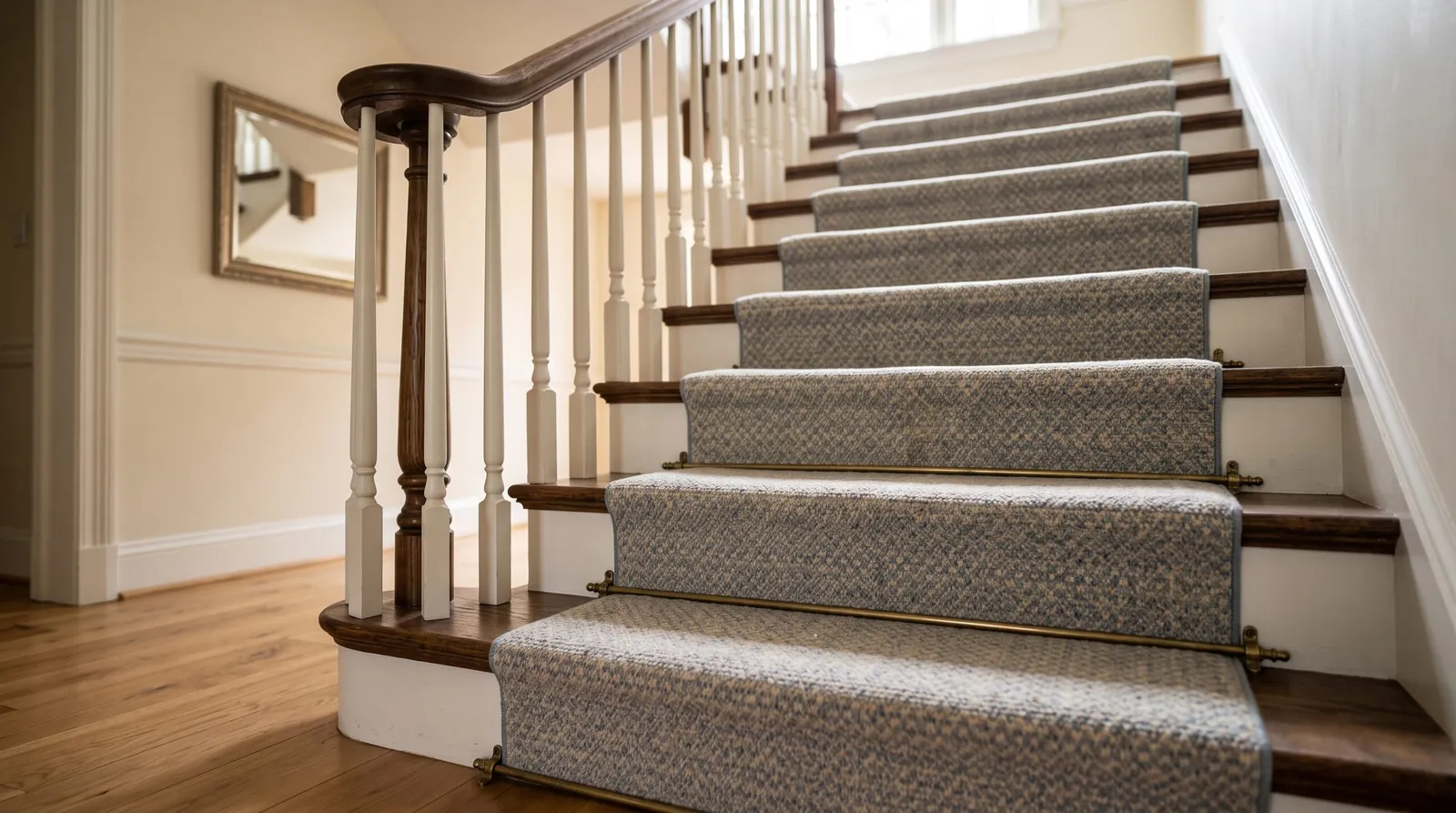
- Groom the pile after cleaning so the fibers stand up and wear evenly.
- Have the stairs cleaned on the same cycle as the adjoining hallway so the colour stays consistent.
Background from the original guide
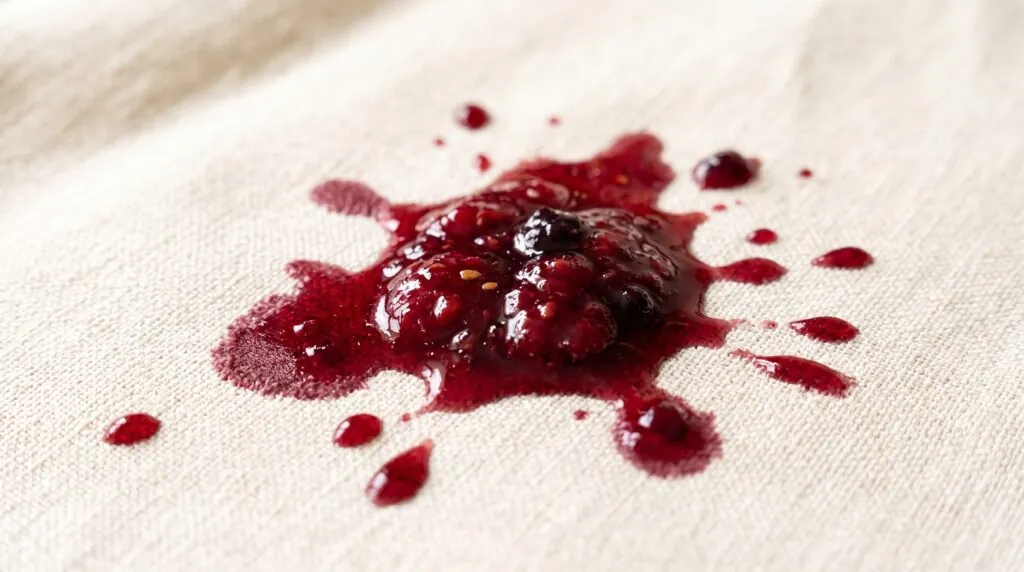
Cranberry juice spills happen fast. One tipped glass, one careless moment, and suddenly you’re staring at a deep red stain spreading across your carpet fibers. The good news? You don’t have to panic.
With the right approach and a little speed, you can remove cranberry stains from carpet without calling in reinforcements — at least for fresh spills. Here’s exactly what to do.
Treating spills and stains
Cranberry sauce or juice contains natural dye compounds that bond quickly to fabric fibers. That’s what makes it harder to remove than, say, water or clear liquid stains. Red stains and berry stains in general are some of the most difficult to remove from light-colored carpet or upholstery.
The longer you wait, the worse it gets. Dried cranberry stains require more effort and stronger cleaning methods than fresh ones. Acting fast is always your best defense.
The moment a spill happens, your goal is simple: lift the liquid before it sets.
An old cranberry juice stain that has already dried is a different challenge. The dye has had time to bond with the fabric, which means you’ll need a stronger approach.
Start by blotting with cool water to rehydrate the dried stain. Let it sit for a few minutes before blotting again.
For stains on upholstery, check the care label before using any liquid cleaning method. If the label prohibits liquid products, consult a qualified fabric-care specialist.
If you need to remove cranberry stains from clothes or a tablecloth, the approach is similar. Remove fresh stains right away by blotting with cool water, then treat with a color-safe detergent or stain remover. Always check that the stain is completely gone before putting the item in the dryer, since heat will set the stain permanently.
Do not scrub a stain right away. Blot it first with a dry cloth to absorb any excess water or liquid.
Use a stain tool or a firm brush to agitate the area gently, working inward from the edges. A dedicated stain cleaner or stain remover made for carpet works best on stubborn stains and grease.
Step 1: Remove the excess liquid
Grab a clean white cloth or paper towel and blot the stain immediately. Do not rub. Rubbing pushes the stain deeper into the fibers and makes it harder to treat later. Always blot from the outside edge inward to avoid spreading.
Use a knife or spoon to gently lift any cranberry sauce or cranberry juice that’s sitting on top of the carpet before blotting.
Step 2: Apply your cleaning solution
This simple combination works well on juice stains on carpet without damaging the fibers.
Apply the solution to a clean cloth, not directly to the carpet, and gently blot the stained area. Avoid rubbing or scrubbing. Continue blotting until the stain begins to lift.
Step 3: Rinse the area
Once the stain is removed or significantly lighter, rinse by blotting with cool water using a fresh, clean white cloth or paper towel. This removes any soap residue that could attract dirt later. Then blot the area dry to remove excess moisture. Do not over-wet the carpet. Too much moisture can cause mold or mildew under the padding.
Why Carpeted Stairs Are Harder To Clean Than You Think
Flat and stair carpets present different cleaning challenges. On stairs, dirt and grime get packed into every tread and riser, especially in the corners where the two surfaces meet. Standard vacuums struggle with the shape, and using too much moisture can lead to mildew forming underneath.
What You Need Before You Start
Getting the right cleaning tools together before you begin saves a lot of frustration. You do not need a full professional setup, but a few specific items make a real difference.
A carpet cleaning machine or shampooer sized for stairs
Vacuuming safely
Before any liquid touches your staircase, vacuum thoroughly. Use the hose with a brush attachment to remove dirt, pet hair, and dust from both the tread and riser of each step. Work from the top stair down so debris falls to steps you have not yet cleaned.
A handheld vacuum is ideal here because it gives you control in tight spaces. The attachment matters more than the machine itself.
Step 3 — Shampoo The Stairs
Once stains are handled, it is time to shampoo the full staircase. If you are using a carpet shampooer, fill the clean water tank with your carpet shampoo solution as directed. Work section by section, one step at a time.
For a machine with a hose attachment, press the nozzle firmly against the tread and riser of each stair. Do not over-saturate. The goal is a controlled deep clean, not soaking the carpet through to the pad underneath.
Drying and residue
After shampooing, rinse each step with a light spray of clean water to remove soap residue. Then use dry towels to blot up as much moisture as possible. You can refill a spray bottle with plain water for this part.
Drying the carpet fully prevents mold growth and helps extend its lifespan. Open windows, run a fan, or turn on the air quality system in your home to speed things up. Do not place a mat back over the stairs until everything is completely dry.
When DIY Is Not Enough
Sometimes carpeted stairs are too dingy or deeply soiled for a DIY process to fully resolve. That is not a failure — it just means the grime has built up beyond what standard cleaning tools can reach.
Related service
Carpet cleaningFamily-owned, based in Beverly Hills, serving Los Angeles County and approved Orange County communities.
Recent Go4Cleaning work
Photos from Go4Cleaning jobs, taken by our own crew.
Common questions
Why are stairs charged separately?
Each step is hand work — agitation on the nose, a separate extraction pass and careful moisture control. A flight of stairs can take as long as a bedroom, so it is priced per step rather than by area.
How long do carpeted stairs take to dry?
Usually a few hours with normal airflow, because we keep the water volume low. We will give you an honest estimate for your home and leave air movers when they are needed.
Can flattened stair carpet be restored?
Cleaning and grooming lift crushed pile noticeably. Fibers that are physically abraded down on the nose are worn, not dirty, and cleaning will not rebuild them.
Want this handled properly?
Call or text (866) 631-2244 for a straightforward quote, or send photos with your request.
Cleaning appointments 8:00 a.m. – 8:00 p.m. daily. Calls, messages and scheduling 24/7.