
Carpet stains
How to Get Cranberry Juice Stains Out of Carpet
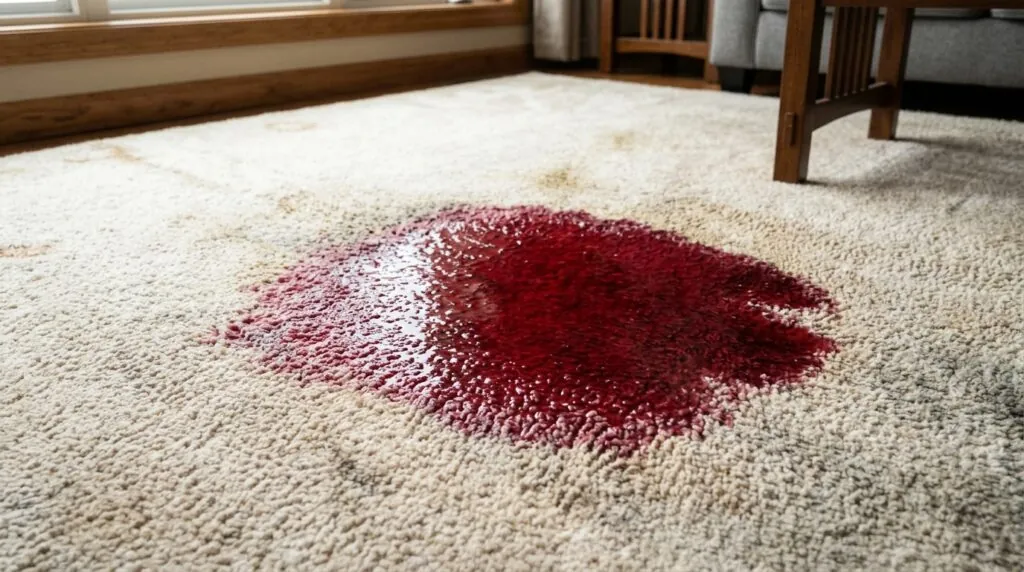
Cranberry, cherry and pomegranate juice all belong to the same difficult family: strong natural pigment, often boosted with added food colouring, in a sugary liquid that soaks straight to the base of the pile. Speed matters more here than with almost any other spill.
By Go4Cleaning Team · Updated August 26, 2026 · 5 min read
Quick answer
Blot immediately with a dry towel, then dilute with cool water and blot again, repeating with a cloth dampened in a mild detergent solution worked from the outside in. Rinse with clean water only and press dry under a weighted towel. Dried or set-in dye stains on any carpet, and anything on wool, are best left to a professional rather than repeated home treatments.
Why juice dyes carpet so fast
The pigment in cranberry juice bonds readily to nylon, which is the most common residential carpet fiber. Once the liquid dries, that bond is far harder to break, which is why a five-minute response and a next-day response produce very different results.
Added food dye is worse than the natural pigment — it is engineered to be colourfast. Assume any red or purple juice contains it.
Do this immediately
- Blot with a thick white towel, pressing straight down. Keep moving to a dry section of the towel.
- Pour a small amount of cool water on the spot and blot again — dilute and lift, repeatedly.
- Mix a teaspoon of clear dish detergent with a cup of cool water, apply to a cloth, and blot from the outside in.
- Rinse by blotting with clean water only until no colour transfers to the towel.
- Weight a dry towel over the spot for a few hours to draw remaining moisture up out of the pile.
If it has already dried
Re-wet the area with cool water and let it sit for a few minutes before blotting; you cannot lift dry pigment. Then repeat the detergent and rinse cycle patiently — three light passes beat one aggressive one.
Blot, never scrub. Scrubbing pushes material deeper into the pile and can permanently distort the fibers, which is a far harder problem than the original spot.
What we do differently
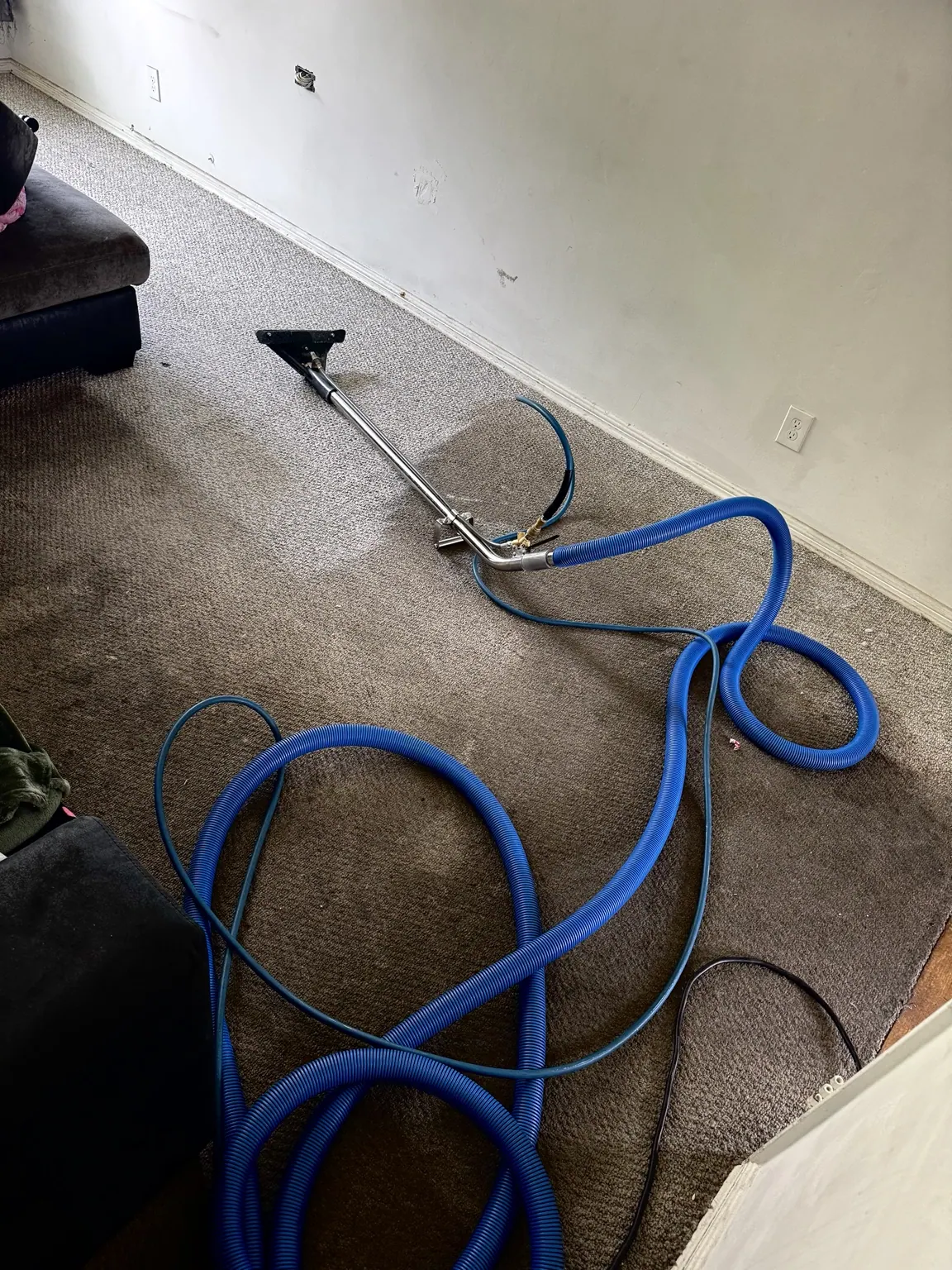
For set-in juice, a professional identifies the fiber and uses a treatment matched to it, followed by extraction and a rinse so nothing tacky is left behind. The right approach depends entirely on what the carpet is made of.
It is fiber-specific work. On wool the same chemistry would be a mistake, so we identify the fiber before anything touches the carpet.
Setting honest expectations
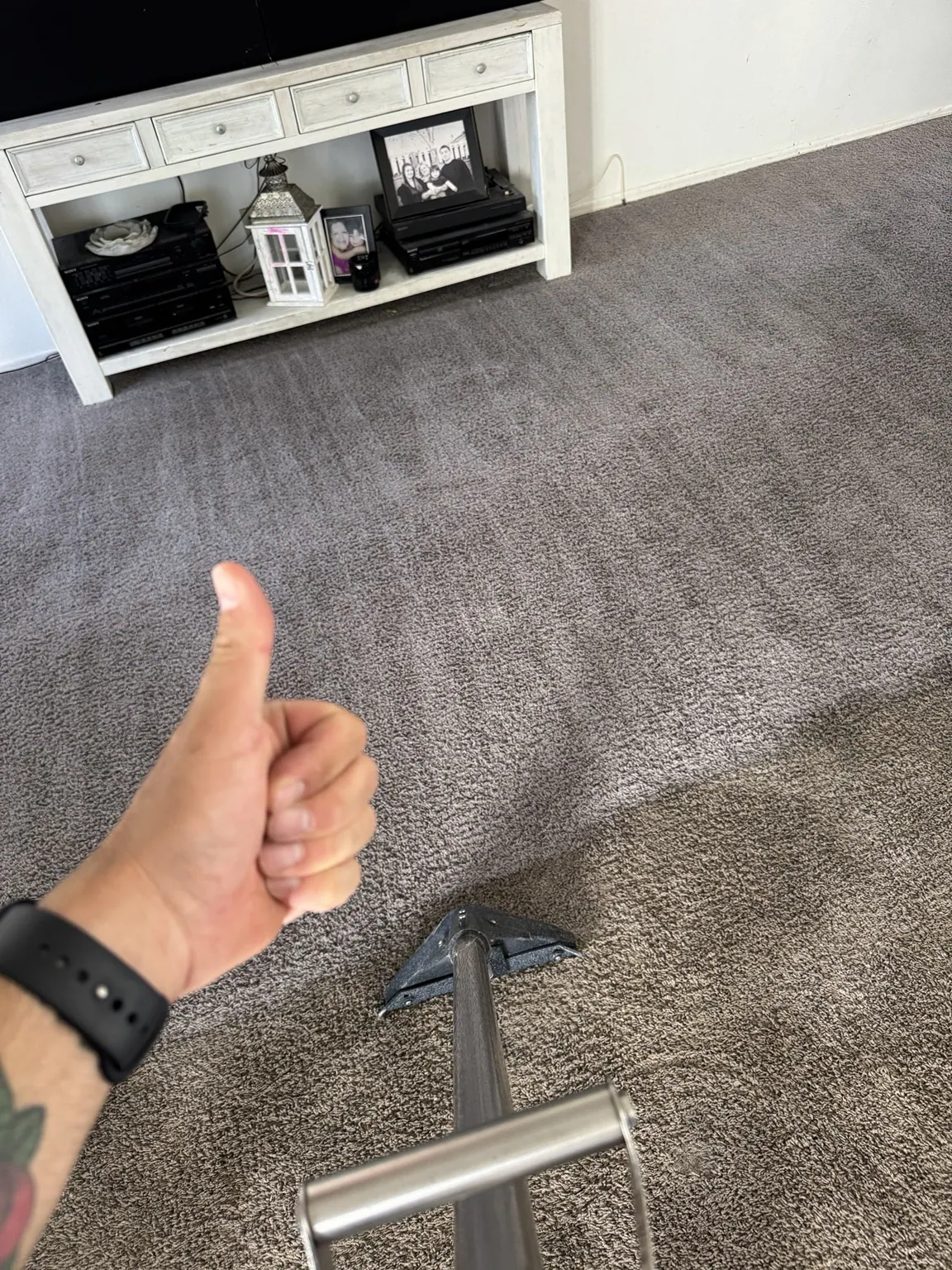
Most fresh spills come out completely. Dried food dye on a light nylon carpet sometimes leaves a faint tint, and we will tell you that before we start rather than after.
We do not promise guaranteed removal on dye stains — anybody who does is guessing.
Treating spills and stains
Cranberry sauce or juice contains natural dye compounds that bond quickly to fabric fibers. That’s what makes it harder to remove than, say, water or clear liquid stains. Red stains and berry stains in general are some of the most difficult to remove from light-colored carpet or upholstery.
The longer you wait, the worse it gets. Dried cranberry stains require more effort and stronger cleaning methods than fresh ones. Acting fast is always your best defense.
The moment a spill happens, your goal is simple: lift the liquid before it sets.
An old cranberry juice stain that has already dried is a different challenge. The dye has had time to bond with the fabric, which means you’ll need a stronger approach.
Start by blotting with cool water to rehydrate the dried stain. Let it sit for a few minutes before blotting again.
For stains on upholstery, check the care label before using any liquid cleaning method. If the label prohibits liquid products, consult a qualified fabric-care specialist.
If you need to remove cranberry stains from clothes or a tablecloth, the approach is similar. Remove fresh stains right away by blotting with cool water, then treat with a color-safe detergent or stain remover. Always check that the stain is completely gone before putting the item in the dryer, since heat will set the stain permanently.
Step 1: Remove the excess liquid
Grab a clean white cloth or paper towel and blot the stain immediately. Do not rub. Rubbing pushes the stain deeper into the fibers and makes it harder to treat later. Always blot from the outside edge inward to avoid spreading.
Use a knife or spoon to gently lift any cranberry sauce or cranberry juice that’s sitting on top of the carpet before blotting.
Step 2: Apply your cleaning solution
This simple combination works well on juice stains on carpet without damaging the fibers.
Apply the solution to a clean cloth, not directly to the carpet, and gently blot the stained area. Avoid rubbing or scrubbing. Continue blotting until the stain begins to lift.
Step 3: Rinse the area
Once the stain is removed or significantly lighter, rinse by blotting with cool water using a fresh, clean white cloth or paper towel. This removes any soap residue that could attract dirt later. Then blot the area dry to remove excess moisture. Do not over-wet the carpet. Too much moisture can cause mold or mildew under the padding.
When to call a professional
Some stains on carpet or upholstery just won’t budge, no matter what you try. If the stain persists after multiple attempts, or if you’re dealing with a large cranberry juice spill across a wide area, professional cleaning is the smarter call.
Stains from carpet or upholstery that have set deeply into the fibers often need commercial-grade equipment and products — like those used in professional carpet cleaning — to fully lift them without causing damage.
Related service
Carpet cleaningFamily-owned, based in Beverly Hills, serving Los Angeles County and approved Orange County communities.
Recent Go4Cleaning work
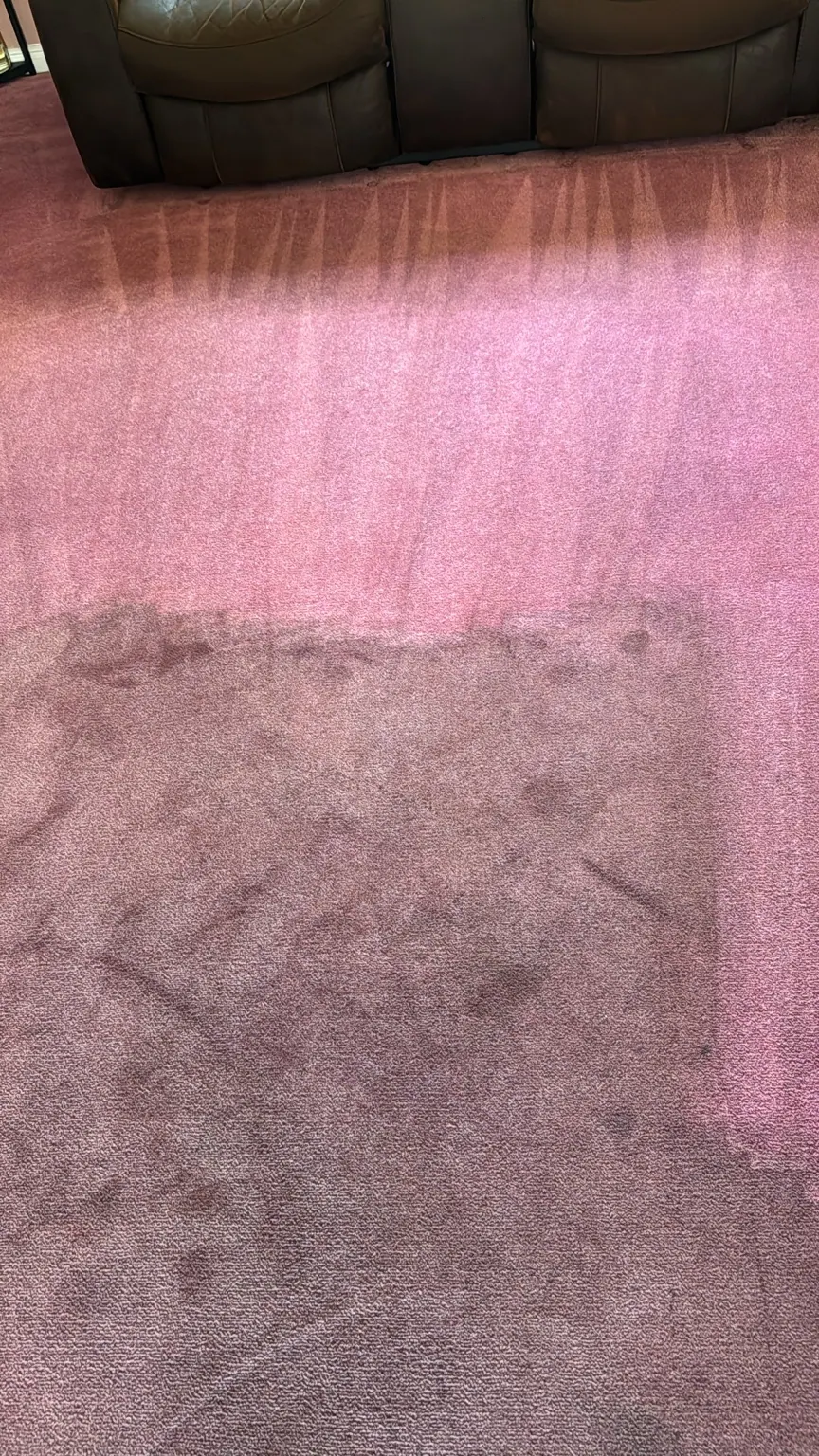
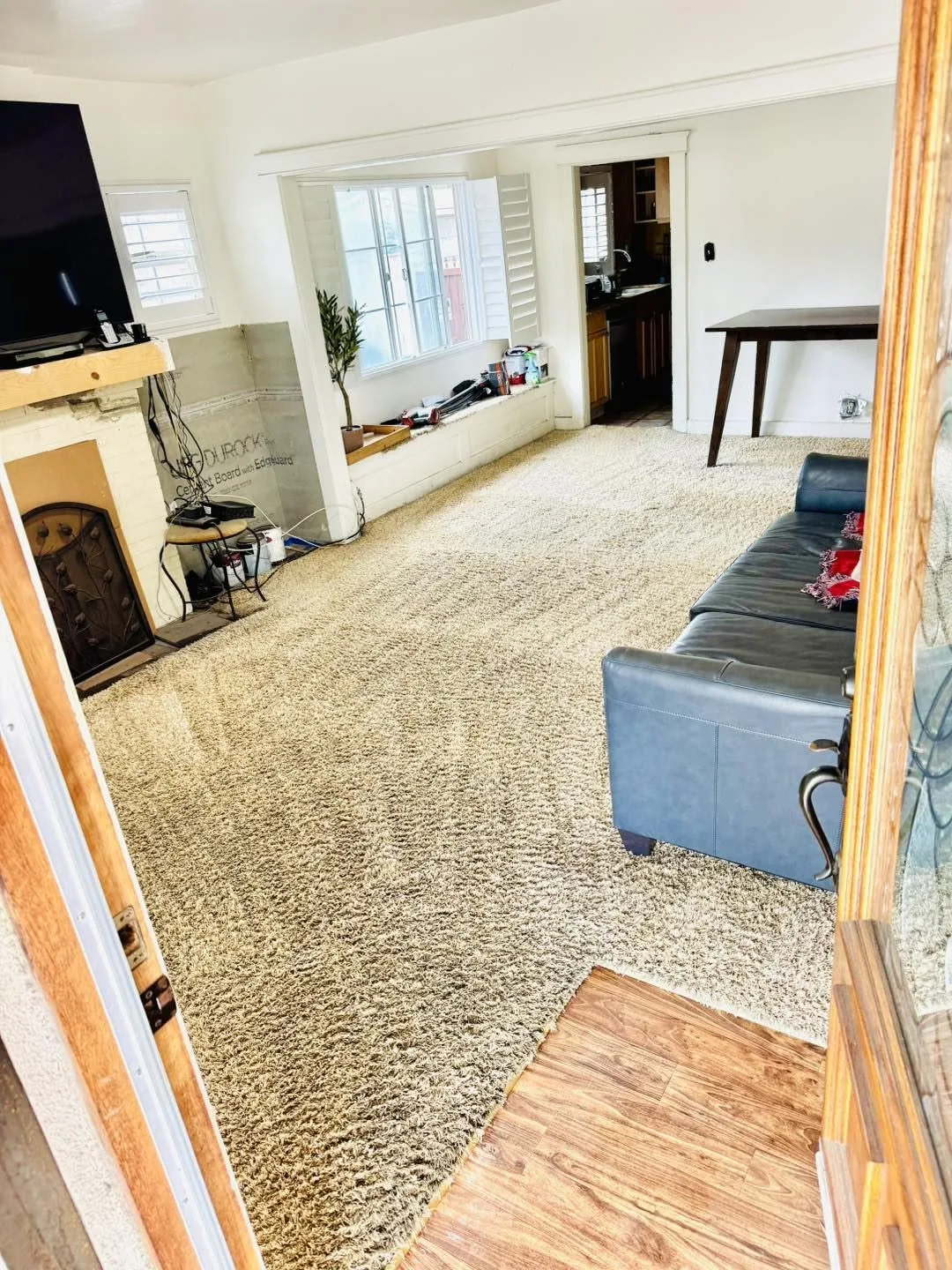
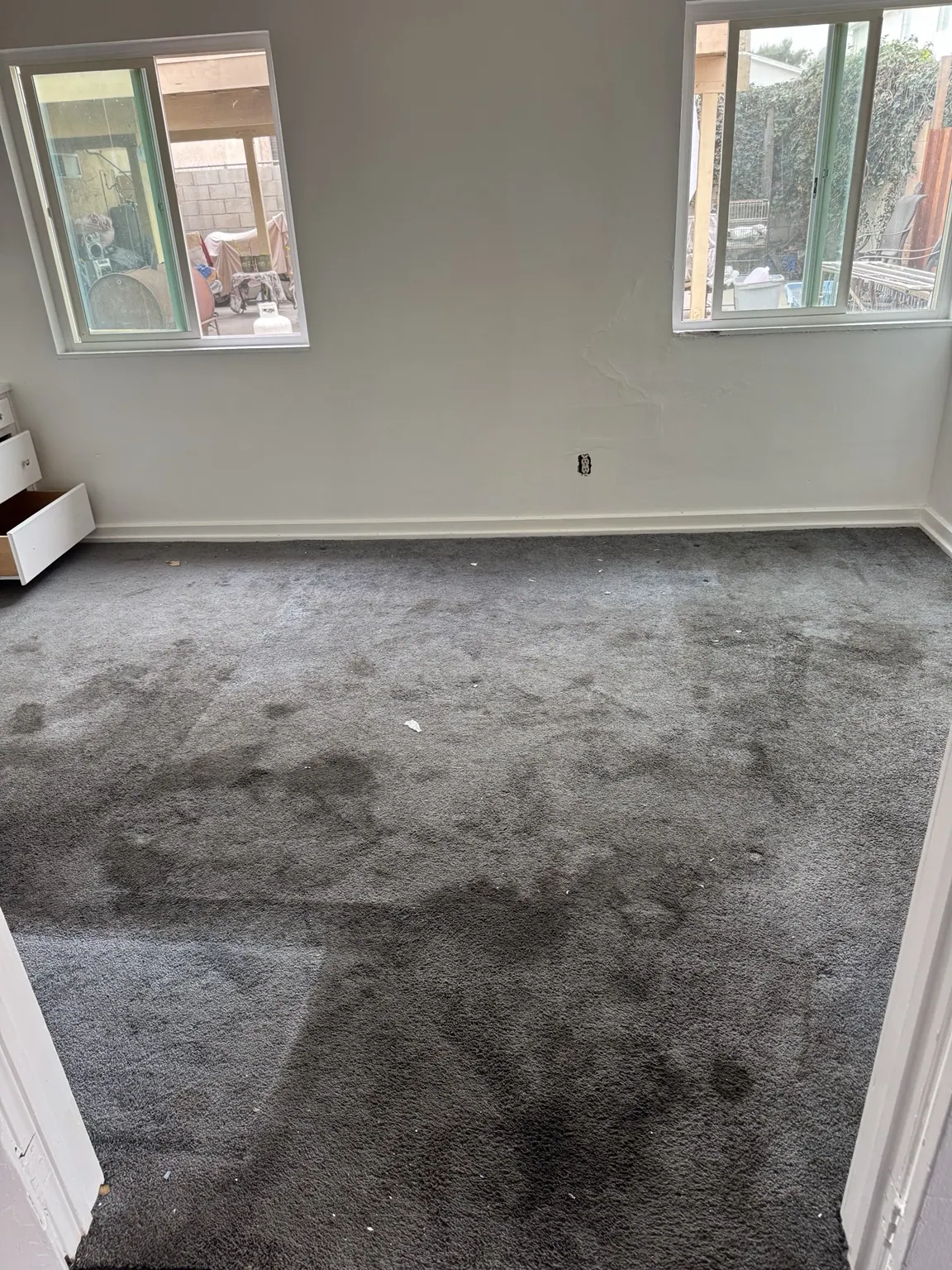
Photos from Go4Cleaning jobs, taken by our own crew.
Common questions
Does club soda work on juice stains?
It is mostly the blotting and the dilution doing the work. Cool water and a good towel achieve the same thing.
Will vinegar remove cranberry juice?
We do not recommend it as a general home remedy — acids can set certain dyes and are not safe on every fiber, including wool. Stick with cool water and a mild detergent solution labeled for carpet, and ask a professional if colour remains.
How soon should I call a professional?
If colour still transfers to your towel after several rinse cycles, stop and call. Continuing to work the spot risks distorting the pile.
Want this handled properly?
Call or text (866) 631-2244 for a straightforward quote, or send photos with your request.
Cleaning appointments 8:00 a.m. – 8:00 p.m. daily. Calls, messages and scheduling 24/7.