
Carpet stains
How to Get Playdough Out of Carpet, Dried or Not
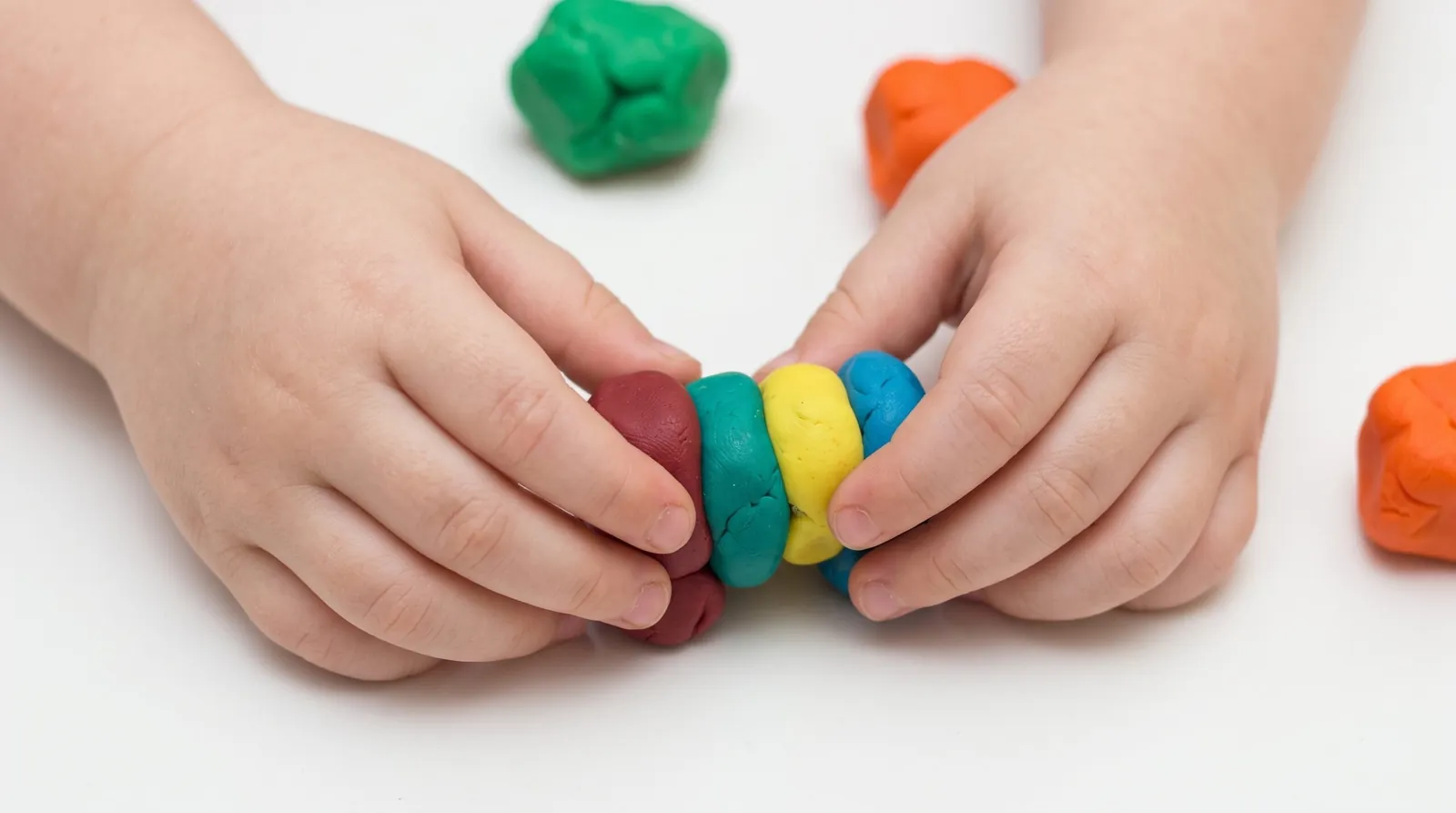
Play dough is two problems in one: a soft solid that packs into the pile, and a bright dye that can move into the fiber the moment it gets wet. Handled in the right order it usually comes out cleanly. Handled with a wet cloth first, it becomes a coloured smear that is much harder to correct.
By Go4Cleaning Team · Updated August 26, 2026 · 6 min read
Quick answer
Let dried play dough harden fully, then crumble and vacuum out as much as possible before any liquid touches it. Only then blot the faint dye residue with a mild detergent solution on a white cloth, working from the outer edge inward, and rinse by blotting with plain water. If a coloured ring remains, stop and have it assessed professionally rather than repeating home attempts.
Let it dry before you touch it
This is the one stain where waiting helps. Wet dough is soft enough to press further into the pile with any pressure at all. Once it has dried and hardened, it becomes brittle and lifts away in pieces instead of smearing.
If you need to speed that up, an ice cube in a small bag held on the lump for a few minutes firms it up without adding moisture to the carpet backing.
Break it up and vacuum it out
- Crumble the dried lump between your fingers or with the back of a spoon, working from the outside of the patch inward.
- Loosen what is stuck in the pile with a stiff-bristled brush, brushing in short strokes rather than long sweeps.
- Vacuum slowly with the crevice tool so the loosened crumbs are pulled up rather than pushed around.
- Repeat the brush-and-vacuum cycle until nothing more comes up dry. Most of the material should be gone before any liquid is used.
Only now deal with the colour
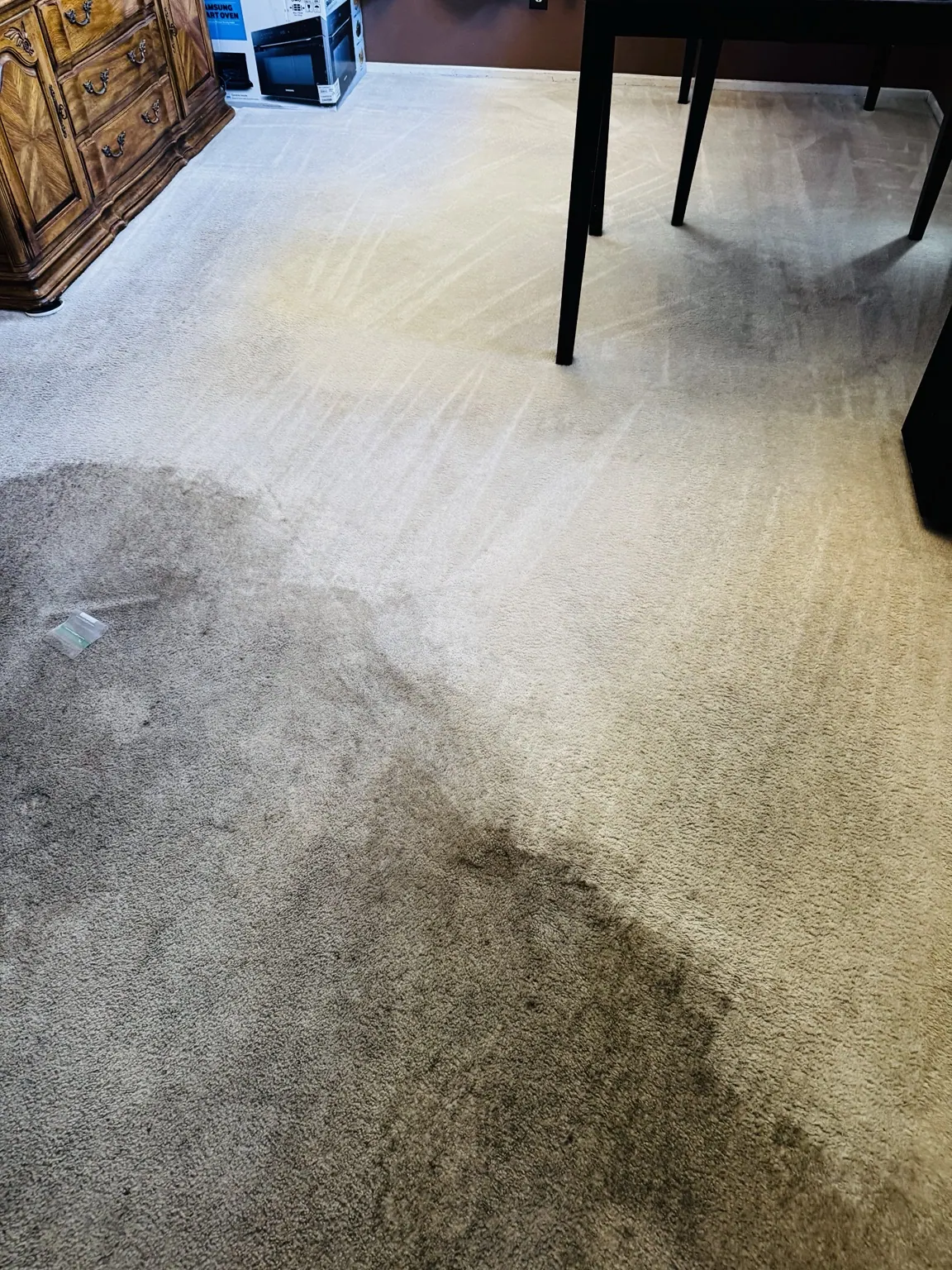
What is usually left is a faint tint from the dye rather than dough. Mix a few drops of clear dish detergent into warm water, dampen a white cloth with it — never pour onto the carpet — and blot from the outer edge toward the centre.
Blot, never scrub. Scrubbing drives material deeper into the pile and can permanently distort the fibers, which is a harder problem to fix than the original spot.
Rinse by blotting with a second cloth dampened with plain water, then press dry with towels. Over-wetting pushes the dye toward the backing, which is where it becomes genuinely difficult to reach.
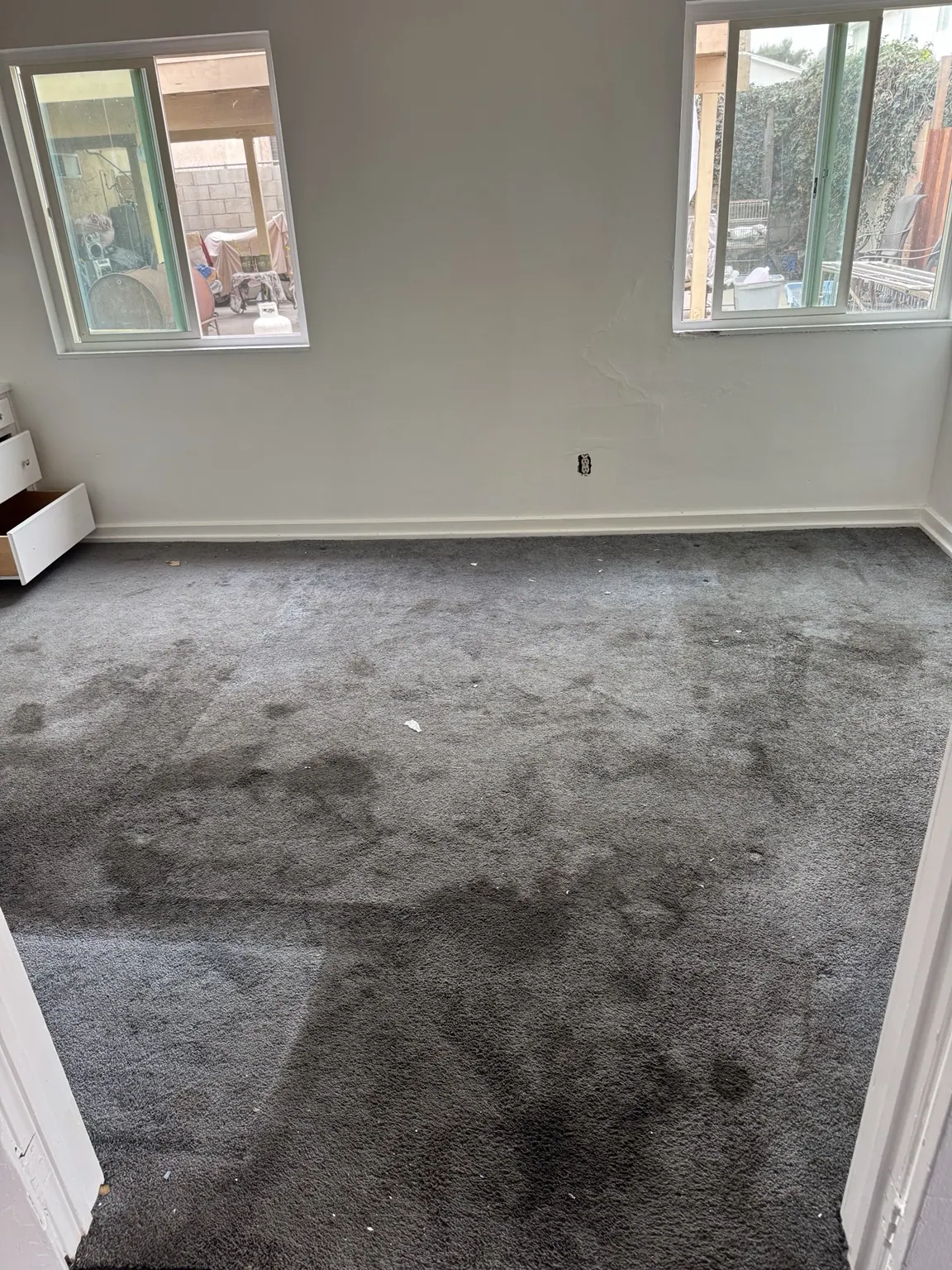
Where it can go permanently wrong
- Hot water on the first pass — heat can set some dyes into synthetic fiber.
- Coloured or printed cloths and paper towels, which transfer their own dye into damp carpet.
- Any bleach-based or 'oxy' product used hopefully on a coloured carpet. That is colour loss, not cleaning, and it cannot be undone.
- Scrubbing a wool or delicate loop carpet, which fuzzes and distorts far more easily than a cut-pile synthetic.
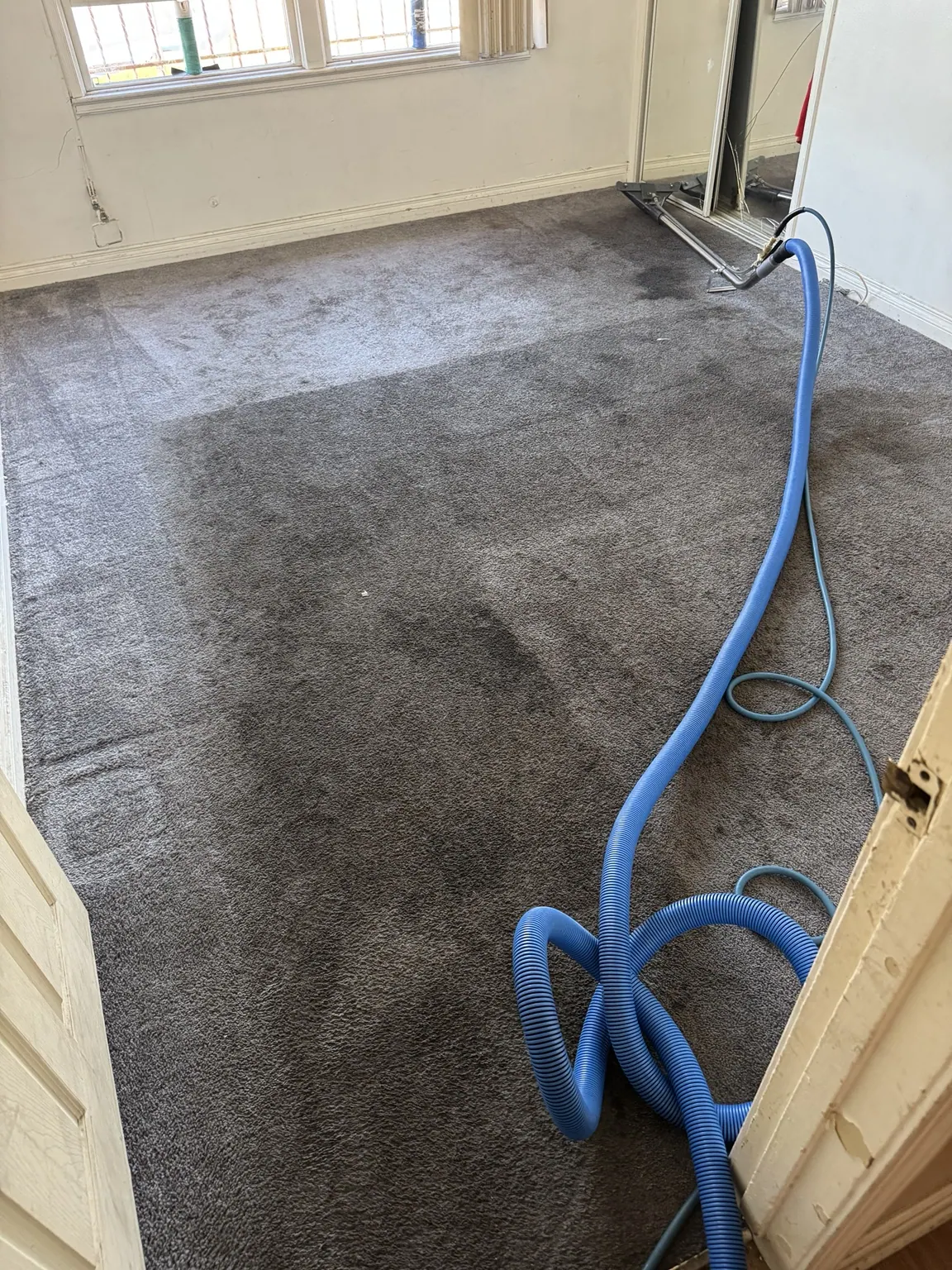
When to hand it to us
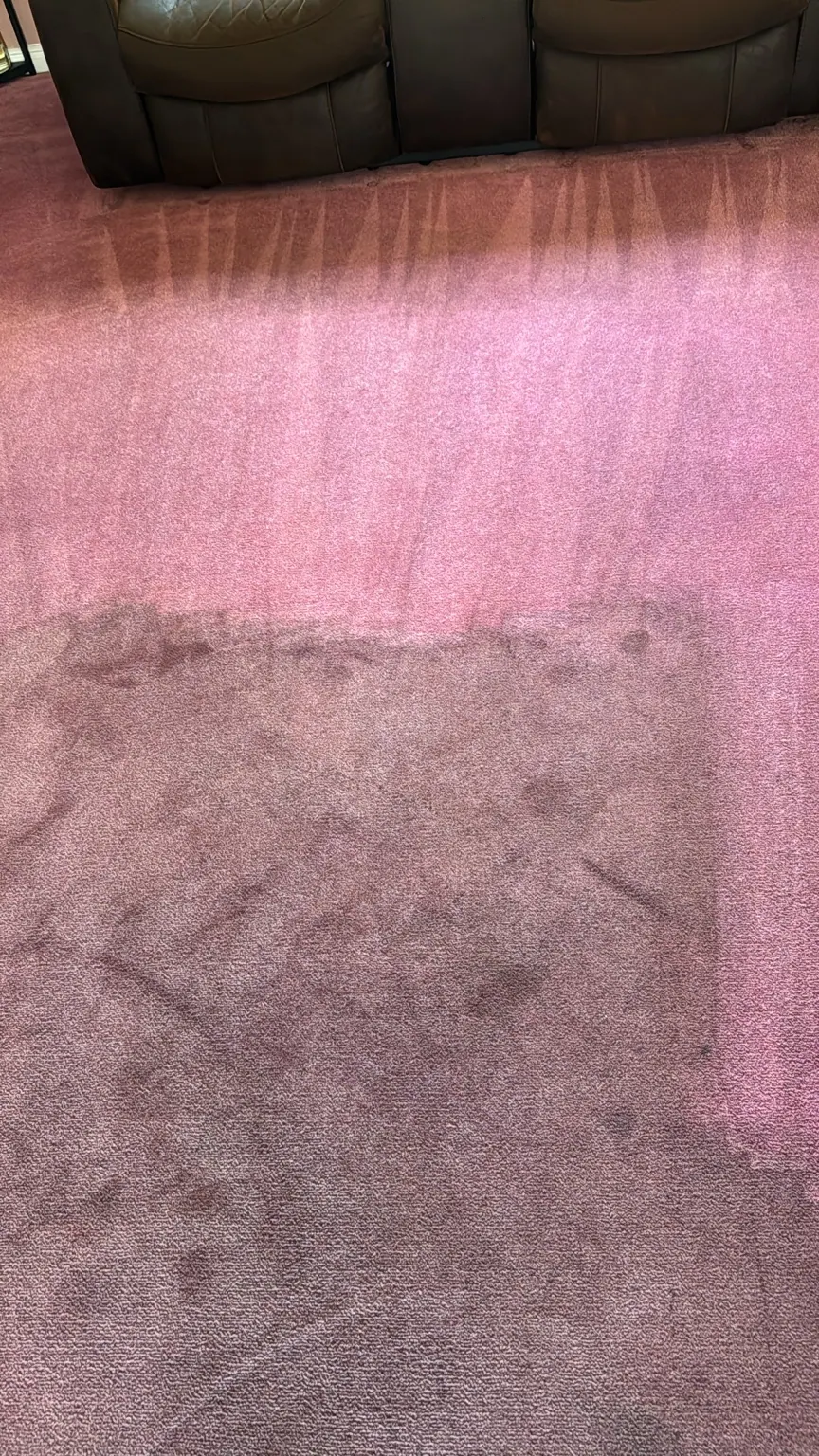
If a bright red, blue or purple tint is still visible after the dough is gone, stop treating it. Repeated home attempts usually spread the ring wider. A professional pass uses a dye-specific approach and controlled extraction, which removes material rather than moving it around.
The same applies to wool and to any carpet where you are not sure of the fiber. We identify the fiber first and tell you honestly whether the colour is likely to come back out.
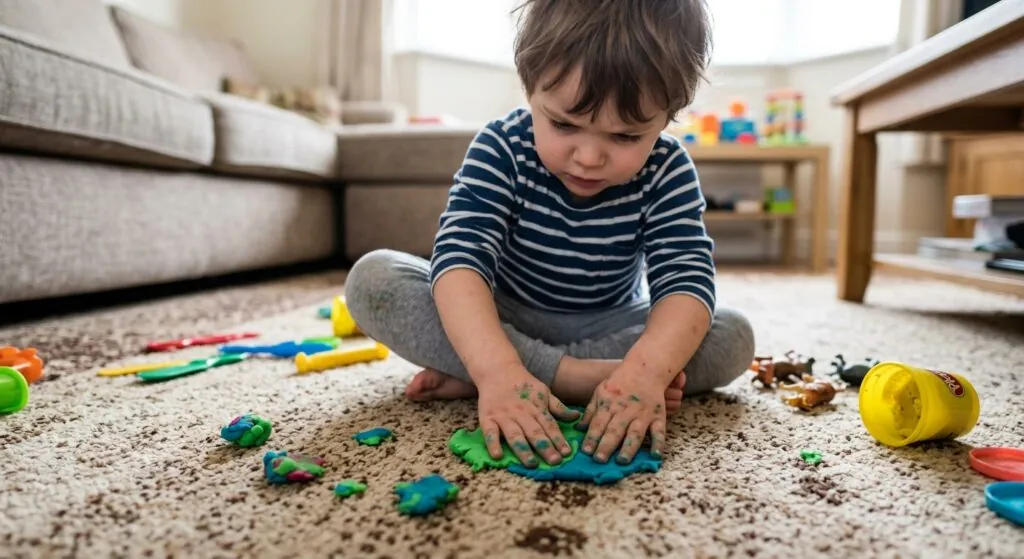
Drying and residue
This is one of the most common questions, and the answer might surprise you. Let it dry first.
Trying to wipe up wet Play-Doh often smears it further into the textile fibers, making the stain worse. Once it dries, it becomes brittle and much easier to break apart and lift out. So if the dough is still soft, step away and give it a few hours.
Then press a dry towel firmly over the area to absorb moisture.
Because most playdough recipes are salt-heavy, you may notice a faint white, powdery film left behind even after the color has lifted. This isn’t a new stain. It’s mineral residue from the salt drying on the carpet fibers. A quick vacuum pass or a light wipe with a barely damp cloth usually clears it up. If it lingers, it’s often a sign the surrounding area could use a deeper clean rather than another round of spot treatment.
How to Get Dried Playdough Out of Carpet
Once it’s fully dry, here’s how to tackle it:
Step 1: Break it up.
Use a butter knife or dull knife to gently scrape the dried dough off the surface. Work from the outer edges inward so you don’t spread it. Be firm but careful — you don’t want to damage the carpet fibers.
Vacuuming safely
After loosening the chunks, use a vacuum cleaner to pull up all the crumbled pieces. A strong suction setting works best here. Run it over the area a few times in different directions.
Vacuuming alone usually isn’t enough. The scraping step breaks the dried dough into pieces small enough for the vacuum to actually lift, so skipping it tends to leave chunks pressed into the pile.
Treating spills and stains
Even after vacuuming, a faint stain or color residue often remains — especially with brightly colored doughs. Dampen a clean towel or paper towel with the solution and blot the stain gently. Never scrub, since scrubbing pushes the pigment deeper into the fiber.
Some Play-Doh colors — especially reds, purples, and blues — can act almost like paint and leave a stubborn stain behind even after cleaning. Blot, don’t scrub.
For upholstery or delicate textiles, use the same method but test on a hidden spot first. The fibers in couches and chairs can react differently than carpet.
Always use a mat or tray under Play-Doh play areas
Keep a paper towel nearby to catch loose bits before they hit the floor
Act quickly when flour-based doughs are involved, since they can harden fast in warm Los Angeles homes
Rarely, if it’s treated soon after you notice it.
When Home Remedies Fall Short
If the stain is still visible after all of this, it may be time to call in professional carpet cleaning help. Deeply embedded pigment — especially from repeated Play-Doh sessions — can work its way past the surface and into the backing of the carpet where standard stain removal methods can’t reach.
How it compares with other fabrics
Most store-bought Play-Doh and homemade dough recipes are water- and salt-based, which is why the steps above work so well. But if your child was using an oil- or wax-based modeling compound instead, like certain sculpting clays or air-dry clays, plain soap and water won’t cut it.
These formulas behave more like candle wax or grease stains once they’re ground into carpet fibers. Lifting them cleanly usually calls for the same freeze-and-scrape approach used on dried candle wax, followed by a solvent-based treatment similar to what works on grease stains. Check the product label if you’re not sure which type you’re dealing with before choosing a cleaning method.
When to call a professional
Yes. Reputable services use solutions that are safe for kids and pets once the carpet has fully dried, and drying times are something a technician will walk you through before starting.
Related service
Carpet cleaningFamily-owned, based in Beverly Hills, serving Los Angeles County and approved Orange County communities.
Recent Go4Cleaning work
Photos from Go4Cleaning jobs, taken by our own crew.
Common questions
Should I use hot water on dried play dough?
Not at first. Remove as much dry material as you can, then use a lightly dampened cloth with cool or warm water. Heat can set the dye.
Can you guarantee the stain will come out completely?
No, and we will not pretend otherwise. Most fresh spots respond well. Anything that has bleached, dyed or physically damaged the fiber may leave a permanent mark, and we tell you what we realistically expect before we start.
Which areas do you serve?
We are a family-owned company based in Beverly Hills, serving Los Angeles County including Malibu, Topanga and the South Bay, plus approved Orange County communities.
Want this handled properly?
Call or text (866) 631-2244 for a straightforward quote, or send photos with your request.
Cleaning appointments 8:00 a.m. – 8:00 p.m. daily. Calls, messages and scheduling 24/7.