Air quality & ducts
Deep Cleaning a Santa Monica Home After Smoke or Poor Air Quality
After a smoke event or a long stretch of bad air, the smell in a house rarely comes from one place. Fine particulate settles on every soft surface at once — carpet, rugs, sofas, mattresses, curtains — and then gets stirred back into the air every time the HVAC runs. Cleaning in the wrong order means doing the same room twice.
By Go4Cleaning Team · Updated August 25, 2026 · 7 min read
Quick answer
Only return home once officials confirm it is safe. Avoid stirring or dry-sweeping ash. Clean hard surfaces and vents first, vacuum soft furnishings with a HEPA vacuum where available, then have carpet and upholstery professionally cleaned last. Structural ash, hazardous debris, or large-scale contamination need qualified restoration professionals, not a standard cleaning visit.
Start high and end with the floor
Gravity decides the order. Anything you disturb up high lands on what you already cleaned, so work ceilings, vents, shelves and hard surfaces first, then soft furnishings, then carpet and rugs last.
- Do not return home or begin cleaning until local officials confirm it is safe to do so.
- Avoid dry-sweeping or stirring settled ash — this lifts fine particulate back into the air. Damp-wipe hard surfaces instead.
- Replace or wash HVAC filters before you clean anything else, so the system stops recirculating what you are trying to remove.
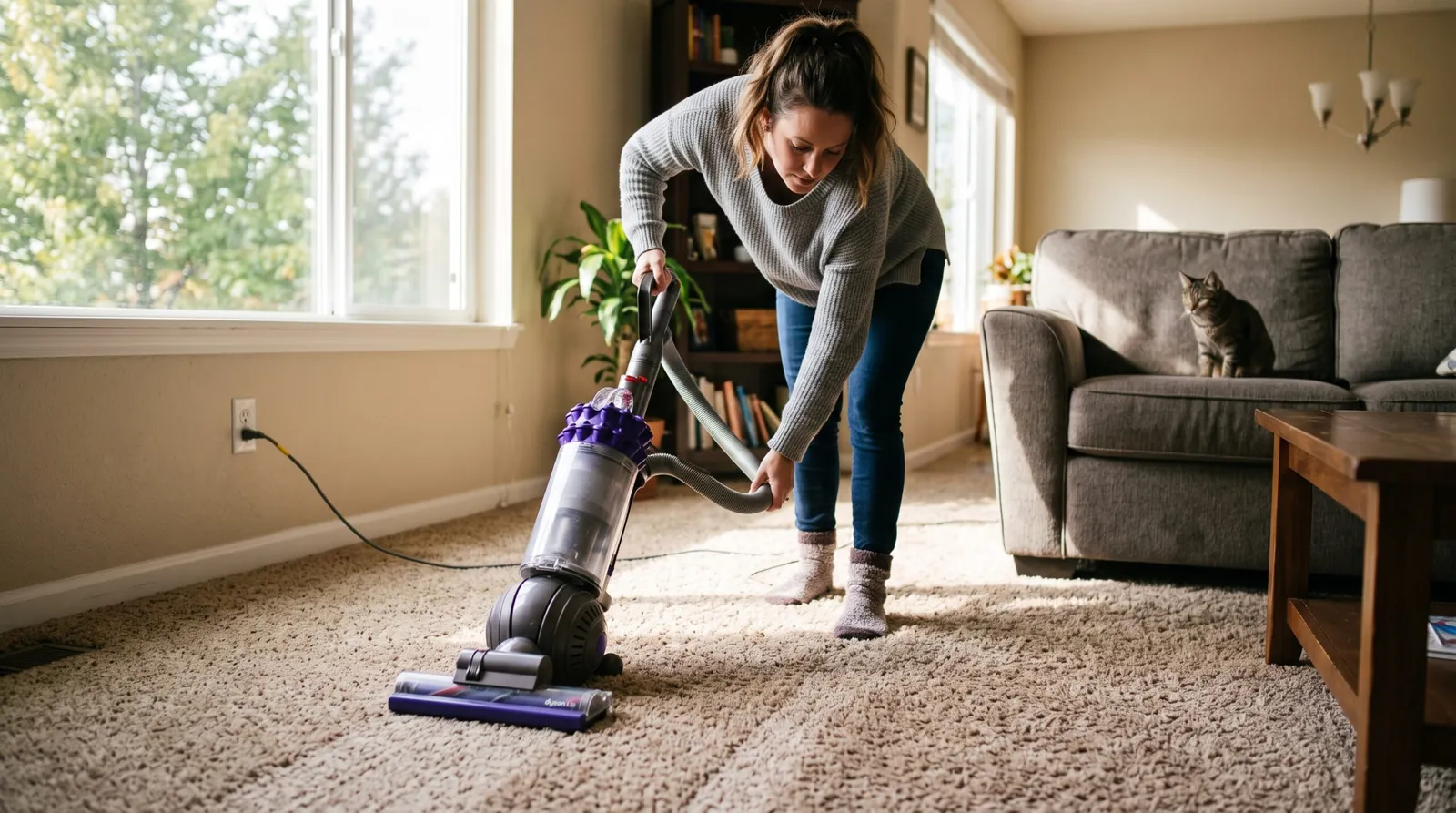
- Vacuum soft furnishings slowly with a HEPA-filtered vacuum where one is available; a standard household vacuum without HEPA filtration is not a reliable substitute for fine ash and smoke particulate.
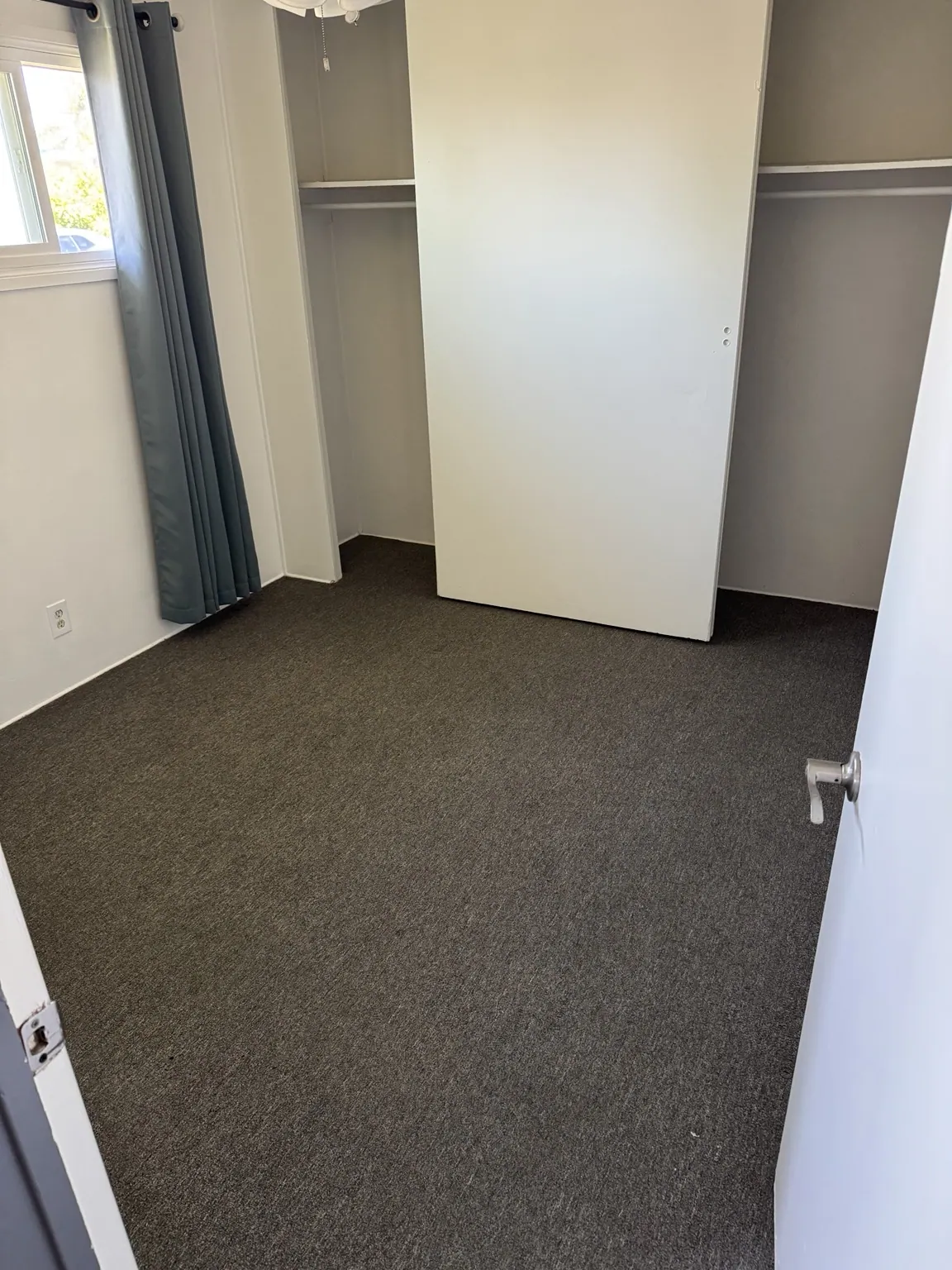
- Save carpet and area rugs for last.
Why vacuuming alone stops short
Smoke residue is oily as well as fine. It clings to fibers in a way ordinary household dust does not, which is why a room can vacuum clean and still smell when the afternoon warms up.
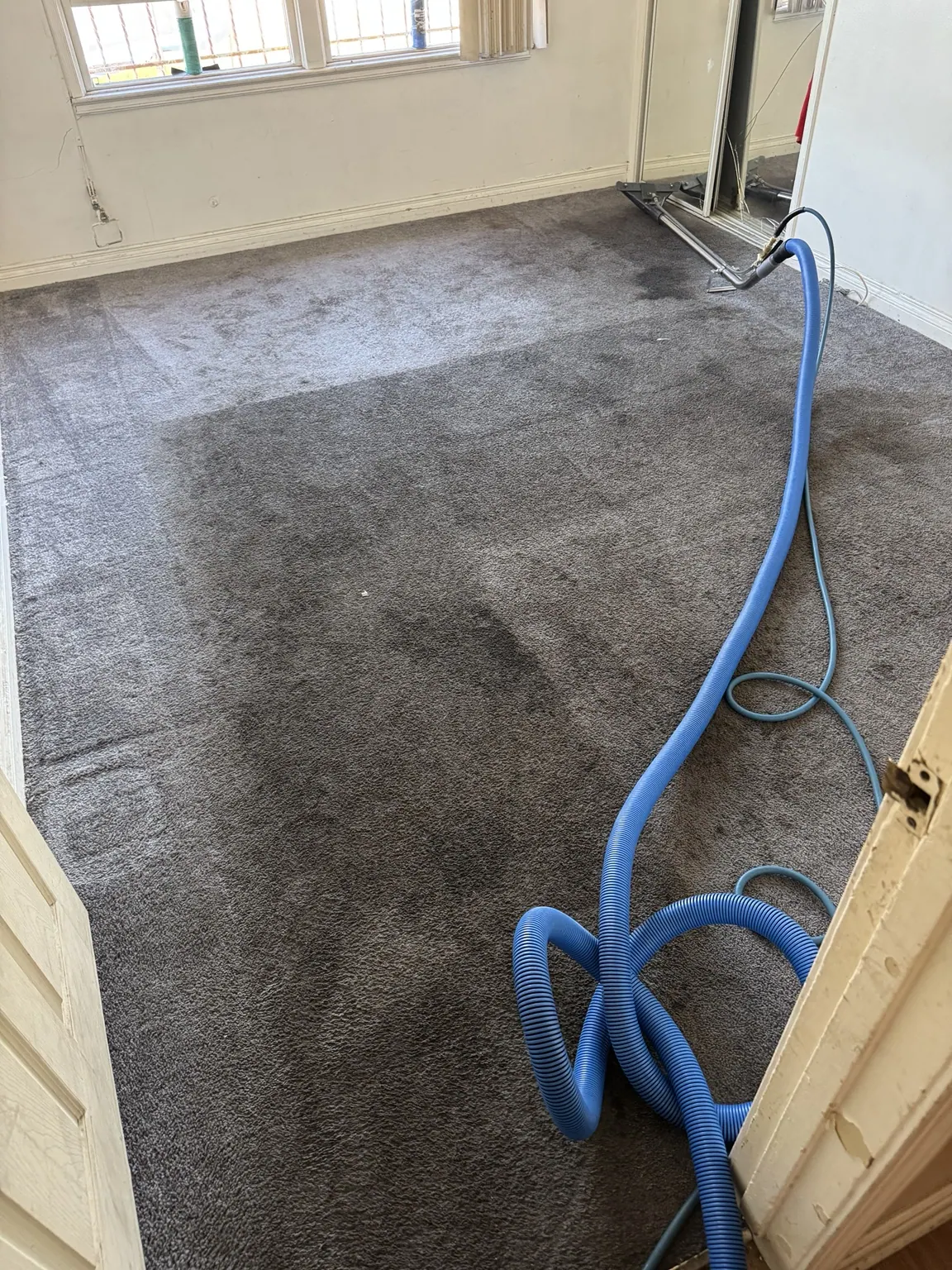
Hot water extraction with a pre-spray suited to the fiber lifts what vacuuming leaves behind, and the rinse carries the residue out of the house instead of relocating it.
Upholstery and mattresses hold odor longest
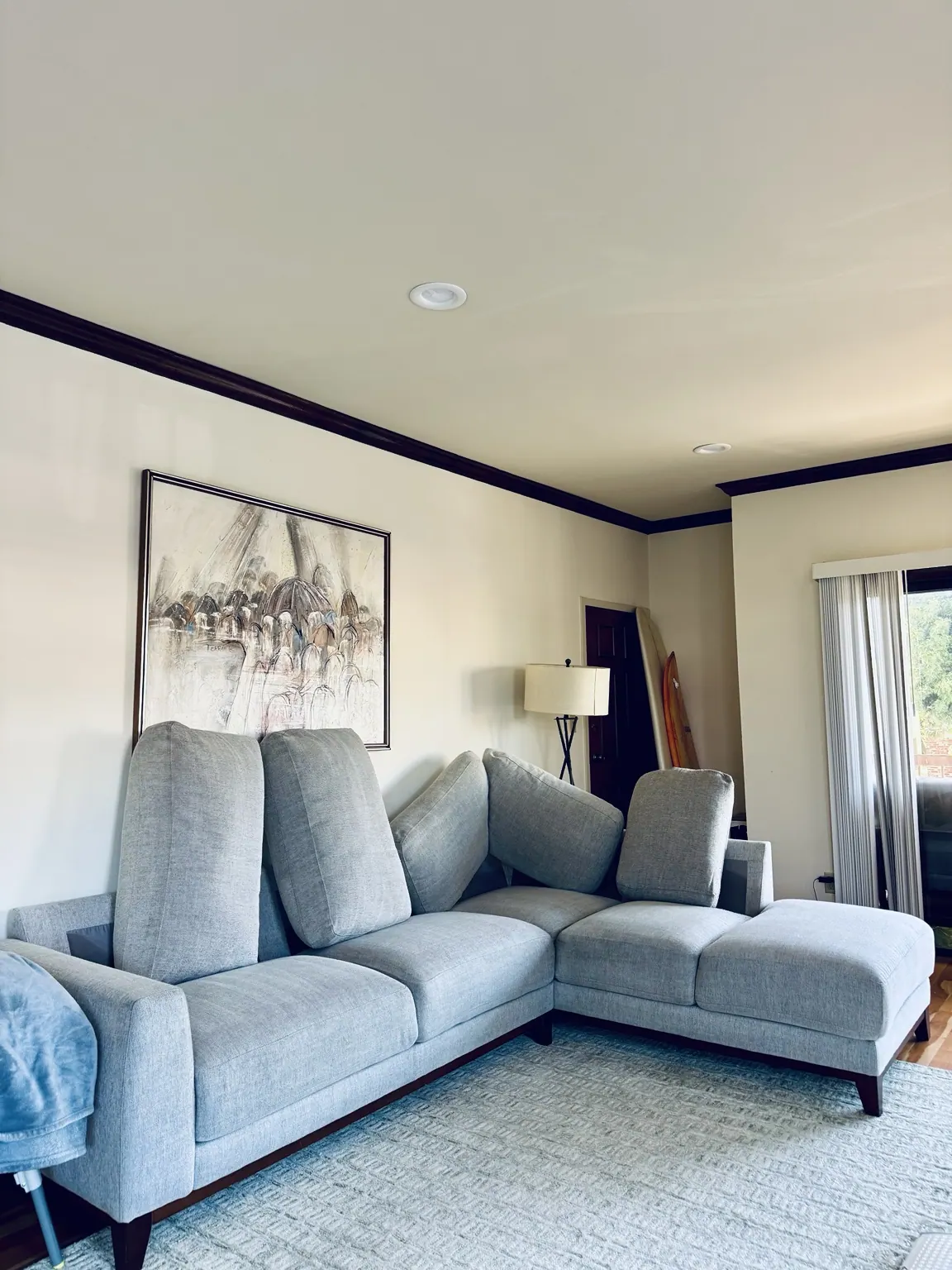
Cushions and mattresses are deep, absorbent and rarely cleaned, so they hold odor after the floors are done. Test any product on a hidden seam first, and check the manufacturer's cleaning code before wetting a fabric.
Delicate covers, silk blends and some performance fabrics need a low-moisture approach instead of extraction.
Where duct cleaning genuinely helps
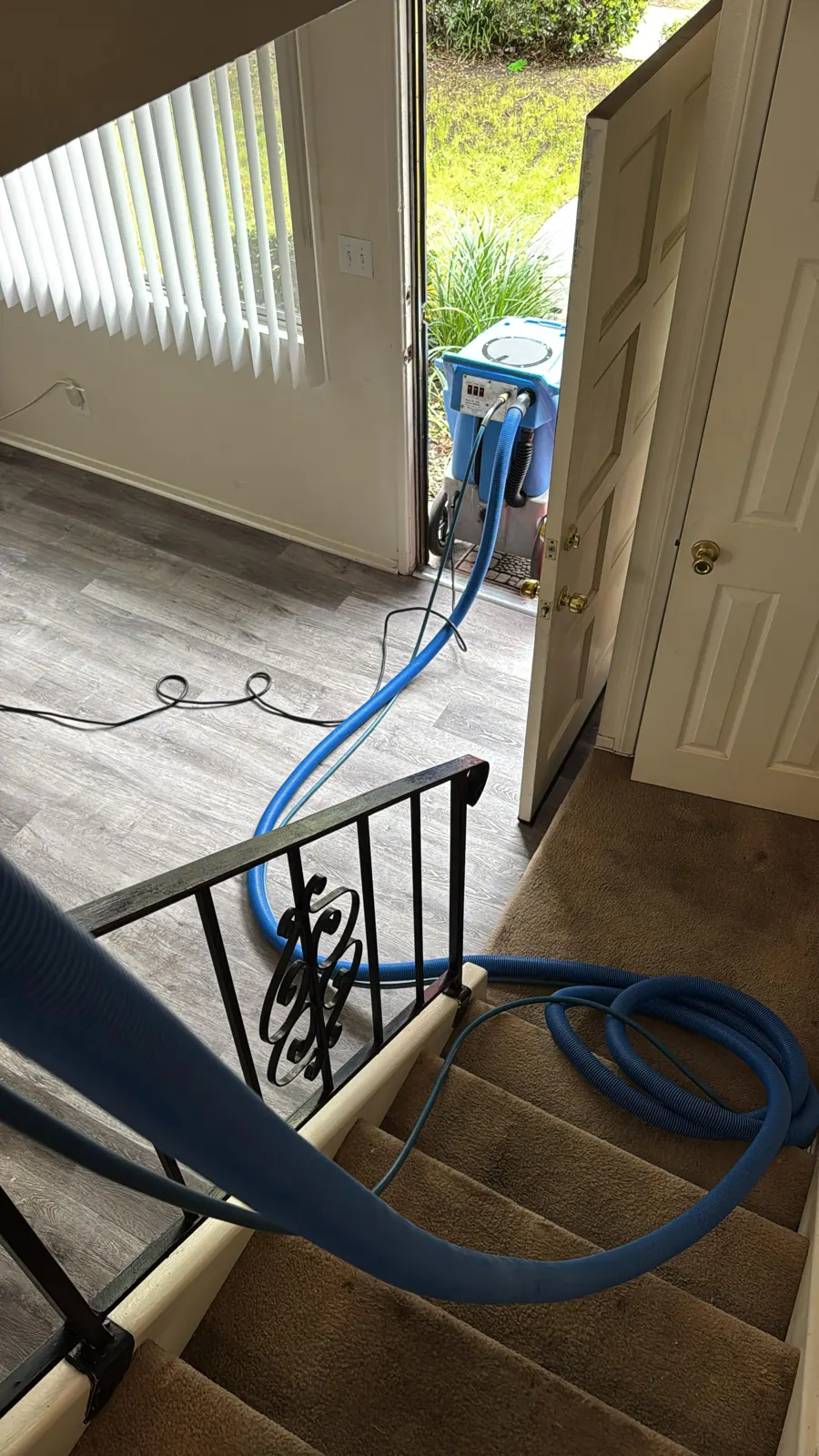
If smoke was drawn through the system while it ran, cleaning the duct interior and registers can help stop the house re-dosing itself every cycle. If the system stayed off through the event, filters and registers may be sufficient.
Structural ash, damaged insulation, charred materials or contamination from a burned structure are outside the scope of a duct or soft-surface cleaning visit and need assessment by a qualified fire-restoration or hazardous-materials professional.
What we will not claim
Cleaning carpet and upholstery is not fire or smoke remediation, and it does not make a building medically safe. No honest company can promise that every trace of smoke odor is gone from every material. Some heavily affected padding, drapery or insulation is a replacement job, not a cleaning job, and any question about structural safety or air quality should go to qualified inspectors and remediation professionals. If we find damage beyond cleaning on site, we will say so.
Background from the original guide
Smoke contains fine particulate matter known as PM2.5, along with gases and chemical residues. These particles are small enough to travel through open windows, doors, vents, and even tiny gaps in building structures.
Once inside, smoke particles cling to surfaces and absorb into soft materials such as carpets, upholstery, curtains, and mattresses. Santa Monica’s coastal air can also increase moisture levels indoors, making it easier for smoke residue to stick and harder to remove if not addressed quickly.
Step 1: Improve Ventilation Safely
Before cleaning, improve indoor air circulation, but only if outdoor air quality has returned to safe levels. Check local air quality reports to confirm conditions.
Open windows and doors to allow fresh air inside
Use box fans or ceiling fans to push stale air out
Run air purifiers with HEPA filters to capture fine particles
Do not ventilate while outdoor air quality is still poor, as this can worsen indoor contamination.
Step 2: Replace or Clean Air Filters
One of the most important steps after smoke exposure is addressing your HVAC system. Smoke particles are easily pulled into air conditioning and heating systems and redistributed throughout the home.
Replace HVAC filters with high-quality HEPA or high-MERV-rated filters
Clean or replace filters in portable air purifiers
Consider professional HVAC inspection and duct cleaning if smoke exposure was prolonged or severe
Dirty filters can continue releasing trapped particles back into the air.
Step 3: Clean Hard Surfaces Thoroughly
Smoke residue leaves behind a thin, often invisible film on hard surfaces. This film can carry odors and irritants.
Avoid harsh chemicals that may react with smoke residue or release strong fumes. Microfiber cloths work well because they trap fine particles rather than spreading them around.
Rinse surfaces with clean water and dry thoroughly to prevent residue buildup.
Step 4: Deep Clean Carpets and Rugs
Carpets and area rugs are some of the biggest collectors of smoke particles. Vacuuming alone does not remove embedded residue.
Vacuuming slowly using a vacuum with a HEPA filter
Follow up with professional-grade deep cleaning if possible. Hot water extraction is often the most effective method for removing smoke residue and odors from carpet fibers. Avoid DIY machines that leave carpets overly wet, as moisture can trap odors and cause secondary issues.
Step 5: Address Upholstery and Soft Furnishings
Smoke penetrates sofas, chairs, mattresses, pillows, and curtains easily. These items often hold onto odors long after surfaces appear clean.
Washing removable covers according to the manufacturer’s instructions
Steam cleaning where appropriate and safe for the fabric
For heavily affected furniture, professional upholstery cleaning in Santa Monica from Go4Cleaning can help remove smoke particles from internal padding and fabric layers that vacuuming cannot reach.
Step 6: Launder All Washable Fabrics
Clothing, bedding, towels, and curtains can absorb smoke quickly, even when stored in closets or drawers.
Avoid masking smoke odors with strong fragrances. Odors that return after washing usually indicate that residue remains embedded in the fabric.
Step 7: Clean Walls, Paint, and Painted Surfaces
Painted walls can absorb smoke residue, especially flat or matte finishes. Cleaning walls may be time-consuming, but it makes a noticeable difference in air quality and odor.
Use a soft sponge or microfiber cloth and a gentle cleaner. Work from top to bottom to avoid streaks. For persistent smoke odors that do not improve, repainting with a stain-blocking primer may be necessary.
Step 9: Neutralize Odors the Right Way
Smoke odors are not just smells. They are airborne particles. Sprays and candles only cover them temporarily.
HEPA air purifiers running continuously for several days
Activated charcoal or baking soda placed in affected rooms
Avoid ozone generators for home use, as ozone can be harmful to health when misused.
When to call a professional
In some situations, professional smoke damage cleaning is strongly recommended. This includes:
Professionals use specialized equipment such as commercial air scrubbers, deep extraction systems, and safe deodorization techniques that are more effective than household tools. You can contact Go4Cleaning directly through their contact page to learn about customized deep cleaning options.
Related service
Air duct cleaningFamily-owned, based in Beverly Hills, serving Los Angeles County and approved Orange County communities.
Recent Go4Cleaning work
Photos from Go4Cleaning jobs, taken by our own crew.
Common questions
How soon after a smoke event should I clean?
Only once local officials have confirmed it is safe to return. Once you are back in the home, residue is easier to remove before it has weeks to bond to fibers, but do not rush the return itself.
Do I need to replace my carpet?
Usually not from a single smoke event with light residue. Carpet that was saturated by firefighting water, exposed to structural ash, or that still smells strongly after a full extraction and drying cycle should be assessed in person before deciding.
Is a regular household vacuum enough for ash?
Not reliably. Fine ash particulate is easily lifted back into the air by vacuums without HEPA filtration. Use a HEPA vacuum where available, and avoid dry-sweeping ash at all.
References
Want this handled properly?
Call or text (866) 631-2244 for a straightforward quote, or send photos with your request.
Cleaning appointments 8:00 a.m. – 8:00 p.m. daily. Calls, messages and scheduling 24/7.