Water & moisture
Flooded Carpet: What to Do in the First 24 Hours
Wet carpet is a clock, not a stain. The first day decides whether you end up with a cleaned floor or a torn-out one, and most of what matters in that window is unglamorous: stopping the water, getting it out of the pad, and moving enough air for long enough.
By Go4Cleaning Team · Updated August 30, 2026 · 6 min read
Quick answer
Stop the water source and deal with electrical safety first, then extract as much water as possible and start drying immediately — carpet, pad and subfloor. Speed matters more than technique. If the water was not clean, if it sat for more than about a day, or if the pad and subfloor stay wet, treat it as a restoration job rather than a cleaning job.
Start with safety, not the carpet
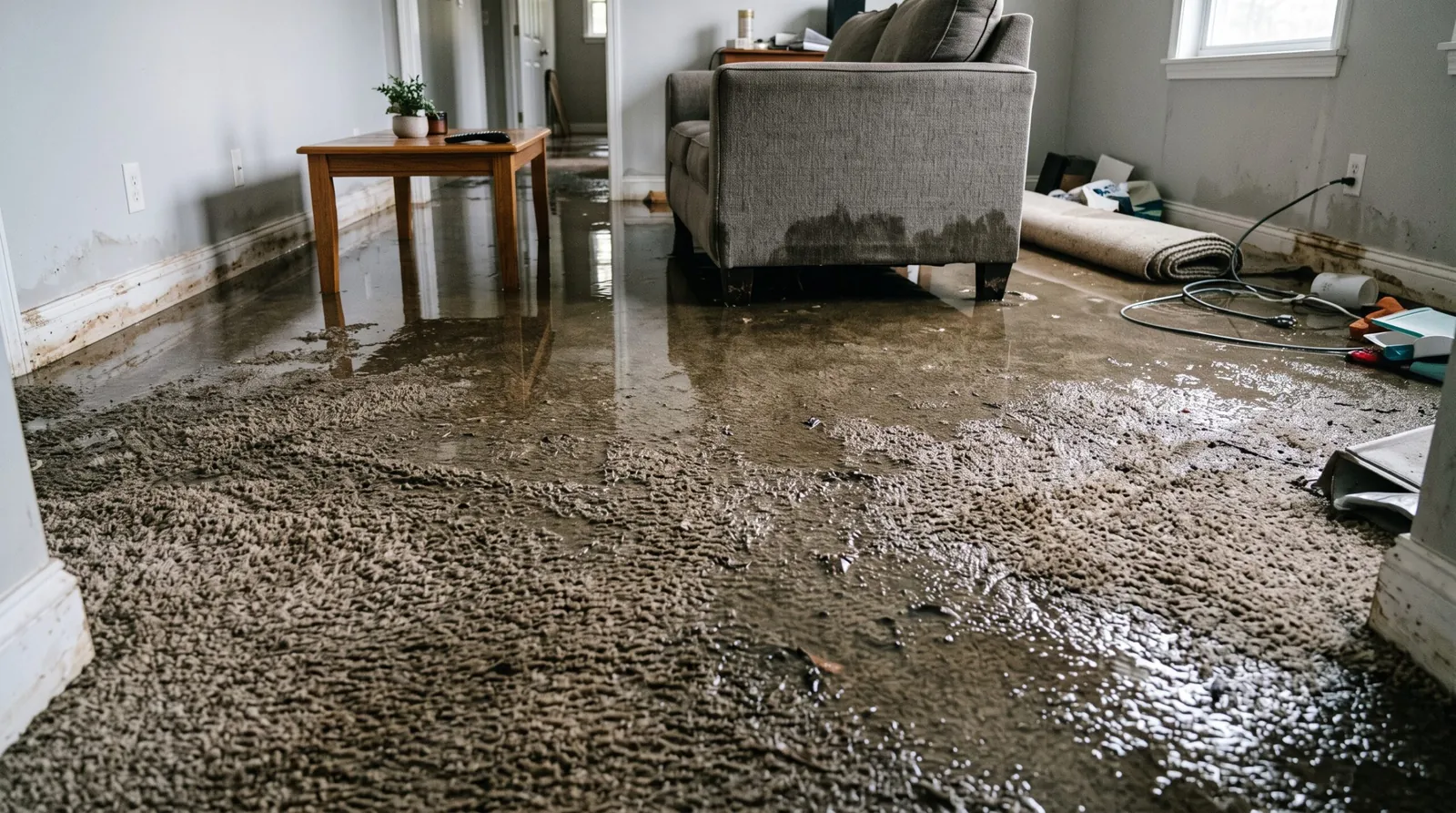
Before anything touches the floor, stop the source if you safely can — a shutoff valve, a supply line, a roof leak container. Water and electricity share the same room, so if outlets, extension cords or appliances are in the wet area, cut power to that circuit before walking through it, and call an electrician if you are not certain.
The other question to settle early is what the water is. A burst supply line is a different situation from a drain backup or storm water. If the water may be contaminated, the correct move is to keep people and pets out and call a professional rather than to start extracting it yourself.
Get the water out before you think about cleaning
Volume removal comes first. A wet vacuum or extractor pulls out far more water than towels ever will, and every gallon removed is drying time you do not have to buy later. Work in overlapping passes and keep going past the point where the surface feels merely damp, because the pad underneath holds far more water than the face fibers.
Lift what you can off the floor. Furniture legs stain damp carpet, and anything wooden or metal sitting on wet fibers leaves marks that are much harder to address than the water itself. Small blocks or foil under the legs solve most of it.
Drying is the whole job
Air movement plus dehumidification is what actually dries a floor. Fans alone move moisture around; a dehumidifier removes it from the room. Run both continuously rather than in bursts, keep interior doors open so air circulates, and resist the urge to declare it dry after a few hours because the surface feels fine.
Whether the pad can be dried in place or has to come out depends on how long it was wet, how much water it holds and what is under it. That is a judgement call better made with a moisture meter than with a hand, and it is one of the main reasons water jobs get inspected rather than guessed at.
When it stops being a cleaning job
There are a few clear signals that a flooded floor needs restoration rather than cleaning: water that was not clean to begin with, carpet that stayed wet for more than roughly a day, moisture that has moved into walls or baseboards, or a musty smell that persists after the surface is dry.
In those cases the right sequence is assessment, controlled removal of unsalvageable material, structural drying and only then cleaning. Cleaning a floor that is still wet underneath simply hides the problem for a few weeks.
What we do on a water call
We look at the source and the extent first, take moisture readings rather than relying on how the carpet feels, extract, and set drying equipment sized to the room. Then we tell you honestly whether the carpet and pad are recoverable, because sometimes they are not and it is cheaper to know that on day one.
Background from the original guide
Stop the source first. If it is plumbing related, shut off the water, and shut off electricity to the affected room if there is any chance of contact with water.
Treat the water itself as the deciding factor. Water from sewage, a drain backup, groundwater or any source you cannot identify may be contaminated: do not handle it, do not clean it yourself, and do not run air movers or fans across it, because moving air over contaminated or mold-affected material can spread contamination through the building.
Where the water is clean — a supply line or rainwater — and the area is small, removing standing water quickly with a wet/dry vacuum and blotting with towels limits the damage while you arrange an assessment.
Drying and residue
The widely used guidance from the US Environmental Protection Agency is to dry wet materials within 24 to 48 hours where it is safe to do so. That is a drying target, not a promise that nothing grows before it or that everything is fine after it — how a specific floor behaves depends on the water source, the volume, the padding and the subfloor.
Carpet and padding that stayed wet, that was soaked by contaminated water, or that already smells musty may not be salvageable. That call needs an in-person assessment rather than a rule of thumb.
It ranges from hours to several days depending on carpet thickness, airflow, humidity and how much water was involved. Aim for the 24 to 48 hour window where the situation is safe to dry, and treat anything beyond it as a reason for professional assessment rather than a deadline you have missed.
Do not disturb suspected mold
If you suspect mold under the carpet, do not lift or pull back the carpet, do not vacuum or scrub it, and do not point a fan at it. Disturbing affected material releases spores into the air and moves the problem into rooms that were not affected.
Close off the area as best you can and have it evaluated. Go4Cleaning does not perform mold remediation; where remediation is needed we say so and, with your consent, refer you to an independent specialist.
When to stop and call for help
Call for professional help when the water may be contaminated, when carpet stayed wet, when mold is visible or the smell is strong, when the subfloor or walls are involved, or when you simply do not have the drying equipment the job needs.
A restoration professional can also document the loss, which matters if you intend to make an insurance claim.
Save the carpet or replace it?
A professional assessment is what tells you whether the carpet can be restored safely or should be replaced. Padding is replaced far more often than carpet, and clean-water losses caught early have the best chance.
Vacuuming safely
No. A dry household vacuum is not built for liquid and using one on standing water is an electrical hazard. A wet/dry vacuum is the right tool for clean water only.
Related service
Emergency water extractionCarpet cleaningFamily-owned, based in Beverly Hills, serving Los Angeles County and approved Orange County communities.
Recent Go4Cleaning work
Photos from Go4Cleaning jobs, taken by our own crew.
Common questions
Can carpet be saved after flooding?
Often yes, when the water was clean and drying starts quickly. The pad is more frequently the casualty than the carpet. Contaminated water, or carpet that stayed wet for a long time, changes the answer.
How long does wet carpet take to dry?
With proper extraction plus air movement and dehumidification, typically one to three days depending on volume, materials and humidity. Without equipment it can take far longer, which is exactly the window where problems develop.
Should I use a household fan and open the windows?
Fans help, and open windows help only when outdoor air is drier than indoor air — in humid conditions they can make things worse. Dehumidification is the part most household setups are missing.
Will cleaning the carpet solve a musty smell after a leak?
Not if the source of the smell is still damp. Persistent odor after drying usually means moisture remains in the pad, subfloor or wall cavity, and that needs to be found and dried before any cleaning is worthwhile.
Want this handled properly?
Call or text (866) 631-2244 for a straightforward quote, or send photos with your request.
Cleaning appointments 8:00 a.m. – 8:00 p.m. daily. Calls, messages and scheduling 24/7.