Water & moisture
Signs of Mold Under Carpet: What to Look For
Mold under carpet is a moisture problem before it is a cleaning problem. By the time anything is visible on the surface, the interesting part is usually happening in the pad or the subfloor — which is why this guide is about noticing and checking rather than about scrubbing.
By Go4Cleaning Team · Updated August 30, 2026 · 7 min read
Quick answer
The usual clues are a musty smell that returns after cleaning, carpet that feels cool or damp underfoot, discoloration spreading from one point, and a history of leaks or slow drying in that spot. Hidden growth is confirmed by inspection, not by a product — and the moisture source has to be fixed first or it comes back.
The smell usually arrives before anything is visible
A musty, earthy smell that gets stronger in a closed room, near the floor, or in humid weather is the most common first signal. It is worth trusting even when the carpet looks completely normal, because the face fibers dry long before the pad underneath does.
The diagnostic detail is persistence. An odor that disappears after a cleaning and returns within days is pointing at something below the surface rather than at the carpet itself.
What to check, room by room
- Carpet that feels cool, heavy or slightly damp underfoot when the rest of the room is dry.
- Discoloration that spreads outward from a single point — near a wall, a window, a radiator, a planter or an appliance.
- Buckling, rippling or a pad that feels spongy in one area.
- Baseboards or drywall with staining, bubbling paint or a tide line above the floor.
- Any spot with a leak history: a past overflow, an appliance line, a roof or window leak, or a slow plumbing drip.
When to stop investigating yourself
Pulling back carpet spreads whatever is underneath into the air of the room, so it is not a casual weekend check. If the affected area is significant, if the smell is strong, if anyone in the household is sensitive to it, or if you suspect the moisture is coming from inside a wall, the right call is a professional assessment.
The EPA publishes plain-language guidance on residential mold and the size thresholds at which a professional should handle the work. We link it below rather than paraphrasing it, because it is the better source.
What an inspection actually involves
Moisture meters and, where useful, a camera inspection tell us where water is now — not where it looks like it might be. From there the honest answer is either that the area can be dried and cleaned, or that the pad and possibly the carpet need to come out. We would rather say the second thing early than clean a floor that will smell again next month.
Background from the original guide
Carpet creates an ideal environment for mold. The fibers trap moisture, dust, and organic debris — basically a ready-made food source for mold spores looking for a place to settle.
High humidity, a water leak, flooding, or even a spilled drink that did not dry properly can create conditions conducive to mold growth. Guidance from the US Environmental Protection Agency is to dry wet materials within 24 to 48 hours where it is safe to do so. That is a drying target rather than a fixed point at which growth begins, so treat any material that stayed wet as a reason to have it assessed.
The padding beneath the carpet makes things worse. That thick cushioning holds moisture long after the carpet surface feels dry, turning your floor into a breeding ground for mold.
A Persistent Musty Smell
The most common sign of mold is a musty smell that does not go away, no matter how much you vacuum or use an air freshener. A musty odor is the result of mold releasing microbial compounds into the air as it grows. If you walk into a room and notice a persistent musty smell that lingers, that is a strong indicator of mold growth hiding beneath the carpet.
Treating spills and stains
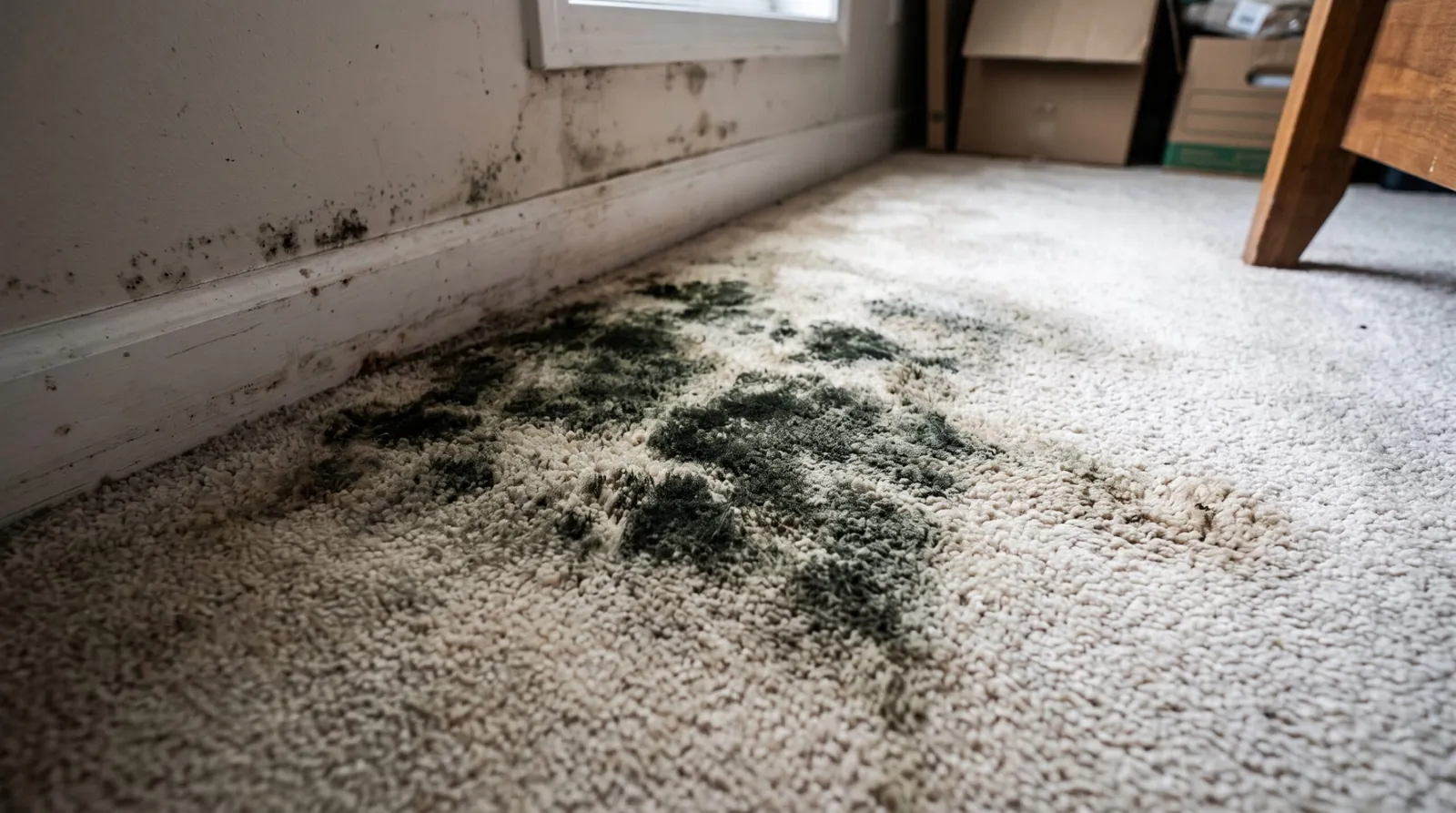
Sometimes mold is visible. Look for green, white, or black patches on the carpet surface or along the edges near baseboards. Discoloration can also appear as dark spots that seem to grow over time.
Damp or Wet Carpet Without an Obvious Cause
A wet carpet that seems to stay damp longer than it should is a major red flag. This often points to a plumbing leak beneath the floor, a crawl space moisture issue, or water damage from a past flood. If the carpet feels damp without a clear reason, mold develops quickly in those moist environments, especially when the subfloor retains water.
Increased Humidity in Certain Rooms
If one room always feels more humid or stuffy compared to the rest of your home, check that room’s carpet carefully. Humidity levels that stay elevated — especially in basements, bathrooms, or rooms with poor ventilation — create humid areas that are perfect for mold development. Keeping indoor humidity under control is one of the best ways to help prevent mold from getting a foothold.
Visible Mold Growth Along the Carpet Edges
Visible mold growth along the edges of the carpet, near walls, or beneath furniture is a clear sign of significant mold infestation. At this stage, the mold problem has likely spread to the carpet padding and possibly the floor beneath it. If mold is suspected in these areas, do not ignore it — it can spread further and become much harder to remove effectively without professional help.
How to Detect Mold in Your Carpet
Start with your senses. Use your sense of smell to check for a musty odor, then look for visible discoloration. Press down on the carpet and check if it feels damp. Pull back a corner to look at the padding beneath for any dark spots or mold presence.
For a more formal approach, mold testing kits are available, but professional mold testing gives you the most reliable results, especially when hidden mold is suspected beneath the carpet.
When to call a professional
If the affected area is larger than a small patch or if you notice black mold, do not attempt DIY mold remediation.
A professional carpet cleaner can also help. We serve homes across Los Angeles and are available 7 days a week.
How to Prevent Mold Growth in Carpets
Use proper ventilation and run your HVAC system regularly
Dry wet carpet immediately after spills or flooding
Maintain indoor humidity at healthy levels to reduce the risk of mold
Related service
Emergency water extractionCarpet cleaningFamily-owned, based in Beverly Hills, serving Los Angeles County and approved Orange County communities.
Recent Go4Cleaning work
Photos from Go4Cleaning jobs, taken by our own crew.
Common questions
Can I tell if there is mold without lifting the carpet?
You can gather strong indications — persistent musty smell, damp feel, spreading discoloration, leak history — but confirmation needs inspection. Moisture readings are the practical way to check without disturbing the area.
Does professional carpet cleaning remove mold?
Cleaning addresses soil on the carpet. It does not resolve growth in the pad or subfloor, and it does not fix the moisture source. Those have to be dealt with first, which is a water and restoration scope rather than a cleaning scope.
How quickly can a problem develop after a spill or leak?
Given the right conditions, growth can begin within a couple of days of material staying wet. That is why the drying window after any water event matters so much more than the cleaning that follows it.
Do I need to replace the carpet?
Sometimes the pad goes and the carpet stays; sometimes both go. It depends on the water, how long it sat and what is underneath. That is decided at inspection, not in advance.
Want this handled properly?
Call or text (866) 631-2244 for a straightforward quote, or send photos with your request.
Cleaning appointments 8:00 a.m. – 8:00 p.m. daily. Calls, messages and scheduling 24/7.