Mattress
Mattress Steam Cleaning Service in Los Angeles
A mattress absorbs body oils, perspiration and dust over years of use, and none of that leaves with a change of sheets. Professional cleaning targets what has soaked into the surface layers.
By Go4Cleaning Team · Updated August 25, 2026 · 11 min read
Quick answer
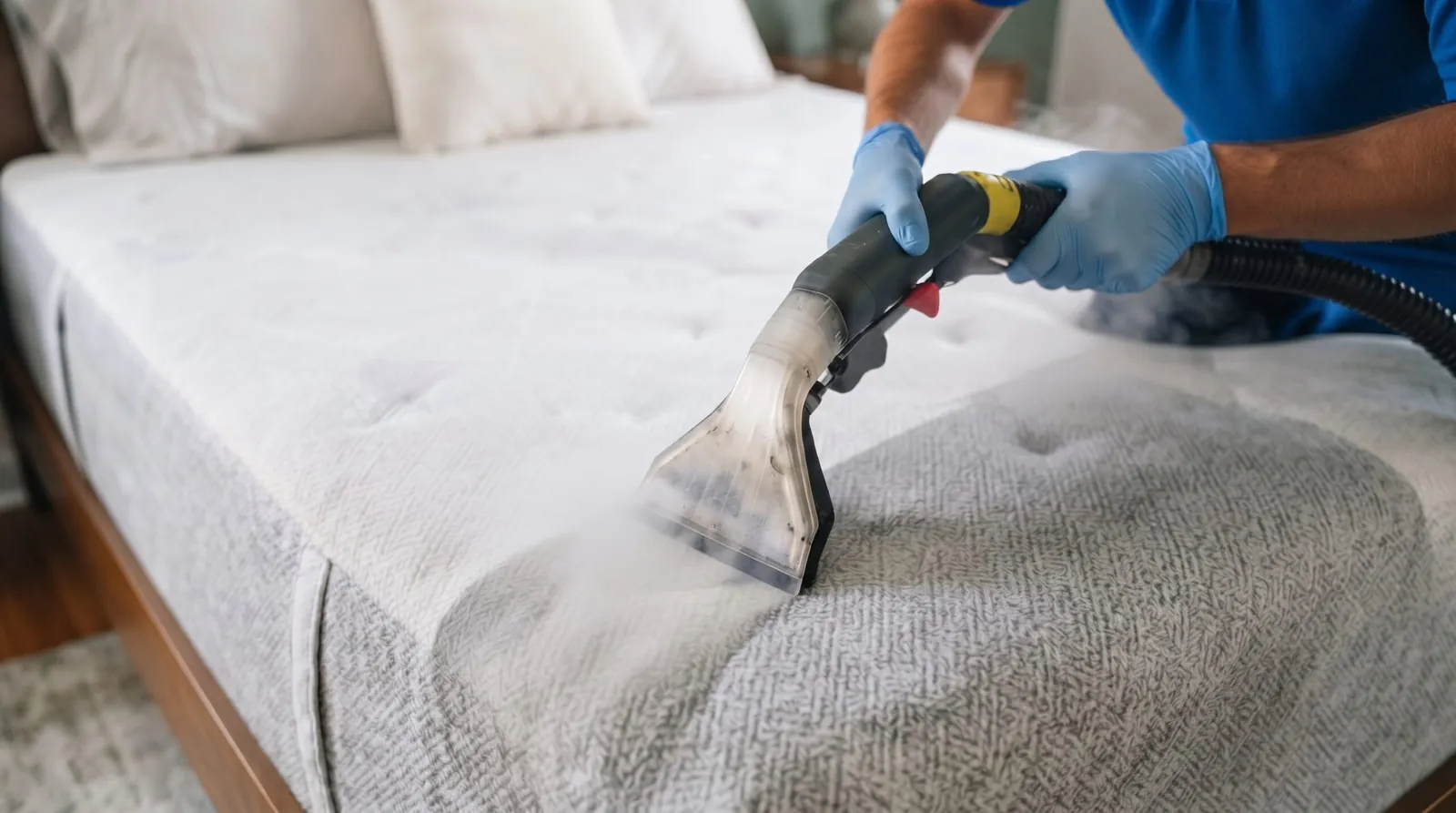
Professional mattress cleaning combines dry vacuuming, fabric-appropriate pre-treatment for spots and odor, and low-moisture hot-water extraction so the surface dries quickly. It addresses accumulated body soil, discoloration and odor in the surface layers; it does not sanitize or eliminate allergens, and long-set or deep stains may lighten rather than fully disappear.

What the service addresses
We describe this as cleaning and odor treatment. We do not make medical, allergen-elimination or germ-kill claims about mattresses, and you should be cautious of any company that does.
- Accumulated body soil and oils in the top layers.
- Perspiration marks and general discoloration.
- Odors from spills, pets, illness or long storage.
- Surface dust and fine debris that vacuuming alone leaves behind.
How we clean a mattress
- Inspect the mattress type and any staining, and check care instructions where present.
- Dry vacuum the whole surface, including seams and side panels.
- Pre-treat spots and odor areas with products matched to the fabric.
- Clean with low-moisture hot-water extraction so the mattress is not saturated.
- Extract thoroughly and set up airflow so the surface dries quickly.
Drying and preparation
Plan on the bed being unusable for some time after cleaning. Drying time depends on the mattress construction, humidity and airflow; a fan and an open window generally help. Strip the bedding before we arrive, clear the area around the bed, and let us know if the mattress has a removable topper.
Memory foam and pillow-top constructions hold moisture differently than a traditional innerspring, so we adjust moisture and dwell accordingly.

Where we work
We are based in Beverly Hills and clean mattresses across Los Angeles County — including Santa Monica, Malibu, Topanga and the South Bay — plus approved Orange County communities. Call or text and we will confirm scheduling for your area.
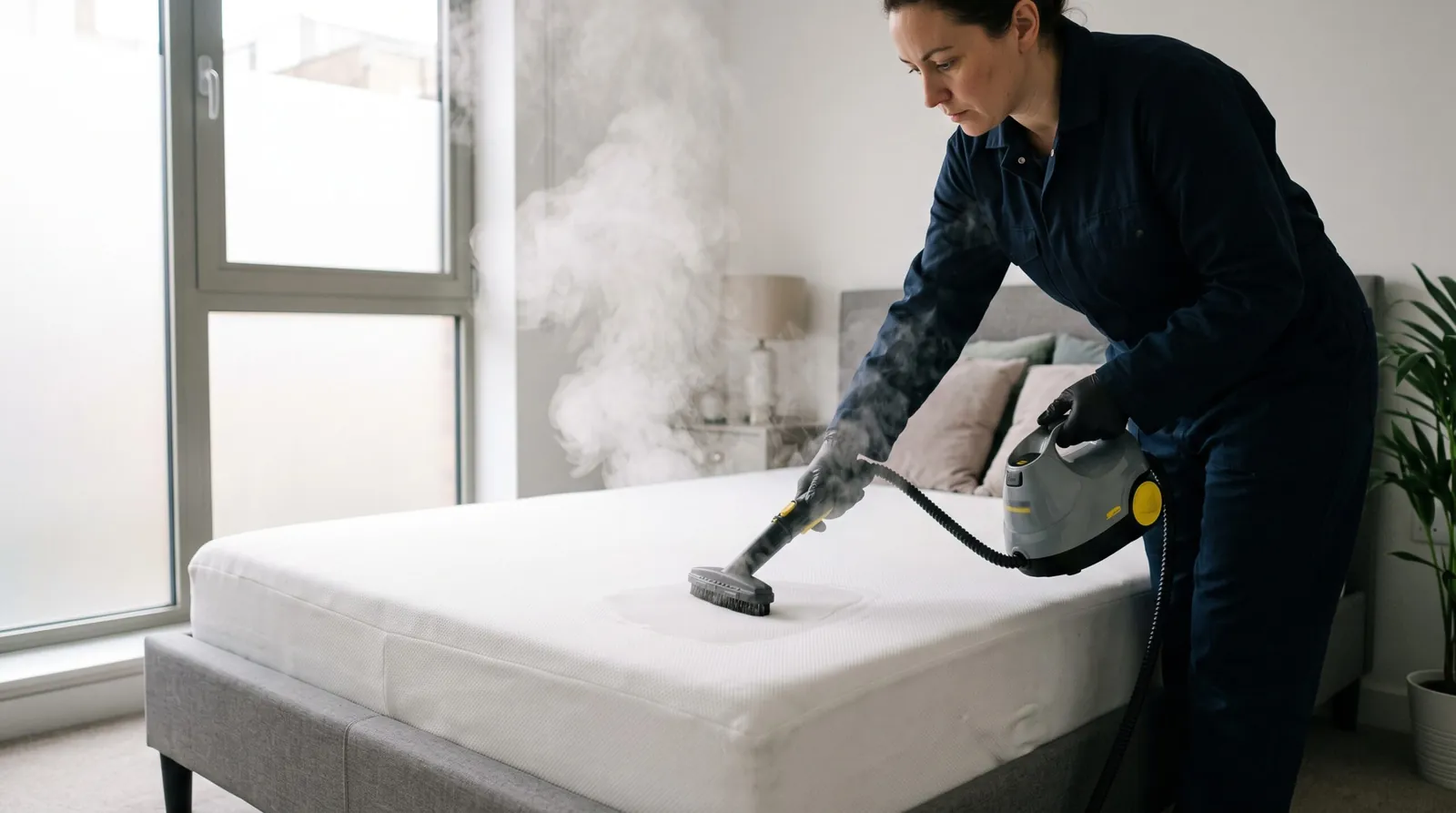
Steam and hot-water cleaning
A pet accident can disappear from view in minutes and still announce itself every time the room warms up. Effective pet odor carpet treatment has to address what soaked below the carpet fibers, not just cover the smell with fragrance. For Los Angeles households with dogs, cats, kids, guests, and busy schedules, that difference is what turns a recurring odor problem into a genuinely fresh room.
The right approach depends on the age of the accident, the type of carpet, the padding beneath it, and how far the moisture traveled. A fresh spot on a low-pile synthetic rug may respond well to prompt home care. Repeated accidents, old urine odors, or smells that return after cleaning usually require deeper extraction and targeted odor treatment.
Mattresses collect buildup gradually. Even with sheets and a mattress protector, everyday use leaves behind skin cells, natural oils, perspiration, hair, and airborne dust. In Los Angeles homes, open windows, pets, beach sand, and dry outdoor dust can add to the problem. A regular vacuum helps with loose debris, but it cannot fully address what has settled below the surface fibers.
Professional cleaning focuses on the areas that are hardest to handle with household products. This can include sweat marks, food or drink spills, pet accidents, body odors, dust, and general discoloration. When stains are treated early, the chances of improvement are usually higher. Older stains can still respond well, but no honest cleaner should promise that every mark will disappear completely.
Odor treatment is also different from masking a smell with fragrance. The best results come from addressing the source of the odor in the fabric and padding, then extracting the affected material as thoroughly as the mattress construction allows. This is especially valuable for pet owners, families with young children, and anyone preparing a guest room or rental property for a new occupant.
Why Pet Odors Keep Coming Back
Pet urine is more complicated than a visible stain. As it dries, it can leave behind salts, proteins, and uric acid crystals. Moisture and humidity can reactivate those deposits, which is why a carpet may smell fine one day and noticeably worse after a warm afternoon, rainy weather, or steam from a shower nearby.
Surface sprays often improve the first impression without removing the source. They may neutralize a small amount of odor at the carpet face, but they cannot reliably reach contamination in the backing, padding, or subfloor. If the pet returned to the same spot, the odor may be deeper and more concentrated than it appears.
Pets also tend to revisit areas where they can still detect their own scent. Even when people cannot smell it, a dog or cat may. That makes complete odor removal part of preventing repeat accidents, not simply a cosmetic cleaning task.
When to call a professional
Professional treatment begins with locating the affected areas. Some spots are obvious from discoloration, while others are hidden beneath furniture or appear only under ultraviolet inspection. Identifying the full area matters because treating just the center of a stain can leave odor-causing residue around the edges.
Next comes a fabric-appropriate treatment designed to break down odor sources rather than mask them. The product must reach the same depth as the contamination to do its job.
Professional extraction then removes dissolved soil, residue, pet dander, and moisture from the carpet. Industry-grade steam cleaning or controlled low-moisture extraction may be used based on the carpet’s fiber type, condition, and the severity of the issue. More water is not always better. Proper technique means using enough solution and extraction power to clean thoroughly without leaving the carpet overwet.
For severe or repeated urine damage, treatment may need to reach the backing and padding. In some cases, the padding or subfloor has absorbed enough contamination that cleaning the carpet alone will not completely resolve the odor. An honest cleaning provider should explain that possibility upfront rather than promise a result that the carpet’s condition cannot support.
A mattress is not a carpet. Its layered construction can hold moisture, and too much water can create a longer drying time or lead to unwanted odors. That is why mattress cleaning requires more control than spraying a large amount of cleaner and scrubbing aggressively.
A skilled technician first assesses the mattress fabric, stain type, age of the stain, and overall condition. Fabric-safe pretreatment is applied where needed, followed by industry-grade steam cleaning or low-moisture extraction. The purpose is to loosen and remove soil while limiting how much moisture reaches the interior layers.
The exact method depends on the mattress. A lightly soiled mattress may need a straightforward cleaning and refresh. A mattress with pet urine, heavy staining, or strong odor may require targeted pretreatment and additional deodorizing steps. Delicate materials, memory foam construction, and mattresses with prior water damage call for extra caution. A responsible company explains the recommended approach before work begins instead of treating every mattress the same way.
When DIY Pet Odor Removal Can Help
Fast action gives you the best chance of handling a new accident at home. Blot the area with clean, absorbent towels. Press down firmly to lift moisture, but avoid scrubbing. Scrubbing can spread the urine, push it deeper into the fibers, and damage the carpet texture.
Follow the label directions carefully, especially the recommended contact time.
Avoid combining cleaners.
A light rinse and thorough drying can help prevent residue from remaining in the carpet. Use fans and ventilation when possible. If the smell returns after the area dries, that is a strong sign the contamination reached deeper than a home treatment could address.
Signs It Is Time to Call a Carpet Cleaning Specialist
A professional service is often the practical choice when the problem is no longer limited to one fresh, identifiable spot. Consider deeper treatment if you notice any of the following:
The odor returns after DIY cleaning or becomes stronger in warm or humid conditions.
Your pet has used the same area more than once.
Stains are old, widespread, or located near seams, baseboards, or furniture.
The carpet smells clean immediately after shampooing but unpleasant again once it dries.
You are preparing a rental, listing a home, welcoming a baby, or hosting guests.
For renters, fast and documented treatment can be especially useful before a move-out inspection. For homeowners, dealing with recurring odor early can help protect carpeting, padding, and indoor comfort before replacement becomes the only realistic option.
Carpet Type, Padding, and the Limits of Treatment
Not every carpet responds the same way. Synthetic carpets are often more forgiving during spot treatment and extraction, while wool and delicate natural fibers require carefully selected solutions and moisture control. Using the wrong chemical or too much water on a sensitive carpet can cause color loss, shrinkage, browning, or texture changes.
Padding is the deciding factor in many difficult pet odor cases. If urine has traveled through the carpet and saturated the pad, a surface cleaning may reduce the smell without fully eliminating it. When contamination has also reached a wood or concrete subfloor, the solution may involve specialized sealing or repair after the carpet is lifted.
That is not a reason to assume the worst. Many odor problems respond very well to professional cleaning and targeted treatment. It simply means a reliable provider should inspect the situation, set clear expectations, and recommend the least invasive option that has a reasonable chance of working.
How to Keep Carpets Fresher Between Cleanings
Regular vacuuming matters more than most households realize. It removes pet hair, dander, dust, and dry soil that can hold onto odors and dull the carpet’s appearance. High-traffic areas and pet sleeping spots benefit from extra attention, particularly in homes with multiple animals.
Wash pet bedding regularly and clean the areas around litter boxes, food bowls, crates, and favorite nap spots. Odors can move through the home on fur, paws, and fabric, so carpet care works best alongside routine cleaning of the surrounding environment.
If accidents are happening frequently, consider the cause as well as the cleanup. A new behavior pattern can be related to training, stress, schedule changes, territory issues, or a health concern. Addressing the reason for repeat accidents helps protect your carpet after it has been professionally restored.
For homes in Beverly Hills, Santa Monica, Malibu, Pasadena, West Hollywood, and throughout Los Angeles, Go4Cleaning provides fabric-safe cleaning options for carpets affected by pet odors, stains, dander, and embedded soil. The goal is straightforward: assess the problem honestly, treat the carpet carefully, and leave your space looking and smelling noticeably cleaner without surprise fees.
A fresh carpet should not depend on heavy fragrance or a temporary cover-up. If an odor keeps returning, treat it as a sign that the source needs more attention. The sooner you address it with the right method, the better the chance of restoring the carpet you already have.
When Should You Have Your Mattress Cleaned?
There is no single schedule that fits every home. For many households, professional mattress cleaning every 12 to 18 months is a sensible maintenance plan.
You may want to schedule cleaning when you notice a persistent odor, visible staining, increased dust around the bed, or a mattress that feels overdue for a reset. It can also be useful before moving into a new home, after a tenant moves out, or before placing a mattress in a guest room. For property managers and short-term rental hosts, a fresh, clean mattress supports a better guest experience and helps protect the condition of furnished units.
Professional service is not a medical treatment, but reducing accumulated dust and dander can make the sleep environment feel cleaner and more comfortable.
What to Expect During Mattress Cleaning
Good service begins with clear communication. Before the appointment, you should know what is included, whether stain or odor treatment is needed, and what the expected pricing will be. Transparent estimates matter because mattress condition varies, and surprises on the final bill are frustrating for any homeowner or renter.
At the appointment, the technician should inspect the mattress and identify areas of concern before starting. The surface is prepared, spots are treated, and professional equipment is used to clean and extract soil from the fabric. High-touch areas and visible stains receive particular attention.
Drying time depends on the mattress material, room airflow, humidity, and the level of treatment required. In many cases, a mattress is ready to use within several hours, but heavy treatment can take longer. Running ceiling fans, opening windows when outdoor conditions allow, or using air conditioning can help with airflow. Your technician should provide realistic aftercare guidance rather than guessing.
For the best result, remove sheets, blankets, pillows, and personal items before the team arrives. If the mattress is on a platform bed or in a tight room, making clear access around the bed can also save time. There is no need to pre-scrub stains with multiple products. Some store-bought chemicals can set a stain, leave residue, or react poorly with professional solutions.
Results You Can Expect and Limits to Understand
Professional cleaning can make a noticeable difference in freshness, appearance, and odor reduction. Many customers see improved color in soiled areas and feel better about sleeping on a mattress that has been thoroughly cleaned. Still, realistic expectations are part of quality service.
The outcome depends on the age of the mattress, fiber type, stain source, prior cleaning attempts, and how deeply a spill reached the interior. A recent coffee spill may improve dramatically. An old yellowed stain, bleach mark, ink stain, or damage that has penetrated deep into the padding may be permanent or only partially improved. Cleaning removes soil and residue, but it cannot restore fabric that has been chemically altered or physically damaged.
A professional should be upfront about these limits before beginning. That honesty protects your budget and helps you make the right call between cleaning, using a mattress protector, or replacing a mattress that has reached the end of its useful life.
Related service
Mattress cleaningFamily-owned, based in Beverly Hills, serving Los Angeles County and approved Orange County communities.
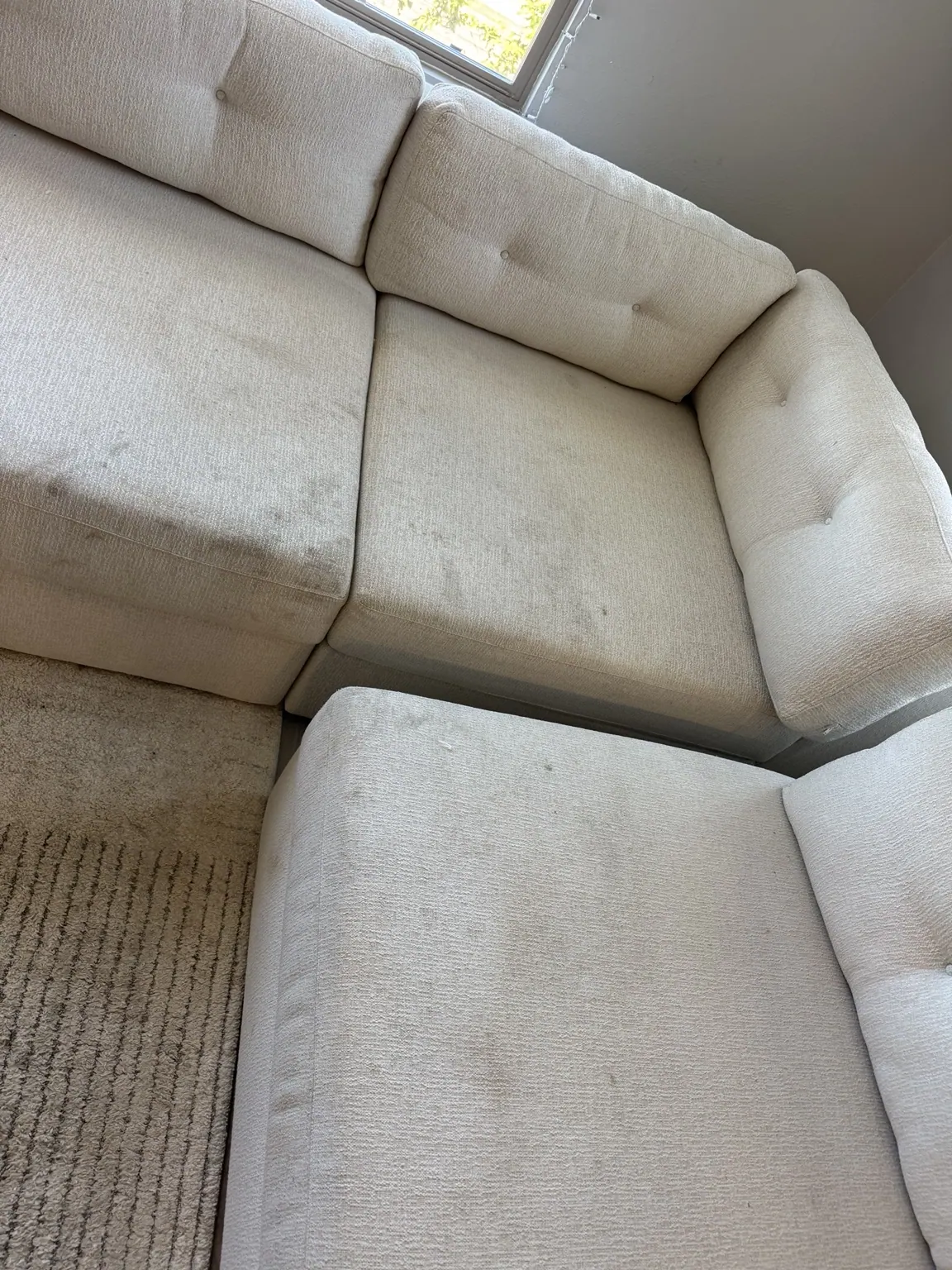
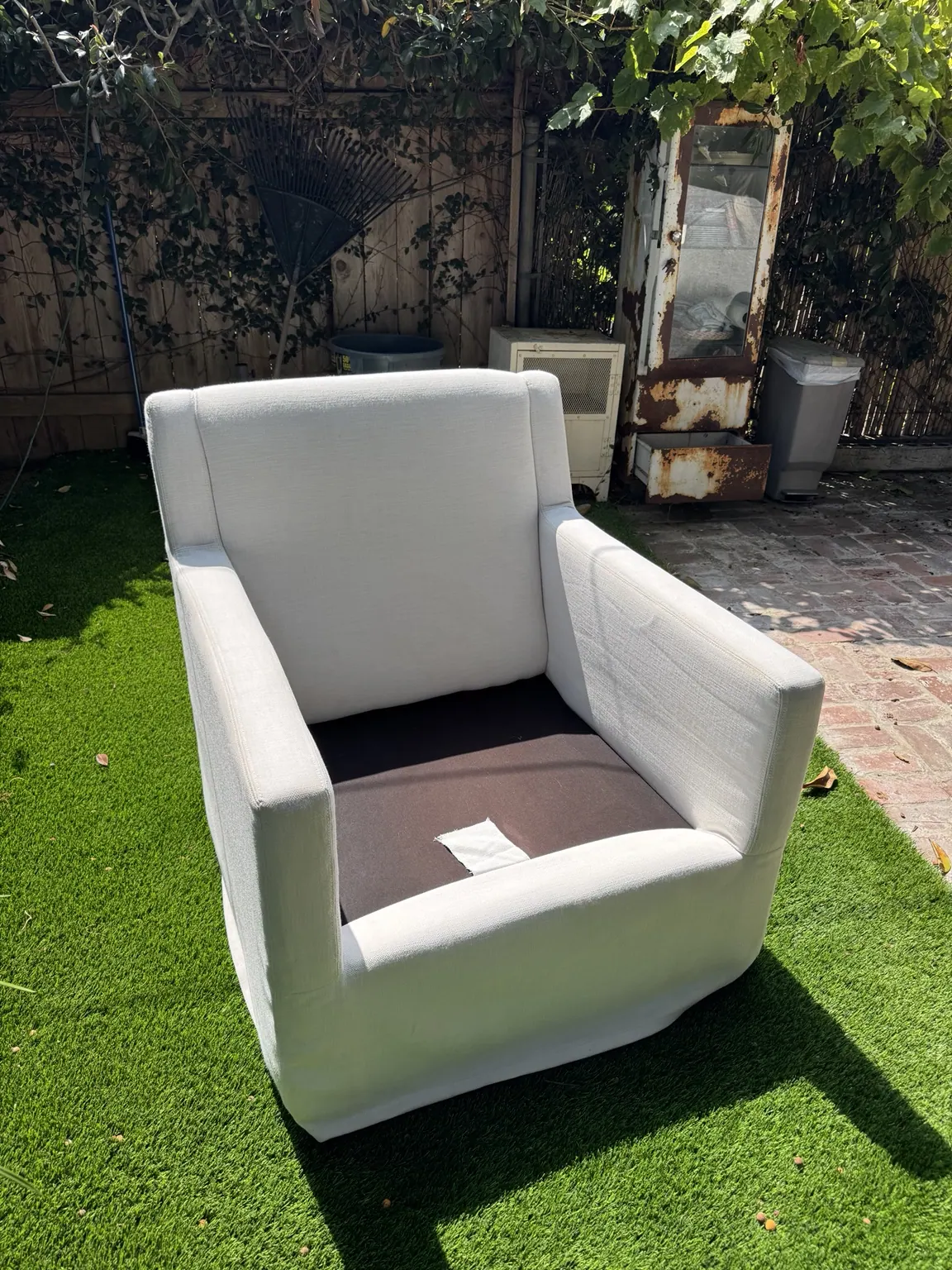
Recent Go4Cleaning work
Photos from Go4Cleaning jobs, taken by our own crew.
Common questions
How long does a mattress take to dry?
It varies with mattress construction, humidity and airflow — memory foam and pillow-top layers generally hold moisture longer than an innerspring. We use a low-moisture approach and recommend a fan or open window to help it dry faster.
Can old stains be removed completely?
Many improve significantly. Long-set stains, dye transfer and some biological stains may lighten rather than disappear, and we will tell you what to expect before starting.
Want this handled properly?
Call or text (866) 631-2244 for a straightforward quote, or send photos with your request.
Cleaning appointments 8:00 a.m. – 8:00 p.m. daily. Calls, messages and scheduling 24/7.