Pet odor & urine
Pet Odor Carpet Treatment That Actually Works
If the smell returns a week after a cleaning, the cleaning was not the problem — the location of the odor was. Pet urine rarely stays in the part of the carpet you can see.
By Go4Cleaning Team · Updated August 25, 2026 · 6 min read
Quick answer
A real pet odor treatment locates contamination beyond the visible stain, treats at the depth it reached (surface, backing, or cushion), uses a product labeled for the specific fiber, extracts thoroughly, and controls drying. Odor that survives this process usually means the cushion or subfloor needs replacing, not another round of surface cleaning.
Where the odor actually lives
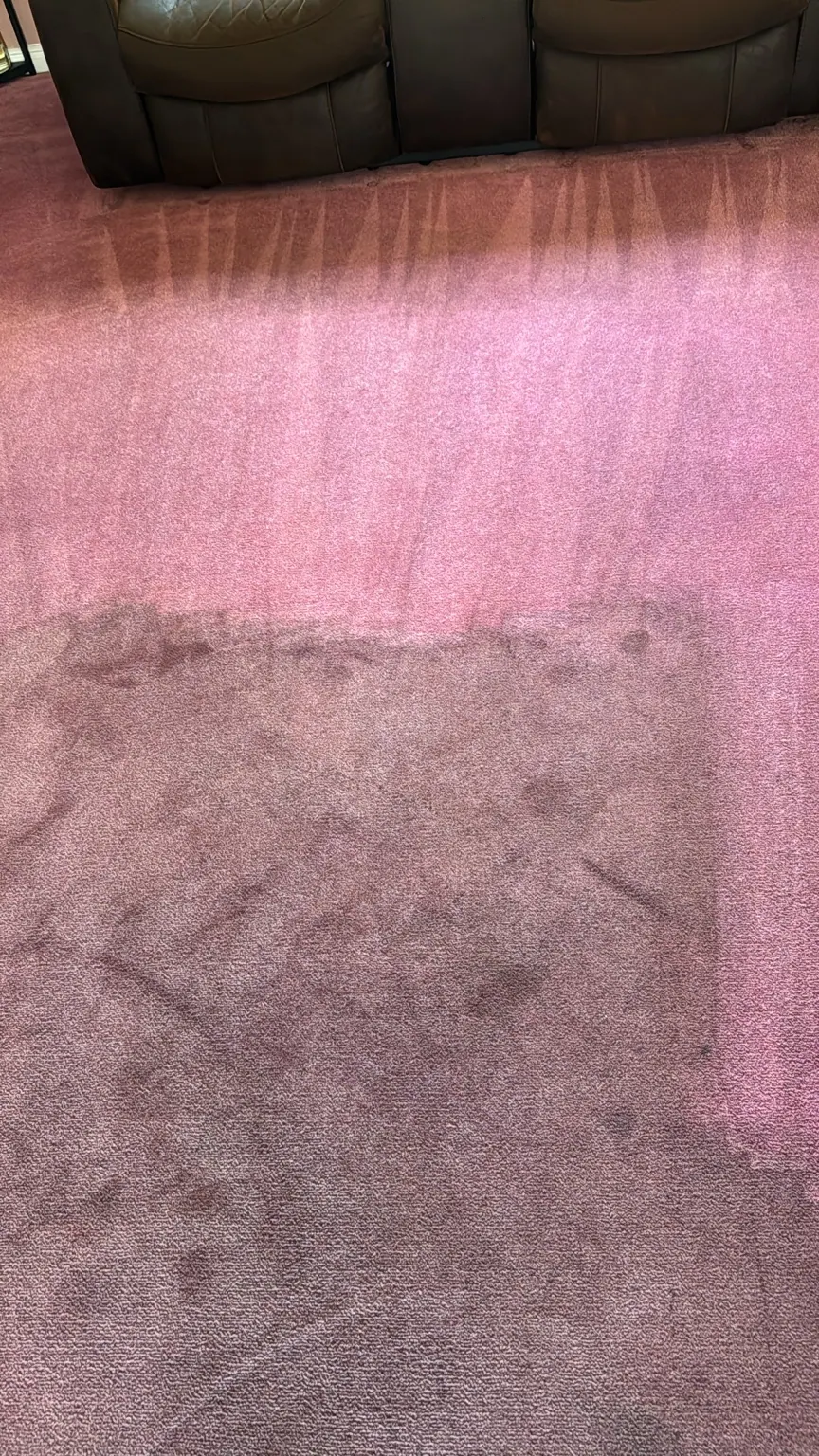
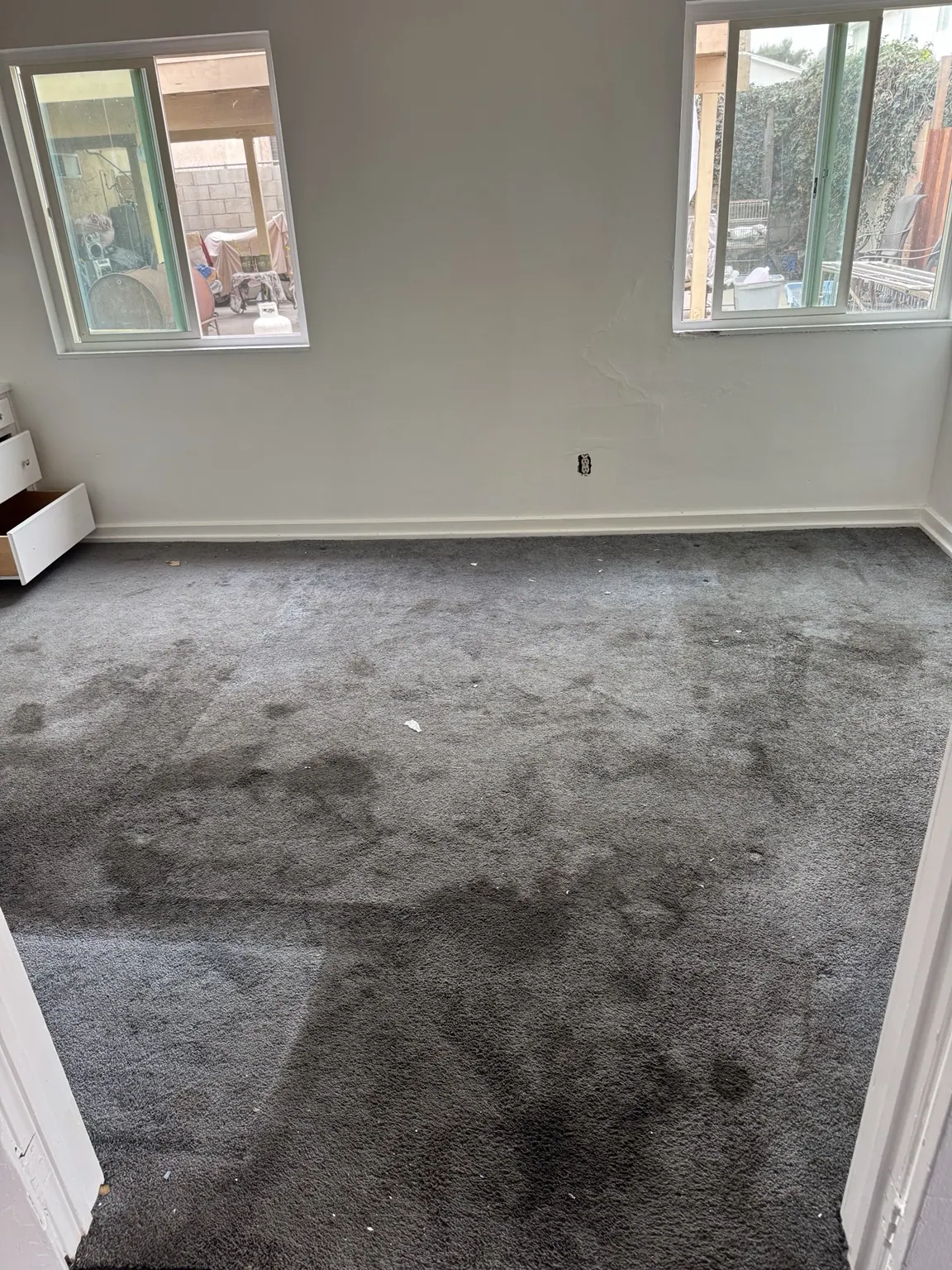
A urine accident lands on the face fiber, but liquid keeps moving. It spreads sideways through the backing, soaks into the cushion beneath, and in larger or repeated accidents reaches the subfloor. The visible spot is often a fraction of the affected area.
Surface cleaning removes what is on top. The material underneath stays, and warm or humid days reactivate it — which is why the smell often seems worse in summer or after a normal steam clean has re-wet the area.
Why household remedies stall
- General household cleaners are not formulated for urine contamination and do not reach cushion-level contamination.
- Scented sprays and plug-ins cover the smell temporarily and add residue that attracts soil.
- On some carpets, applying heat or steam to old contamination can drive residue deeper or set the stain rather than lift it.
- Over-wetting with a rental machine leaves moisture in the cushion, which is how a musty smell gets added on top of the original one.
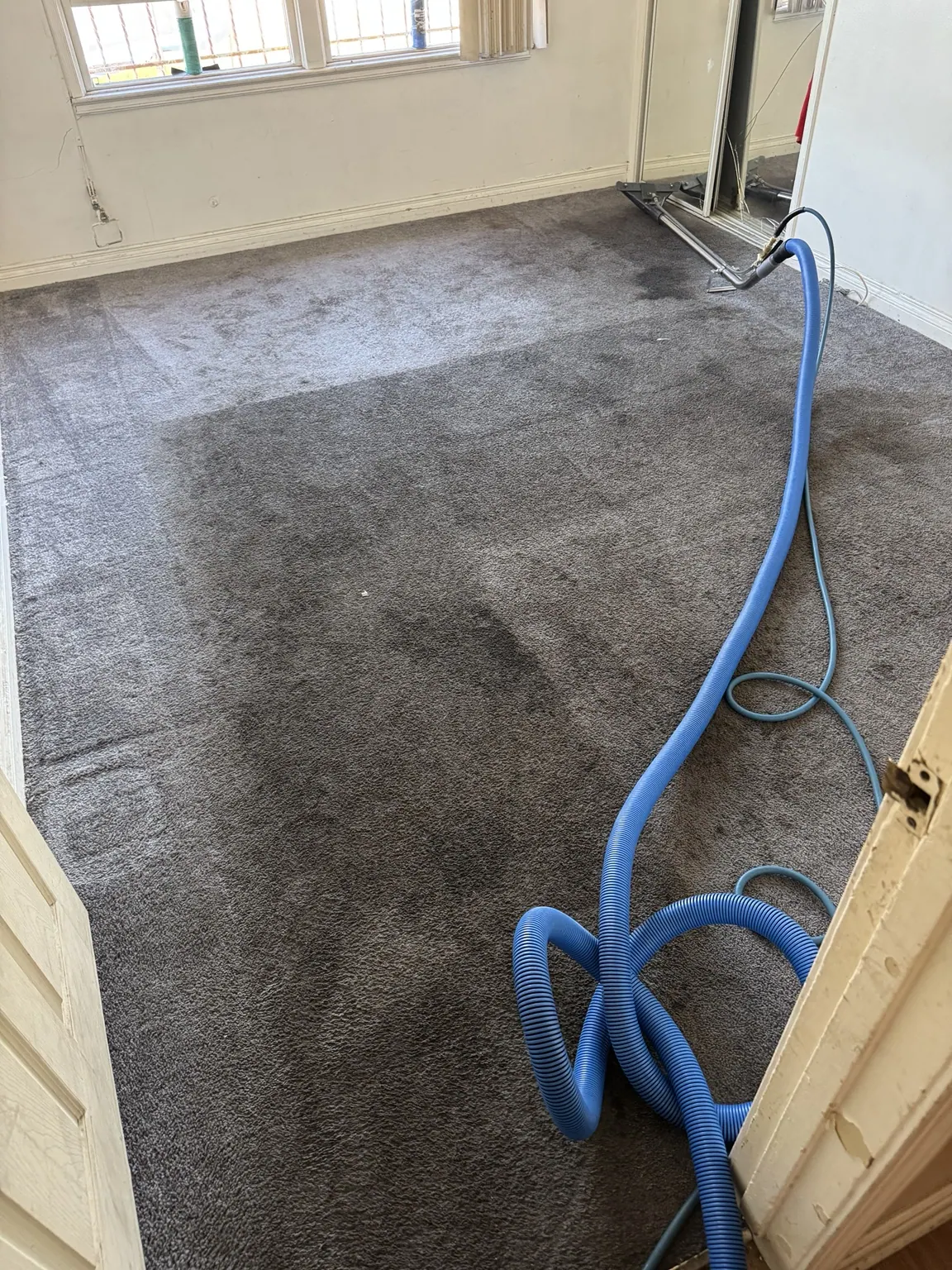
What a real treatment looks like
- Locate the affected area, including the parts that are not visible, rather than treating only the stain outline.
- Treat at the depth the contamination reached — surface only, backing, or backing plus cushion.
- Identify the fiber first and use a product labeled for that specific fiber, applied exactly as directed, so wool and delicate constructions are not damaged.
- Extract thoroughly, then control drying so nothing stays damp underneath.
- Reassess after drying. Severe or long-standing contamination sometimes needs a second treatment, or cushion replacement in the worst areas — and we will tell you honestly if that is the case.
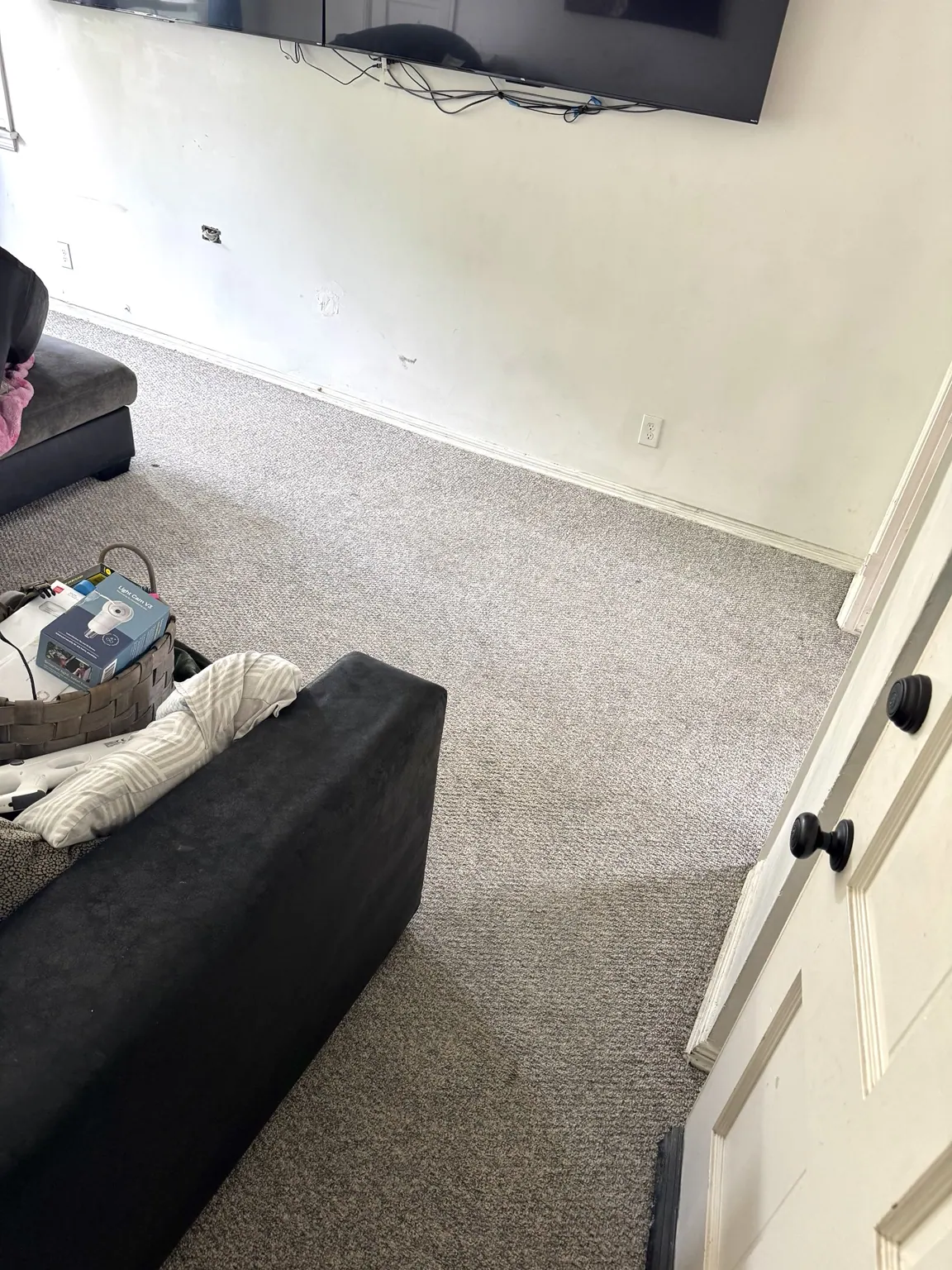
Setting realistic expectations
Most pet odor problems improve substantially with proper treatment. Some do not fully resolve without replacing cushion or addressing a subfloor, particularly where accidents happened in the same spot for months. We would rather explain that up front than promise a result the carpet cannot deliver.
We will tell you what product we plan to apply and why, and keep children and pets clear of the area while it is wet, per the product label.
Background from the original guide
Pet urine is more complicated than a visible stain. As it dries, it can leave behind salts, proteins, and uric acid crystals. Moisture and humidity can reactivate those deposits, which is why a carpet may smell fine one day and noticeably worse after a warm afternoon, rainy weather, or steam from a shower nearby.
Surface sprays often improve the first impression without removing the source. They may neutralize a small amount of odor at the carpet face, but they cannot reliably reach contamination in the backing, padding, or subfloor. If the pet returned to the same spot, the odor may be deeper and more concentrated than it appears.
Pets also tend to revisit areas where they can still detect their own scent. Even when people cannot smell it, a dog or cat may. That makes complete odor removal part of preventing repeat accidents, not simply a cosmetic cleaning task.
When to call a professional
Professional treatment begins with locating the affected areas. Some spots are obvious from discoloration, while others are hidden beneath furniture or appear only under ultraviolet inspection. Identifying the full area matters because treating just the center of a stain can leave odor-causing residue around the edges.
Next comes a fabric-appropriate treatment designed to break down odor sources rather than mask them. The product must reach the same depth as the contamination to do its job.
Professional extraction then removes dissolved soil, residue, pet dander, and moisture from the carpet. Industry-grade steam cleaning or controlled low-moisture extraction may be used based on the carpet’s fiber type, condition, and the severity of the issue. More water is not always better. Proper technique means using enough solution and extraction power to clean thoroughly without leaving the carpet overwet.
For severe or repeated urine damage, treatment may need to reach the backing and padding. In some cases, the padding or subfloor has absorbed enough contamination that cleaning the carpet alone will not completely resolve the odor. An honest cleaning provider should explain that possibility upfront rather than promise a result that the carpet’s condition cannot support.
When DIY Pet Odor Removal Can Help
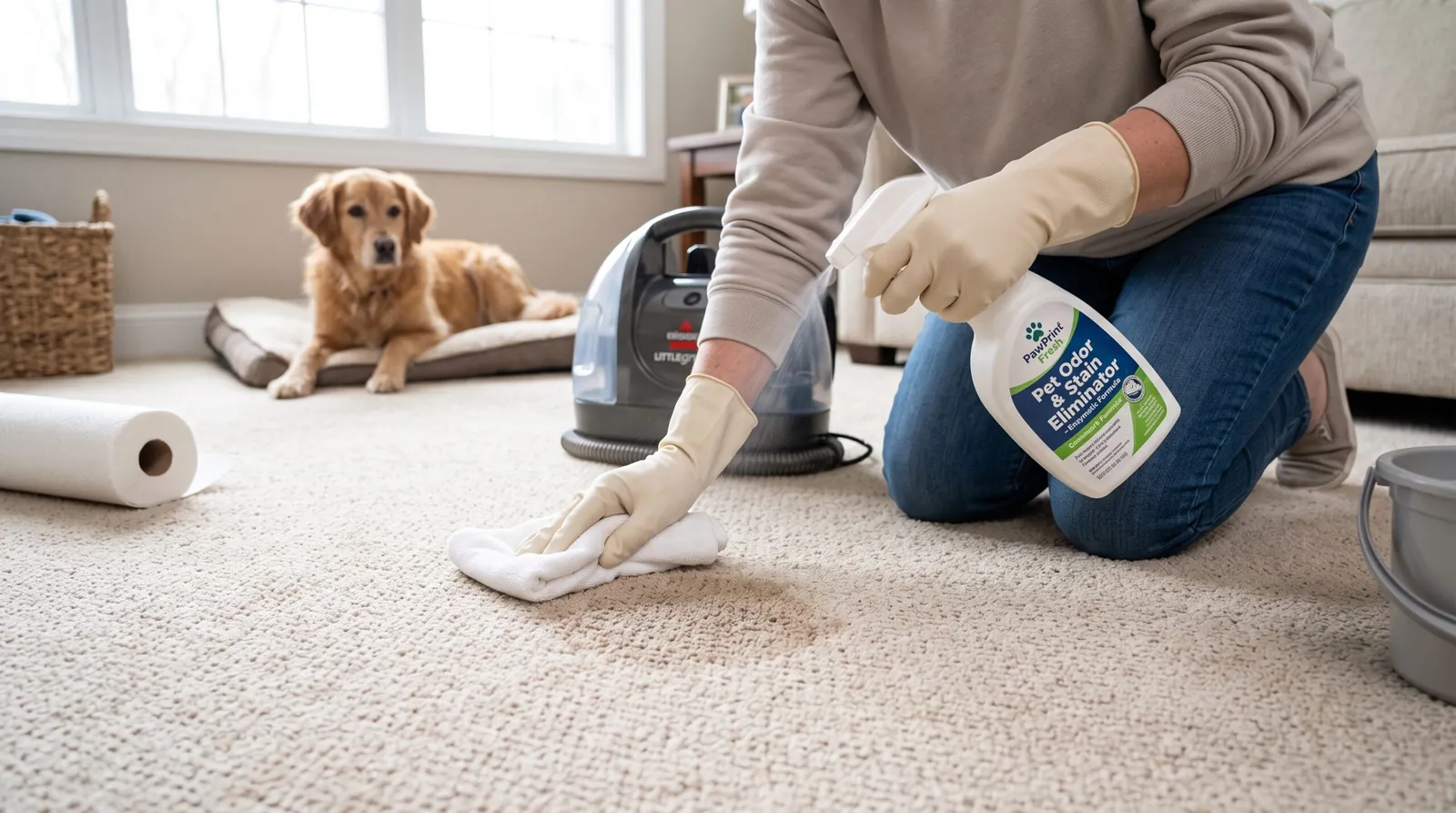
Fast action gives you the best chance of handling a new accident at home. Blot the area with clean, absorbent towels. Press down firmly to lift moisture, but avoid scrubbing. Scrubbing can spread the urine, push it deeper into the fibers, and damage the carpet texture.
Follow the label directions carefully, especially the recommended contact time.
Avoid combining cleaners.
A light rinse and thorough drying can help prevent residue from remaining in the carpet. Use fans and ventilation when possible. If the smell returns after the area dries, that is a strong sign the contamination reached deeper than a home treatment could address.
Signs It Is Time to Call a Carpet Cleaning Specialist
A professional service is often the practical choice when the problem is no longer limited to one fresh, identifiable spot. Consider deeper treatment if you notice any of the following:
The odor returns after DIY cleaning or becomes stronger in warm or humid conditions.
Your pet has used the same area more than once.
Stains are old, widespread, or located near seams, baseboards, or furniture.
The carpet smells clean immediately after shampooing but unpleasant again once it dries.
You are preparing a rental, listing a home, welcoming a baby, or hosting guests.
For renters, fast and documented treatment can be especially useful before a move-out inspection. For homeowners, dealing with recurring odor early can help protect carpeting, padding, and indoor comfort before replacement becomes the only realistic option.
Carpet Type, Padding, and the Limits of Treatment
Not every carpet responds the same way. Synthetic carpets are often more forgiving during spot treatment and extraction, while wool and delicate natural fibers require carefully selected solutions and moisture control. Using the wrong chemical or too much water on a sensitive carpet can cause color loss, shrinkage, browning, or texture changes.
Padding is the deciding factor in many difficult pet odor cases. If urine has traveled through the carpet and saturated the pad, a surface cleaning may reduce the smell without fully eliminating it. When contamination has also reached a wood or concrete subfloor, the solution may involve specialized sealing or repair after the carpet is lifted.
That is not a reason to assume the worst. Many odor problems respond very well to professional cleaning and targeted treatment. It simply means a reliable provider should inspect the situation, set
Related service
Pet stain & odor removalFamily-owned, based in Beverly Hills, serving Los Angeles County and approved Orange County communities.
Recent Go4Cleaning work
Photos from Go4Cleaning jobs, taken by our own crew.
Common questions
Will regular carpet cleaning remove pet odor?
It removes surface odor. If urine reached the backing or cushion, a standard cleaning will not reach it and the smell typically returns as the area dries or warms.
How long until the smell is gone?
Treated areas typically smell noticeably better once fully dry, though drying time depends on humidity, airflow and how deep the treatment needed to go. Odor that persists after the area is completely dry usually means the contamination went deeper than the treatment reached.
Want this handled properly?
Call or text (866) 631-2244 for a straightforward quote, or send photos with your request.
Cleaning appointments 8:00 a.m. – 8:00 p.m. daily. Calls, messages and scheduling 24/7.