Pet stains & odor
Pet Urine Smell Removal From a Couch: What Actually Works
Urine passes through the cover in seconds and sits in the foam, where a cloth cannot reach it. The visible mark is the smallest part of the problem, which is why so many sofas look fine and still announce themselves on a warm afternoon.
By Go4Cleaning Team · Updated August 25, 2026 · 5 min read
Quick answer
Blot fresh urine immediately with dry towels, check the fabric's cleaning code, then apply a product labeled for pet urine on upholstery exactly as directed. Because urine soaks into cushion foam, a surface treatment on the cover often will not reach the full source, and repeat or heavy soiling usually needs professional inspection of the cushion itself.
Act on a fresh accident immediately
- Press dry white towels straight down to draw out as much liquid as the cover will release.
- Keep going with fresh towels until transfer is minimal — this removes more than any product will.
- Check the fabric's cleaning code before applying anything wet.
- Apply a product labeled for pet urine on upholstery, following the label directions and dwell time, after testing it on a hidden area.
Why the smell survives a surface clean
Urine residue can stay in the foam after the moisture evaporates, and humidity may bring it back into solution so the smell returns. Cleaning products only work on what they physically contact, so a light application on the cover often does not reach a reservoir soaked into the cushion underneath.
Things that make it worse
- Ammonia-based cleaners — the smell resembles urine and can encourage repeat marking.
- Heat before treatment, which can set the stain.
- Over-wetting, which pushes contamination deeper and risks a musty cushion.
- Scrubbing, which distorts the nap on velvet, chenille and boucle.
- Mixing different cleaning products together, which is never a good idea and can be hazardous.
What professional treatment adds
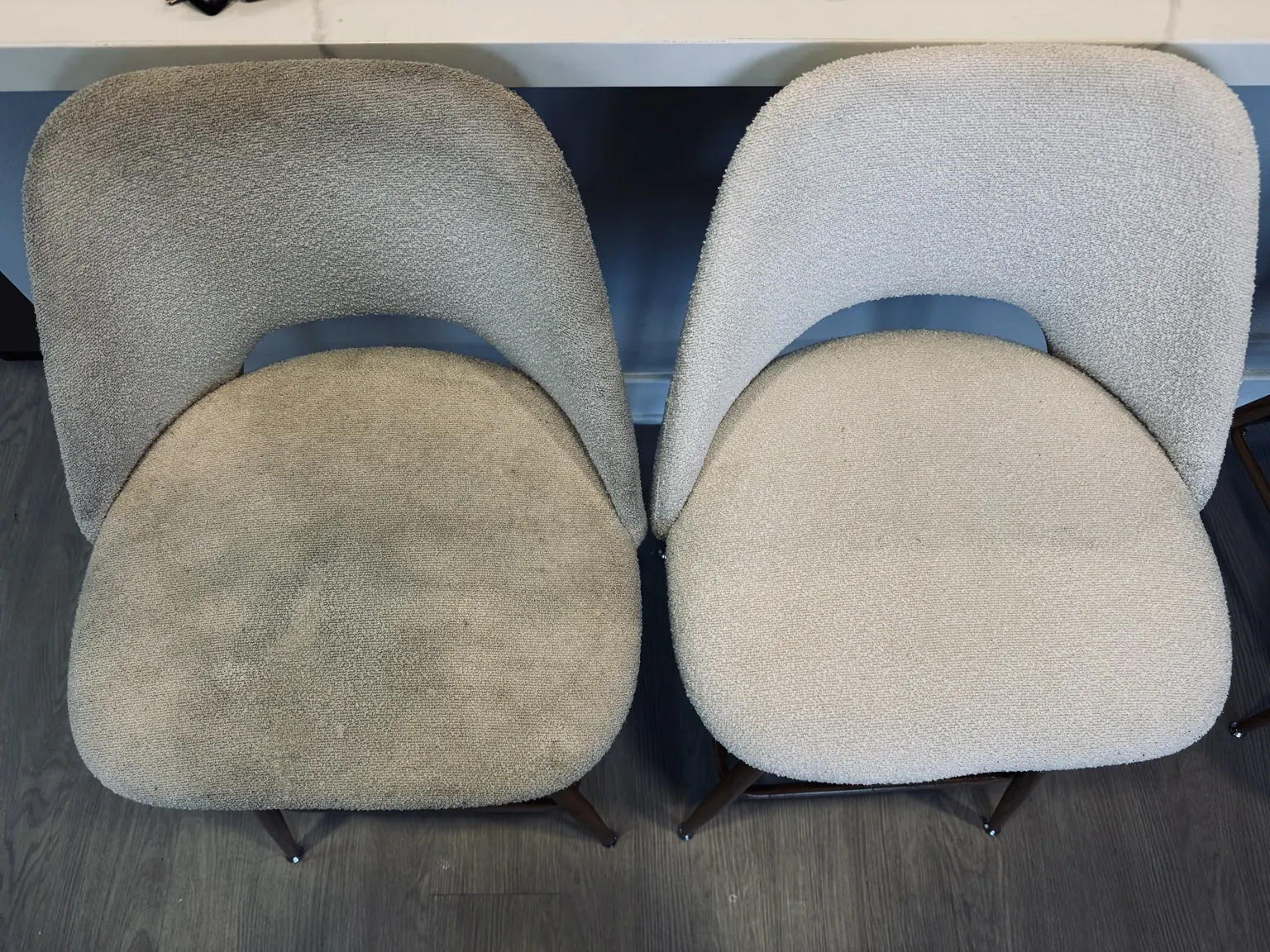
We inspect the cushion, not just the cover, identify the fabric, use a method and product suited to it, and extract thoroughly so nothing is left damp.
We are straight about limits: heavy repeat soiling in foam sometimes needs a cushion insert replaced. No cleaning process can guarantee full removal from saturated foam, and we will not pretend otherwise.
Background from the original guide
Upholstery holds odor differently than hard floors or even carpet. Fabric, foam, batting, and wood can all absorb moisture at different speeds. By the time you notice the smell, the urine may already be below the surface.
That is why many store-bought products give mixed results. Some help with fresh accidents but struggle with older contamination. Others leave behind a strong fragrance that briefly masks the issue, then fades and exposes the odor again. In some cases, using too much liquid makes the problem worse by pushing urine deeper into the cushion.
There is also the fabric question. Cotton, linen blends, velvet, microfiber, and performance upholstery do not all respond the same way to cleaning. A method that works on one couch can water-spot, discolor, or over-wet another. For delicate or higher-end furniture, that trade-off matters.
What to do first when you find pet urine on a couch
Speed helps. The sooner you address fresh urine, the better the chance of keeping it from settling deep into the upholstery.
Blot the area with clean white towels or paper towels. Press down firmly to pull up as much moisture as possible, but do not scrub. Scrubbing spreads the stain and can push liquid farther into the fibers. If the cushion cover is removable and the care tag allows cleaning, separate it carefully and continue blotting both the cover and the cushion insert.
After blotting, use a small amount of cool water to lightly rinse the affected area, then blot again. This step can help dilute residue, but restraint matters. Soaking the fabric is not the goal. Too much water can carry urine deeper into the filling and make drying take far longer.
If the odor is from a fresh accident, an enzyme-based pet treatment made for upholstery may help. These products are designed to break down the organic compounds in urine instead of simply covering them up. Follow the label carefully, and always test a hidden area first. Upholstery can react differently than carpet.
What often makes couch odor worse
The biggest mistake is using heat too early. Hot water, steam from a handheld unit, or even a hair dryer can set proteins and intensify the smell if the urine has not been properly treated first. Heat has its place in professional cleaning, but timing and extraction matter.
Another common issue is overusing vinegar or heavily scented cleaners. It may reduce odor temporarily, yet still leave behind moisture and a lingering smell of its own. Fragranced sprays are even trickier. They can mix with the urine odor and create a worse overall result.
Then there is over-wetting. Homeowners understandably want to flush the odor out, but saturated foam cushions do not dry quickly. In Southern California, dry weather helps, but thick upholstery can still hold moisture long enough to create musty smells, mildew concerns, or ring marks.
How to tell if the smell is still in the cushion
If the fabric surface smells better after cleaning but the odor returns when someone sits down, the contamination is likely below the cover. Pressure forces trapped odor back into the air. The same thing happens when the room heats up or sunlight hits the couch.
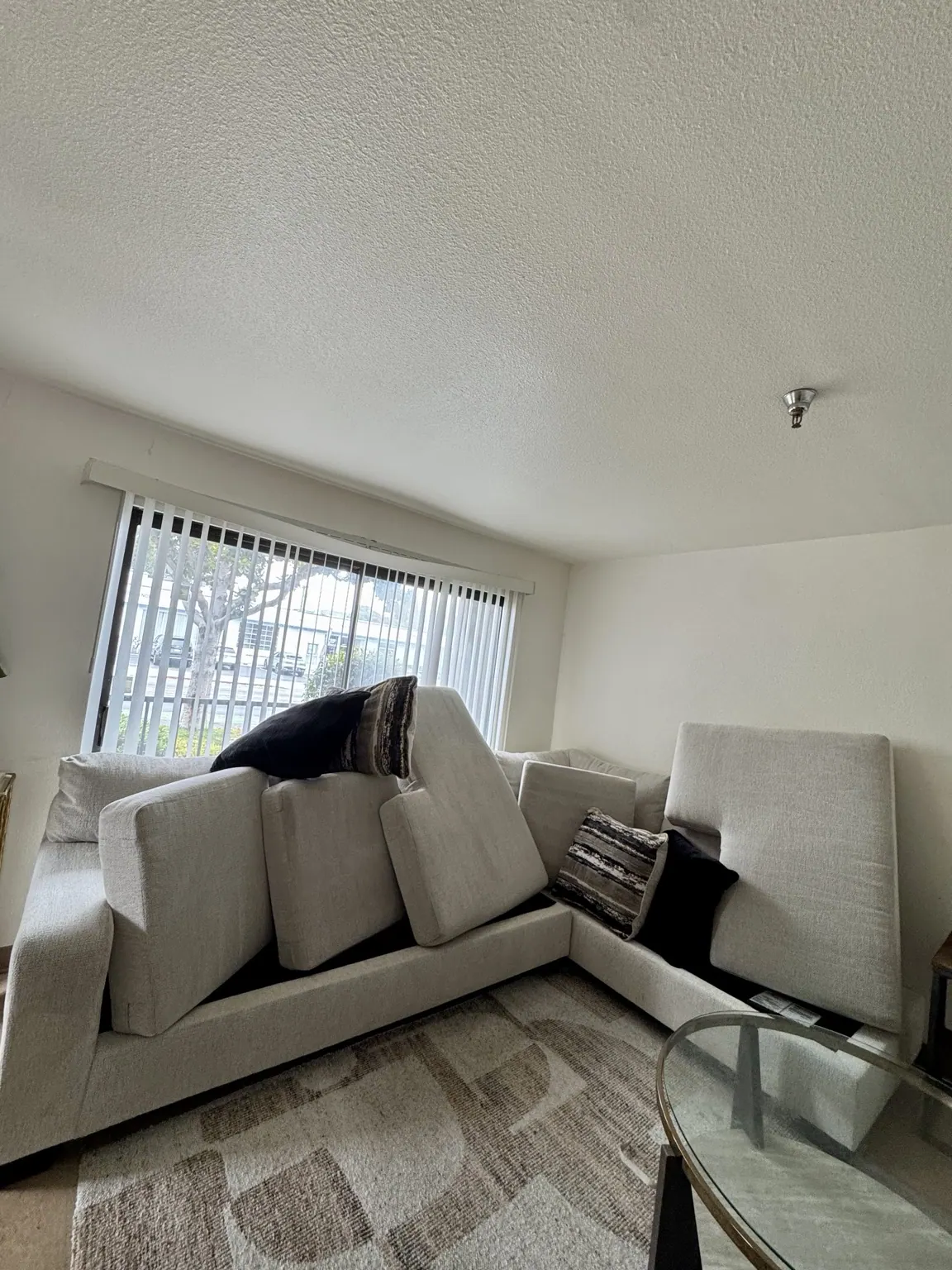
You may also notice that one side of the cushion smells stronger than the other, or that the odor seems to come from the seam, zipper area, or lower front edge. Those are clues that urine traveled through the cushion and possibly into the deck or frame.
At that point, surface treatment alone usually is not enough. You need cleaning that reaches the internal layers and removes as much residue as possible without damaging the material.
Related service
Pet stain & odor removalFamily-owned, based in Beverly Hills, serving Los Angeles County and approved Orange County communities.
Recent Go4Cleaning work
Photos from Go4Cleaning jobs, taken by our own crew.
Common questions
Can you clean just the one cushion?
We can treat a single cushion, but cleaning the whole piece usually looks better — a single freshly cleaned panel can stand out against the rest.
How do I stop it happening again?
Address the cause with your vet or trainer, and use a washable throw over the dog's chosen spot in the meantime.
Want this handled properly?
Call or text (866) 631-2244 for a straightforward quote, or send photos with your request.
Cleaning appointments 8:00 a.m. – 8:00 p.m. daily. Calls, messages and scheduling 24/7.