Carpet problems
Carpet Browning After Cleaning: Why It Happens and How It Is Fixed
Carpet that looked good when the technician left and turned patchy brown by the next morning has not been ruined. Three different things cause this, they look similar and they need different corrections — which is why guessing usually makes it worse.
By Go4Cleaning Team · Updated August 25, 2026 · 6 min read
Quick answer
Brown or yellow patches after cleaning are usually wicking (old soil resurfacing as carpet dries), cellulosic browning (backing discoloration from prolonged dampness), or leftover detergent residue attracting soil. Each needs a different fix, so avoid applying a store-bought spotter and instead contact the company that cleaned it for an in-person diagnosis and correction.
Wicking: soil rising back up as the carpet dries
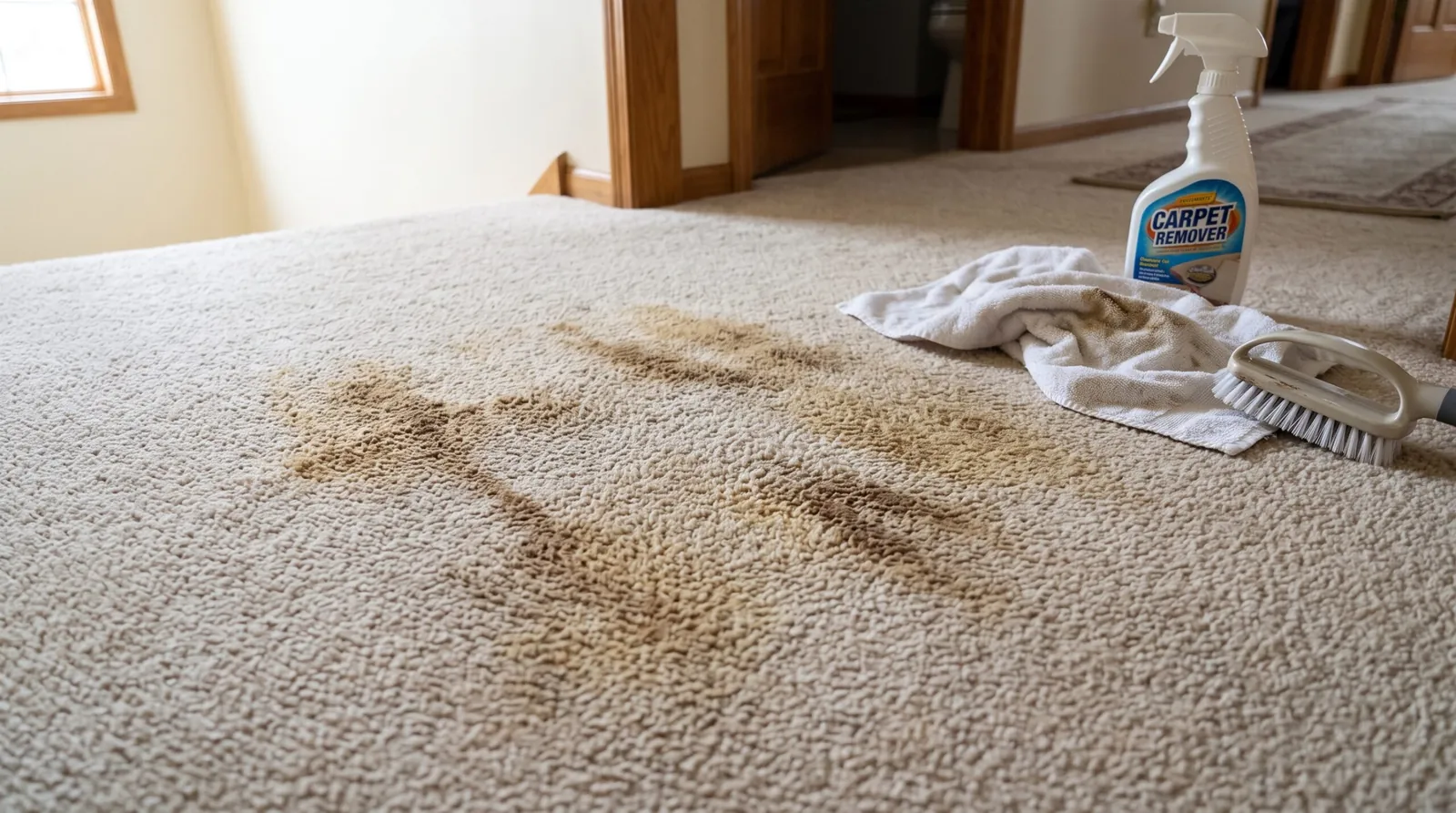
If a spill soaked into the backing or pad, cleaning wets that contamination again. As the carpet dries from the bottom up, the moisture carries the old soil back to the tips of the fibers and the spot reappears in almost exactly the same shape.
The fix is a proper flush of the affected area with fast drying afterwards, not another light surface pass.
Cellulosic browning: the backing itself discoloring
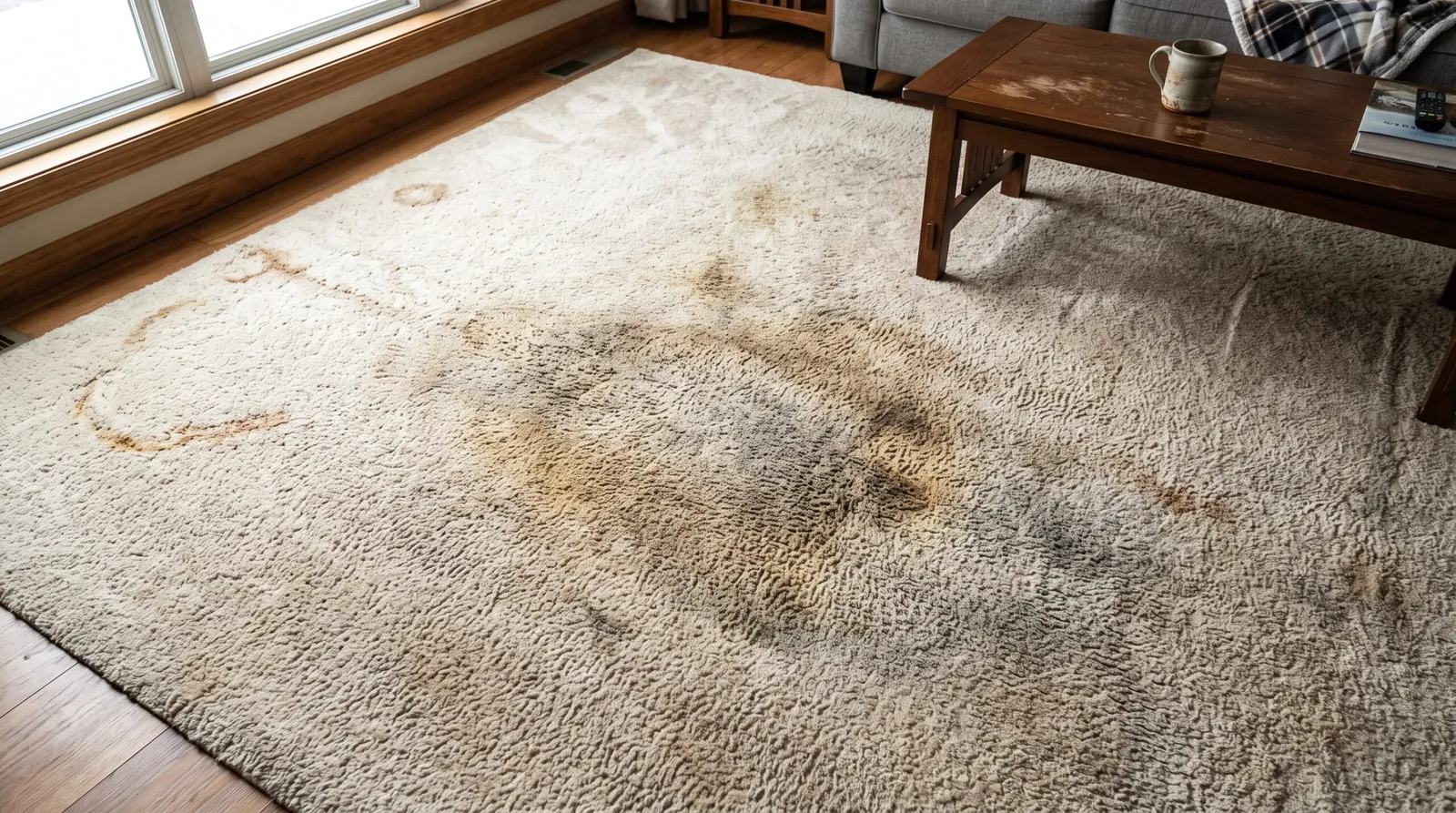
Jute and other natural backing materials release tannins when they stay wet too long. The result is a broad yellow-brown haze, often worst at the edges of a room or where the carpet stayed damp the longest.
It is corrected with an acidic browning treatment and rapid drying. Household remedies typically set it.
Residue: soil sticking to leftover detergent
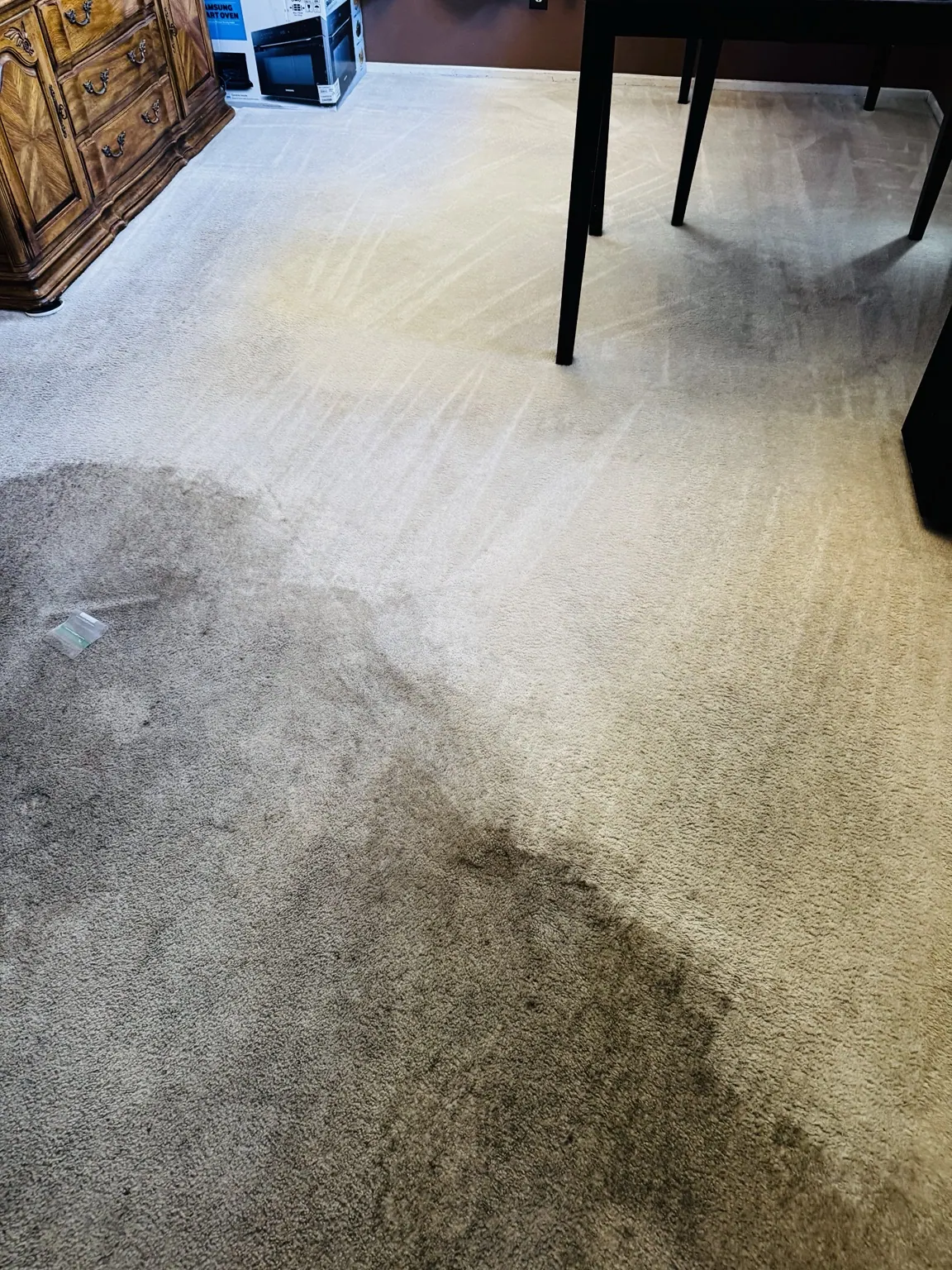
Detergent that was not rinsed out stays tacky and grabs soil from shoes within days. The tell is that the discoloration follows traffic paths rather than old spill shapes.
The correction is a thorough rinse-only pass, sometimes with a neutralizing agent.
What to do right now
- Do not scrub the area or apply a store-bought spot cleaner — the wrong product for the cause can lock the discoloration in.
- Get air moving over the carpet and lower the humidity in the room.
- Photograph the pattern while it is visible; the shape helps identify the cause.
- Call the company that cleaned it. A competent cleaner treats this as a correction to make, not a complaint to argue about.
Background from the original guide
Carpet discoloration after cleaning usually comes down to a few specific causes. None of them means your carpet is ruined, but they do need to be addressed properly.
Cellulosic Browning
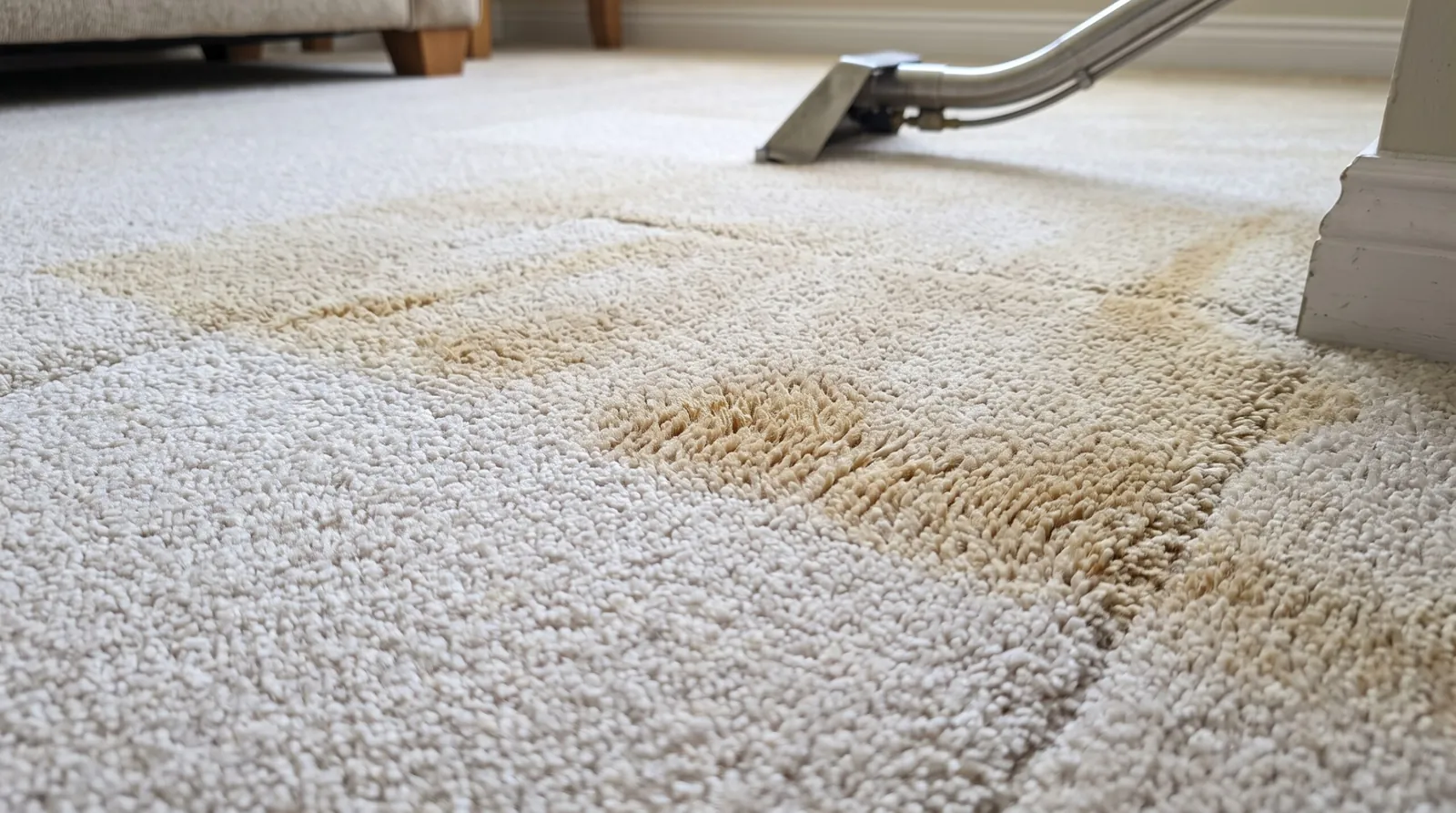
This is one of the most common culprits, especially in carpets and rugs made with natural fibers like jute, sisal, or cotton backing. Cellulosic browning occurs when moisture is left in the carpet too long, causing the natural cellulose in the carpet fiber or carpet backing to oxidize and release a brownish-yellow tint.
Wool carpets and older rugs with jute backing are particularly vulnerable. If your carpet turned yellow or developed a yellowish tint after cleaning, this is likely the reason.
Treating spills and stains
Wicking usually surprises homeowners the most. You clean a stain, it disappears, and then a day or two later, it seems to reappear. This happens through a process similar to capillary action — moisture pulls old soil, detergent residue, or deep stains back up through the carpet fiber to the surface as the carpet dries.
Wicking is especially frustrating because it can make you feel like the cleaning did not work at all. In reality, the wick is pulling up what was already buried in the carpet backing or padding.
Drying and residue
When carpets take too long to dry — often due to over-wetting during cleaning — moisture becomes trapped beneath the surface. This excess moisture creates the perfect environment for mildew growth and brown stains to develop. Poor ventilation in a room only makes this worse.
Using too much cleaning solution or shampoo without a thorough rinse leaves behind chemical residue that can discolor or permanently damage carpet fibers over time.
High pH Cleaning Products
Using harsh or alkaline cleaning agents can cause carpet discoloration, especially on delicate or dyed fibers. This is why using the right products matters as much as the technique itself.
How to Fix Brown Spots After Cleaning Your Carpet
If you are already dealing with browning, here are practical steps to take.
Apply lightly, blot with a clean absorbent cloth, and allow it to dry again with fans running. Do not soak the area.
Apply, let it sit briefly, then vacuum once fully dry. Avoid using a stain remover with a high pH — this can make things worse.
For residue buildup: Rinse the area with clean, cold water using controlled moisture cleaning. Blot thoroughly, then use fans or open windows to improve ventilation and speed up drying.
If brown stains persist or the carpet or rug has been affected in a large area, it is time to call professional carpet cleaners rather than continuing with DIY carpet home remedies that risk causing a permanent stain.
How to Prevent Carpet Browning in the Future
Prevention comes down to three things: proper drying, the right products, and technique.
Always use fans or a dehumidifier after cleaning carpets to reduce drying time.
Avoid over-applying cleaning solution or shampoo — less is more.
Rinse thoroughly to remove cleaning agents and soap residue.
Do a spot test on a hidden area before using any new cleaning products.
For natural fiber rugs (wool, sisal, jute), always opt for professional carpet cleaning rather than DIY methods.
Why carpet discolours in coastal Los Angeles homes
Coastal humidity, strong sunlight through west-facing glass and sandy foot traffic are hard on carpet, and the discolouration they cause usually has a specific origin rather than being general dirt.
Common causes include sun fading, which leaves uneven washed-out areas near windows; moisture reaching the padding, which shows as dark patches from below; chemical reactions from products tracked in or applied to the carpet; pet accidents, which yellow or brown as they age; and filtration soiling, the dark line along baseboards and under doors where air is drawn through the pile over years.
Identify the cause before treating anything
The cause changes the treatment completely, and the wrong treatment can set the problem permanently. Ask whether the discolouration is a single spot or a broad fade, whether it smells, and whether it follows traffic paths or the room's edges.
Sun fading and filtration soiling are not stains and will not respond to spot cleaning. Pet-related discolouration usually goes deeper than the surface. Anything linked to lingering damp needs the moisture source found first.
What is safe to try at home
For light, recent surface marks, blot with a clean white cloth and cool water, working from the outside of the mark inwards so it does not spread, and blot dry rather than rubbing. Test any product on a hidden area first and follow the carpet manufacturer's guidance.
Do not saturate the carpet, and never combine cleaning products. If a mark has already been treated several times without success, further attempts usually risk the fibre more than the mark.
When to call a professional
Deep chemical staining, bleached spots, filtration soiling and anything tied to prolonged moisture usually need professional assessment. So does any area that stays damp without an obvious reason, because the cause matters more than the appearance.
A technician can identify what happened, tell you honestly whether the colour can be improved, and explain the alternatives when it cannot.
Related service
Carpet cleaningFamily-owned, based in Beverly Hills, serving Los Angeles County and approved Orange County communities.
Recent Go4Cleaning work
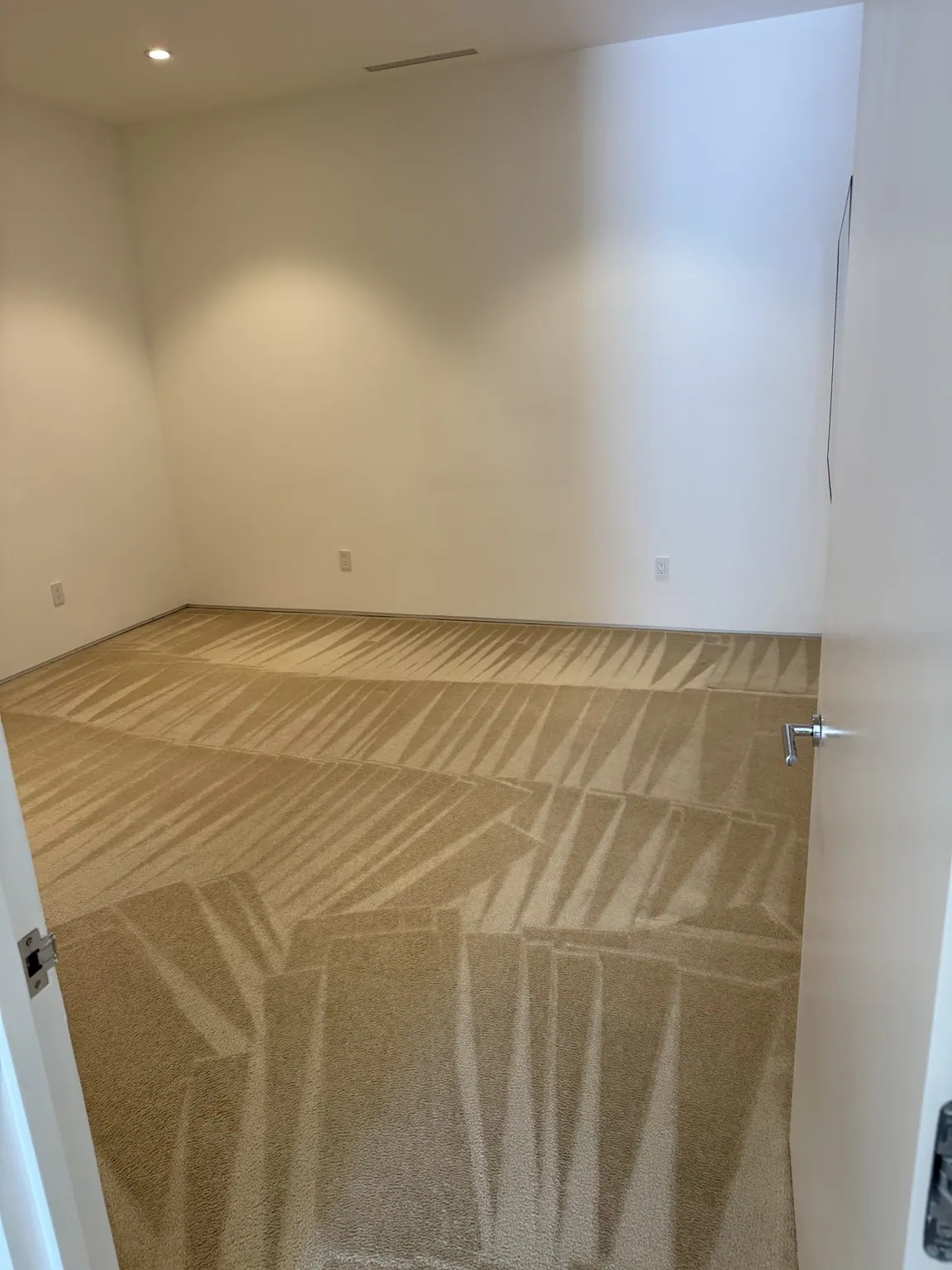
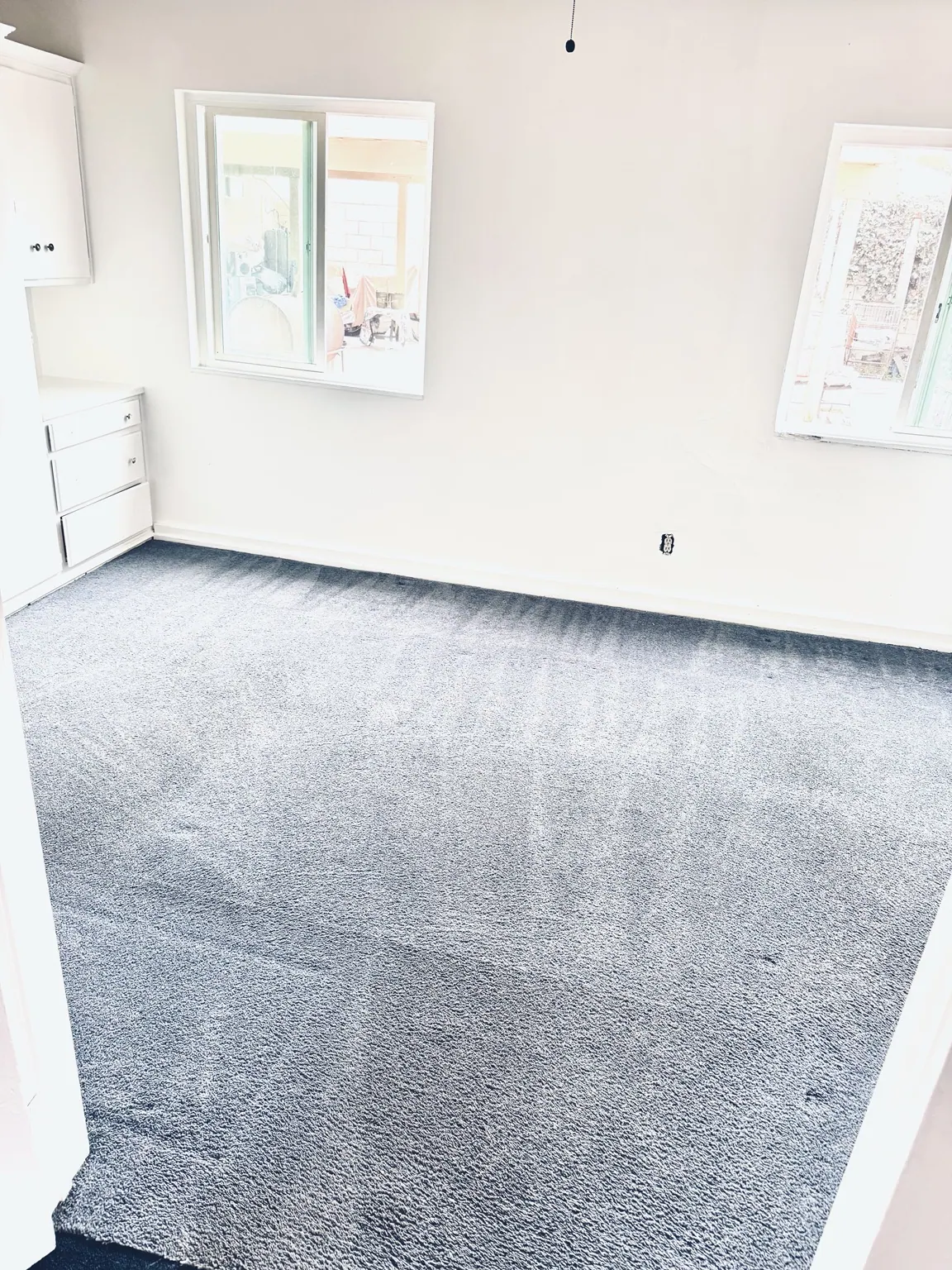
Photos from Go4Cleaning jobs, taken by our own crew.
Common questions
Will it go away on its own?
Wicking sometimes fades slightly as it dries fully, but the source is still in the backing and it will return. Browning and residue do not resolve without treatment.
Is my carpet damaged permanently?
Rarely. Most browning is correctable when treated promptly. The risk goes up when someone attacks it with the wrong chemistry first.
Want this handled properly?
Call or text (866) 631-2244 for a straightforward quote, or send photos with your request.
Cleaning appointments 8:00 a.m. – 8:00 p.m. daily. Calls, messages and scheduling 24/7.