Rug care
How to Clean a Shag Rug Without Ruining Its Fluffy Texture
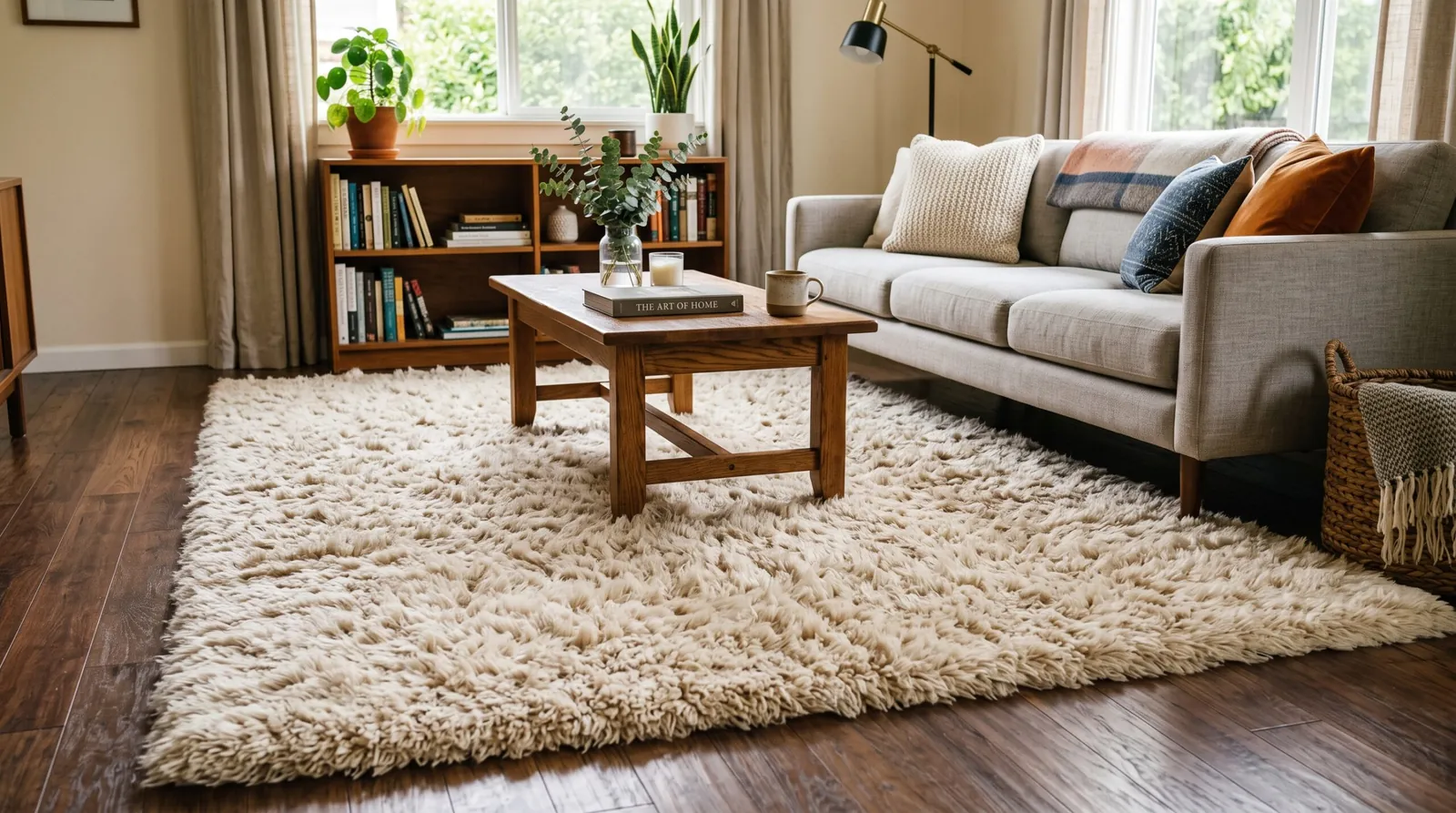
The long loose pile that makes a shag rug feel good is also a filter. Grit falls straight through to the backing and stays there, and the fibres tangle the moment they are cleaned with too much water or too much agitation.
By Go4Cleaning Team · Updated August 26, 2026 · 5 min read
Quick answer
Shag rugs hide most of their soil in the backing rather than on the surface, so regular suction-only vacuuming (no beater bar) on both sides is the most useful home habit. Rented wet-cleaning machines often over-wet the pile and cause matting, so heavily soiled or grit-packed shag rugs generally do better with professional facility washing that removes dry soil before any water is used.

Most of the soil is at the bottom, not the top
Run your hand down to the backing on a shag rug that looks clean and you will usually find sand. In Los Angeles homes — especially near the beach in Malibu, Santa Monica or the South Bay — that grit is what cuts the fibres and makes a rug look tired long before it is worn out.
Surface vacuuming never reaches it, which is why shag rugs benefit more from a proper deep clean than almost any other rug type.
Home maintenance that will not damage it
- Turn off or lift the beater bar — a rotating brush tangles and tears long pile.
- Vacuum with suction only, and vacuum the back of the rug too so grit falls out of the base.
- For smaller rugs, take them outside and shake them out regularly.
- Shake and blot spills immediately rather than rubbing them into the pile.
- Rotate the rug a couple of times a year so traffic wears evenly.

Why home wet-cleaning goes wrong
A rented machine puts down more water than a shag pile can release. The fibres mat together as they dry slowly, the backing stays damp, and the rug develops the flat, stringy look that never quite brushes out.
On wool or viscose shag it can be worse: viscose in particular discolours and stiffens when it gets wet in an uncontrolled way.
On-site cleaning versus facility washing
Many shag rugs can be cleaned in your home, with the flooring underneath protected and kept dry, and finished with grooming and controlled drying.
Heavily soiled rugs, or ones with grit packed into the backing, generally do better as a facility wash — picked up, dusted to remove dry soil first, washed and treated as appropriate for the material, dried properly and returned. Dry soil removal before any water is the step that separates a good rug clean from a mediocre one.
Setting expectations honestly
Cleaning restores loft and removes soil. It does not undo fibres that have already been cut by grit or matted by years of heavy traffic, and we do not promise that every stain releases. We look at the rug, tell you what we expect, and quote from there.
Why this fabric needs extra care
Unlike a standard low-pile rug or carpet, shag rugs have long, loose fibers that tangle easily. Too much moisture, the wrong brush, or a harsh machine can mat the fiber down permanently. Wool shag rugs, in particular, are especially sensitive to heat and excess water.
Think of it like hair. You would not scrub your hair with a stiff-bristle brush and then blast it with hot air, right? The same logic applies here.
Step 1: Shake It Out First
Take the rug outside and give it a firm shake. This removes loose dirt and debris before you ever touch a vacuum cleaner. If the rug is too large to lift, beat it gently over a railing or furniture edge to dislodge surface particles.
Vacuuming safely
Use a vacuum on its lowest suction setting — no beater bar. Flip the rug upside down and vacuum the backing first. This pushes dirt up and out through the pile. Then flip it back and vacuum lightly from above using a handheld attachment rather than the full machine head.
A standard carpet cleaning machine is not ideal for shag rugs unless it has a gentle upholstery attachment. The suction on a full tank setting can pull and damage fibers.
Treating spills and stains
Mix a small amount of gentle rug cleaner with cool water. Apply it with a soft cloth, not a brush, and blot gently. Do not scrub. A mild cleaning solution can help lift many common household stains without being too harsh on delicate fibers.
Some people also reach for dry shampoo as a quick refresh between deeper cleans. It absorbs odor and light grease without adding moisture, which helps handle everyday buildup safely.
Step 4: Deep Clean When Needed
For a more thorough wash, fill a clean basin with cool water and a gentle cleaner. Submerge small rugs and gently work the solution through the fibers by hand. Avoid wringing. Rinse thoroughly, then press out excess water using towels.
Clara from our team always says: Let it dry flat in a well-ventilated area. Weather and humidity affect drying time, so avoid damp conditions if possible.
Restoring the nap or pile
Once dry, use a wide-tooth comb or your fingers to separate and fluff the fibers back up. This is the step most people skip, and it makes a huge difference. You can also find rug rakes on Amazon that work well for this purpose.
What to avoid
Never use hot water on wool or synthetic shag carpet
Avoid stiff brush attachments that can break fibers
Do not let moisture sit — it causes mildew and odor
Related service
Area rug cleaningFamily-owned, based in Beverly Hills, serving Los Angeles County and approved Orange County communities.
Recent Go4Cleaning work
Photos from Go4Cleaning jobs, taken by our own crew.
Common questions
Can shag rugs go in a washing machine?
Only small ones with a machine-washable label, and even then air drying is essential. Machine agitation and heat mat the pile quickly.
How often should a shag rug be professionally cleaned?
Every 12 to 18 months in most homes, and more often in high-traffic or pet households.
Want this handled properly?
Call or text (866) 631-2244 for a straightforward quote, or send photos with your request.
Cleaning appointments 8:00 a.m. – 8:00 p.m. daily. Calls, messages and scheduling 24/7.