Pet stains & odor
How to Get Vomit Smell Out of Carpet
Vomit is acidic and it soaks fast. Two things decide the outcome: how quickly you get the bulk off the fibers, and whether you rinse afterwards. Almost every 'the smell came back' story is a missing rinse.
By Go4Cleaning Team · Updated August 25, 2026 · 5 min read
Quick answer
Wear gloves, scrape up solids without pressing down, and blot moisture with white towels rather than scrubbing. Use a product labeled for organic stains on carpet, applied as directed, then rinse with plain water and dry with airflow. Avoid hot water and heat, which can set the stain. If it reached the pad, professional inspection is needed.
Lift the bulk before it dries
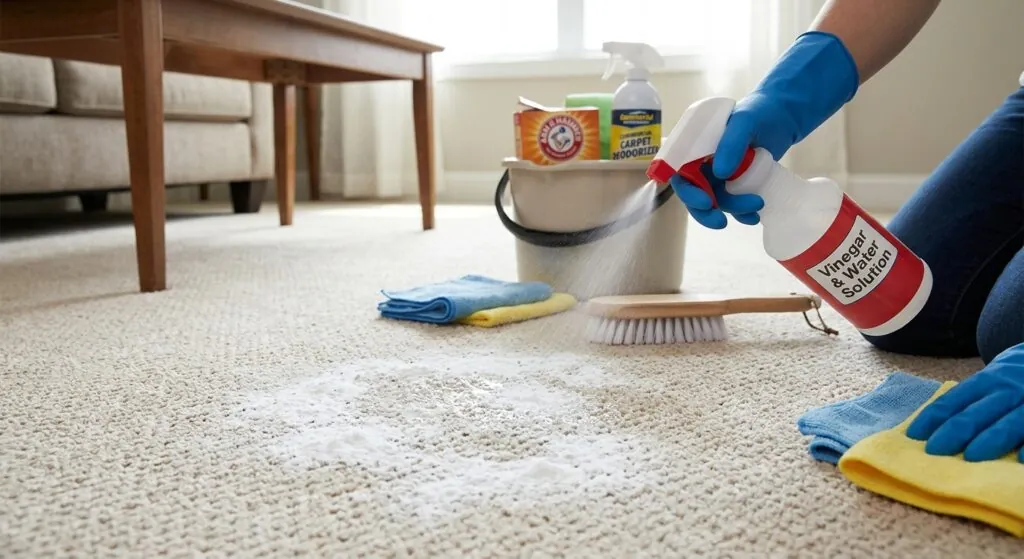
- Scrape the solids up with a card or spatula, working from the outside of the spot toward the middle.
- Blot the moisture out with white towels, pressing straight down and standing on the towel if needed.
- Keep swapping to a dry section of towel until very little transfers.
- Do not rub — rubbing distorts the pile and spreads the stain.
Neutralize the acid, do not cook it
Use a cleaning product labeled for organic stains on carpet, applied as directed on the label, after checking it on an unseen area. Hot water can set a protein stain permanently, and steam from a household machine on an untreated spot can have the same effect.
On wool, skip generic home remedies entirely and call a professional — wool is easy to damage and hard to correct once the wrong chemistry has been applied.
Rinse and dry properly
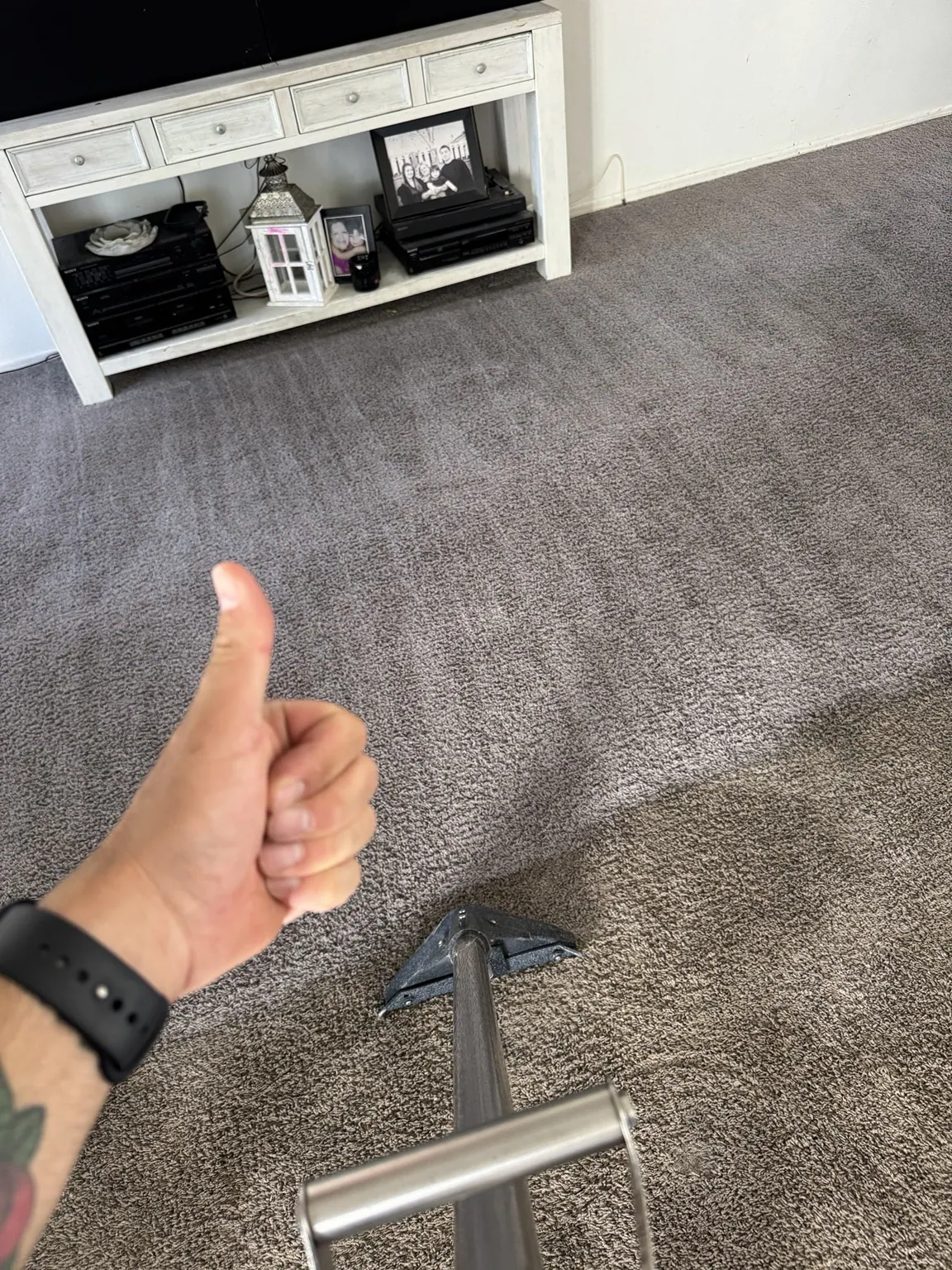
Flush the spot with cool water and blot it dry, then put a fan on it. A spot that stays damp under the surface is how you get a musty smell on top of the original problem.
When it went through to the pad
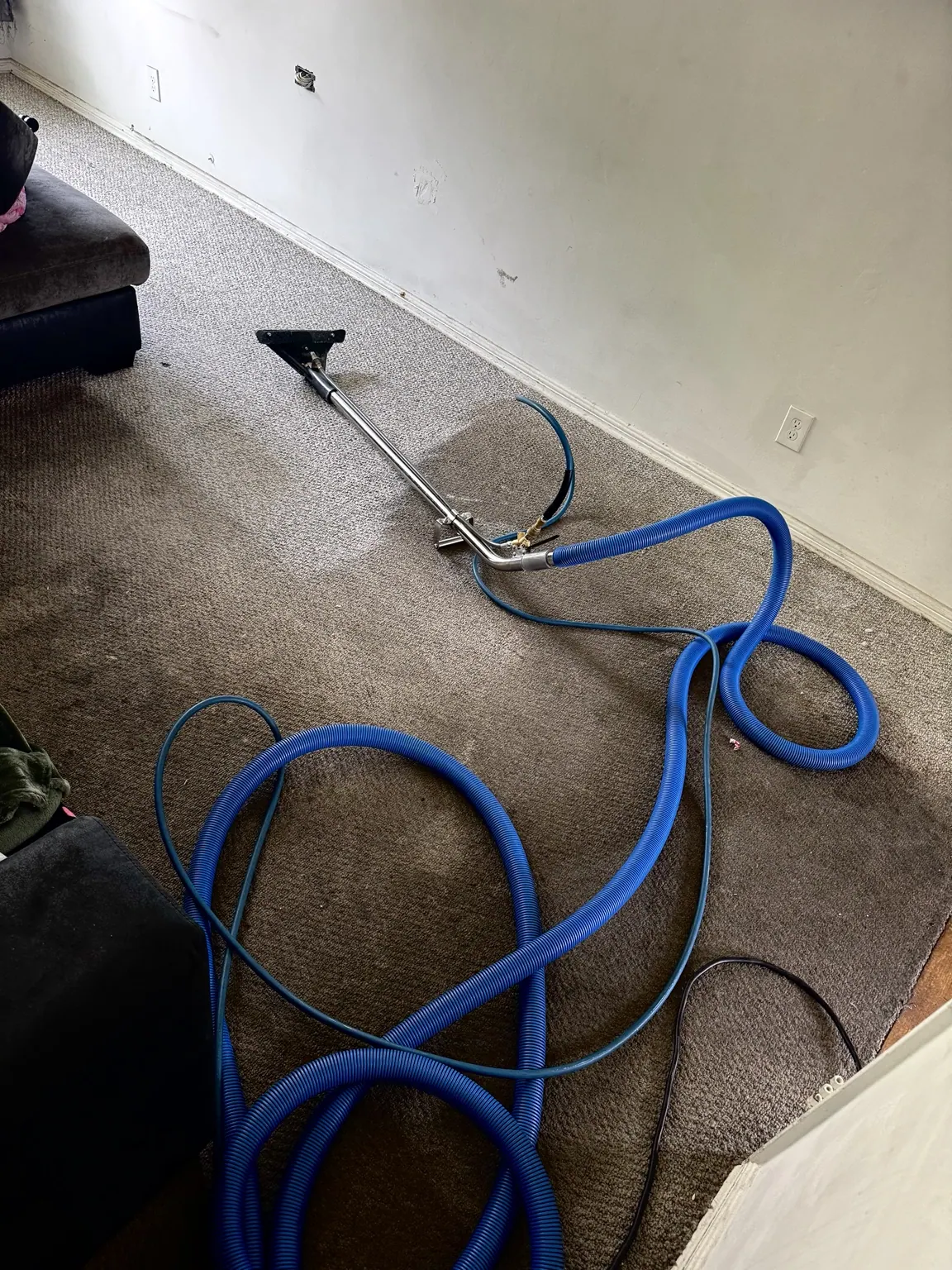
A large or repeated incident usually reaches the backing and pad. At that point the odor source is under the carpet and no amount of surface work fixes it. Professional treatment flushes the affected area and treats below the face fibers; occasionally a section of pad has to be replaced, and we will tell you if that is the case.
Background from the original guide
Vomit contains stomach acid, bile, and partially digested food. When it hits the carpet, the liquid seeps down past the fibers and into the padding underneath. That’s why blotting the surface isn’t always enough — the odor source goes deeper than what you can see.
Conditions like gastroenteritis can make vomit particularly potent because the stomach contents are more acidic and active. The same goes for pet-related messes. A dog or cat vomiting near a litter box can create layered odors that make the carpet smell even worse.
The key is treating the stain and the odor separately — and getting to it quickly.
Step 1 — Remove Solids First
Before you pour anything on the carpet, pick up as much of the solid material as possible. Use a spoon, a dull knife, or a few sheets of paper towel to scoop it up. Work from the outside of the stain inward so you don’t spread it further.
Blot — do not rub. Rubbing pushes the mess deeper into the carpet fibers and makes the stain worse.
Step 2 — Absorb the Liquid
Lay a dry towel or stack of paper towels over the wet area and press down firmly. You want to absorb as much moisture as possible before treating it. The more liquid you pull out now, the less odor you’ll have to fight later.
If you have a wet/dry vacuum, this is a great time to use it. A wet/dry vacuum can pull moisture out much more effectively than a towel alone.
Step 4 — Make a Cleaning Solution
Spray the mixture onto the stain and let it sit for five minutes before blotting again with a clean towel.
Drying and residue
After treating with any cleaning solution, always rinse the area with cold water and blot dry with a clean towel. This removes soap residue that can actually attract dirt over time.
Then let the area air dry completely. You can point a fan at it or crack a window. Do not replace furniture or rugs over it until it’s fully dry — trapping moisture is how you end up with mildew, which is an entirely different odor problem.
What to avoid
A few common mistakes can make things worse, not better.
Avoid hot water. Heat can set the stain and lock the proteins from vomit deeper into the carpet fibers. Always use cold or lukewarm water.
Do not scrub. It’s tempting, especially when the stain seems stubborn, but scrubbing spreads the mess and damages the carpet pile.
Skip bleach on most carpets. Bleach can discolor and weaken carpet fibers. Unless the manufacturer specifically says your carpet is bleach-safe, avoid it entirely.
Do not use too much soap. Residue from dishwashing liquid or other soap products can leave a sticky film that traps dirt and dulls your carpet over time. Use it sparingly and always rinse thoroughly.
Related service
Pet stain & odor removalFamily-owned, based in Beverly Hills, serving Los Angeles County and approved Orange County communities.
Recent Go4Cleaning work
Photos from Go4Cleaning jobs, taken by our own crew.
Common questions
Why does the smell come back on hot days?
Warmth and humidity can reactivate residue left in the backing or pad. It is often a sign the contamination was never fully flushed out and rinsed.
Is baking soda enough?
It can absorb some surface odor and moisture as a first response, but it does not replace cleaning with a product labeled for organic stains, and it will not reach contamination in the pad.
Want this handled properly?
Call or text (866) 631-2244 for a straightforward quote, or send photos with your request.
Cleaning appointments 8:00 a.m. – 8:00 p.m. daily. Calls, messages and scheduling 24/7.