Upholstery care
How to Clean a Faux Leather Couch the Right Way
Faux leather is a fabric backing with a polymer coating on top. Everything that goes wrong with it — cracking, peeling, a sticky surface — is that coating failing. Cleaning it well is mostly about not attacking the coating.
By Go4Cleaning Team · Updated August 26, 2026 · 10 min read
Quick answer
Faux leather has a polymer coating, not a hide, so leather conditioners, alcohol wipes and degreasers can soften or crack that coating rather than help it. Clean it with a mild soap-and-water solution on a soft cloth, rinse with a separate damp cloth, and dry immediately; once the coating is cracked or peeling, cleaning cannot restore it.
Why leather products are the wrong tool
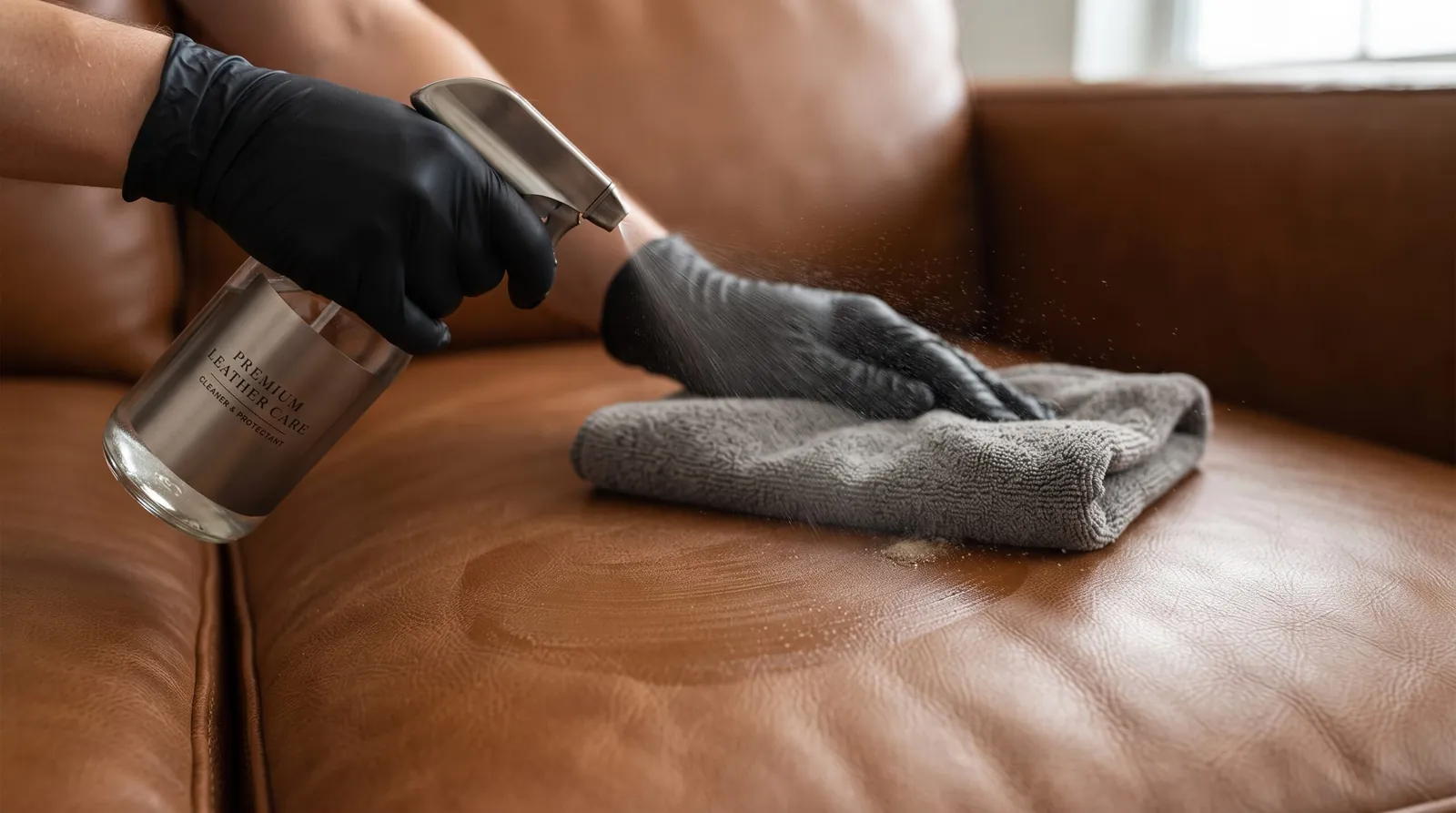
Conditioners made for real leather are designed to feed a porous hide. Faux leather is not porous, so the product sits on the surface, stays tacky and collects dust.
Alcohol wipes, degreasers and all-purpose sprays go the other way and soften the coating, which is what starts the peeling you cannot undo.

A safe weekly routine
- Vacuum seams and crevices with a brush attachment.
- Wipe with a cloth dampened in warm water and a drop of mild dish soap.
- Rinse with a second cloth using plain water so no soap film is left behind.
- Dry immediately with a soft towel — standing moisture works into the seams.
Spot problems and what actually works
- Body oil on headrests: mild soap solution, repeated gently rather than one aggressive pass.
- Denim dye transfer: address it early; once it has sat for months it often will not come out.
- Ink: do not reach for alcohol or hairspray, both of which can lift the coating with the ink.
- Sticky surface: usually product residue from a previous cleaner. Repeated plain-water wiping is the safest fix.
Where professional cleaning helps
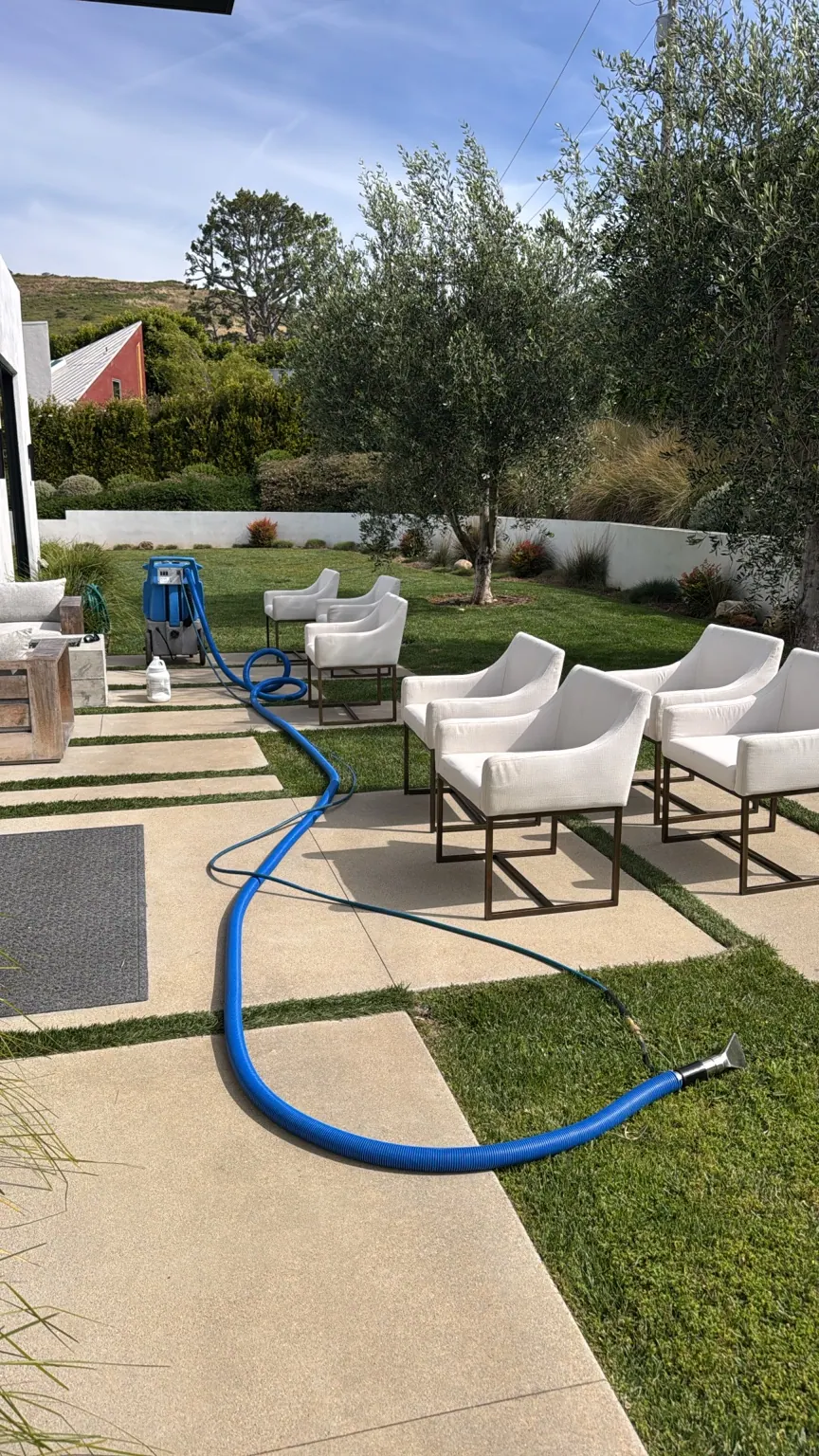
Faux leather does not need extraction, so professional work here is about controlled chemistry, deep cleaning of stitched seams and piping, and treating the fabric panels many sofas combine with the vinyl sections.
If the coating is already cracked or peeling, cleaning will not repair it. That is a reupholstery or replacement conversation, and we will tell you plainly which one you are in.
Making it last
Keep faux leather out of direct sun, which is the single biggest cause of cracking in Los Angeles homes. Wipe headrests and armrests more often than the rest of the piece, because body oils are what break the surface down first.
Background from the original guide
Faux leather couches have become a popular choice in many homes, and for good reason. They offer the stylish look of real leather, cost significantly less, and generally stand up well to everyday use. The problem is that many people clean them the wrong way, which can lead to cracking, peeling, staining, or a permanently dull finish.
The good news is that cleaning a faux leather couch safely is much easier than most people think once you understand the material.

What Is Faux Leather?
Faux leather, also known as synthetic or artificial leather, is made from man-made materials designed to imitate genuine leather. The most common types are polyurethane (PU) and polyvinyl chloride (PVC). Unlike natural leather, which is porous, faux leather has a protective coating that repels moisture. However, that coating can break down when exposed to harsh chemicals or abrasive cleaning methods.
Because of this, the products that work on fabric upholstery or other household surfaces are not always suitable for faux leather. A gentler approach is essential.
What to avoid
Before cleaning, it helps to know what not to use.
Bleach can strip the protective coating and cause peeling or cracking.
Abrasive brushes and scouring pads can scratch the surface and reduce its shine.
Strong solvent-based cleaners may damage the PU or PVC layer, especially on older furniture.
Whenever you try a new cleaning product, test it first on a small, hidden area.
Step 1 — Remove Loose Dirt
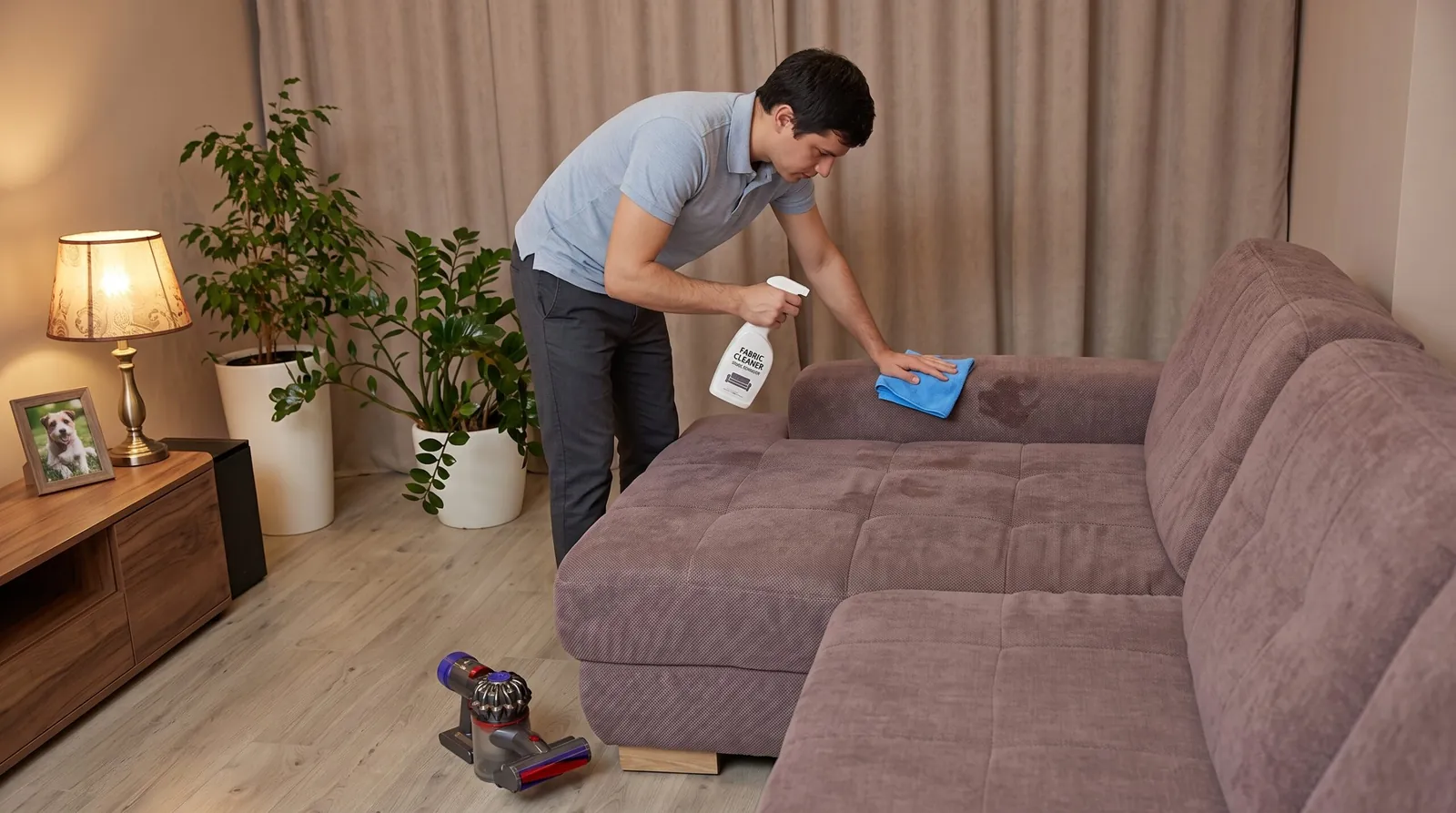
Start by vacuuming the couch with an upholstery attachment. Remove dust, crumbs, pet hair, and other debris, paying close attention to seams and creases where dirt tends to collect.
For wiping the surface, use a microfiber cloth. It is soft enough to avoid scratching and effective at lifting dirt without leaving excess moisture behind.
Step 2 — Make a Gentle Cleaning Solution
Routine cleaning requires only a mild solution. Dampen a microfiber cloth with the solution, wring it out well, and wipe the couch gently using small circular motions. The cloth should be damp, not dripping wet.
For stubborn marks, a small amount of isopropyl alcohol on a cloth can help remove residue. Use it sparingly and wipe the area afterward with a clean damp cloth.
Treating spills and stains
Gently brush away the powder and wipe the area clean.
Do not scrub, as scrubbing can spread the stain and damage the surface.
General discoloration: Use a cleaner specifically designed for faux leather or synthetic upholstery and follow the manufacturer’s instructions.
Accidents happen. Coffee tips over on a white couch. A child drops Juice. A pet has an accident involving blood or other liquid.
Use a white cloth or a microfiber cloth.
Always blot the stain instead of rubbing. Scrubbing pushes the liquid deeper into the fabric and weakens the fiber structure. If the stain is responsive to treatment early, you increase the odds that the stain is gone completely.
Let it sit for 15 to 20 minutes to absorb the grease, then brush it off gently with a soft brush before wiping the area clean. This method draws out the oil without spreading it further.
Apply a small amount to a cotton ball or cloth, dab gently, and avoid scrubbing. Scrubbing spreads the stain and can damage the textile coating.
Drying and residue
After cleaning, wipe the couch with a clean, dry microfiber cloth to remove any remaining soap residue. Residue can leave the surface sticky and attract more dirt.
Let the couch air dry completely before using it. Avoid hair dryers, heaters, or direct heat, which can cause the material to warp or crack.
After cleaning, use a clean, dry microfiber cloth to remove any soap residue. Leftover cleaning agents can cause the surface to become sticky or attract more dirt over time.
Allow the couch to air dry completely before sitting on it. Avoid using a heat source to speed up drying, as heat can cause faux leather to warp or crack.
Step 5 — Protect the Finish
Occasional conditioning helps keep faux leather looking its best. Use a conditioner labeled safe for faux leather, vinyl, PU leather, or synthetic upholstery. Apply a thin layer with a soft cloth and buff away any excess after a few minutes.
When to call a professional
Some problems cannot be solved with routine DIY care. Consider professional upholstery cleaning if you notice:
Professional couch cleaning uses upholstery-safe products and specialized equipment to clean more thoroughly without damaging synthetic materials.
If your couch is one of the main seating pieces in your home, occasional professional cleaning can help preserve its appearance, hygiene, and lifespan.
Sometimes home methods are not enough. If you see:
It may be time to call a professional upholstery cleaner.
At Go4Cleaning, we specialize in carpet and upholstery cleaning throughout Los Angeles, California. Our cleaning process uses professional equipment and products chosen for the material, so soil is removed without saturating the fabric.
As a trusted upholstery cleaning company with a 4.9 rating on Google, we understand how different materials respond to treatment. Some cotton blends are more delicate than others, and professional upholstery techniques protect the life of your furniture.
We also clean carpet, area rugs, mattresses and upholstered furniture, with each material assessed before treatment.
Why this fabric needs extra care
Cotton is a textile made from a plant fiber. Unlike synthetic blends such as Crypton, cotton is more absorbent and more sensitive to water, heat, and certain chemical substance cleaners.
Because cotton soaks up liquid quickly, spills can settle deep into the cushion or padding if not handled properly. Moisture left behind can lead to mildew, odor, or stubborn stain marks that are harder to remove later.
Proper upholstery care is not about using stronger cleaning products. It is about using the right cleaner, the right tools, and the right amount of moisture.
Check the cleaning code first
Before you start cleaning your upholstery, check the tag attached under a seat cushion or along the base. It will list a cleaning code along with manufacturer care instructions.
W — Safe to use water-based cleaning solution
S — Use a solvent and avoid water
If the care label prohibits water-based products, do not attempt heavy moisture cleaning yourself. In that case, consult a qualified fabric-care specialist. Always perform a spot test in an inconspicuous area before applying anything broadly.
Vacuuming safely
When cleaning upholstered furniture, never skip the dry step. Use a vacuum cleaner with an upholstery attachment to remove dust, debris, feather fibers, and loose dirt.
Gently clean the surface using a brush with soft bristles
Vacuum upholstered furniture at least once a week to prevent buildup. If dirt turns into muddy residue during wet cleaning, it creates a bigger mess.
Use the upholstery attachment on your vacuum to remove loose dust, crumbs, and debris from the couch. Pay close attention to the seams and crevices where dirt accumulates. This step prevents you from grinding dirt deeper into the surface when you start wiping.
A microfiber cloth works best for the actual cleaning, as it is soft enough not to scratch the surface and absorbent enough to lift grime without overwetting.
How To Apply the Cleaning Solution Safely
Apply a small amount using a sponge (tool) or a white cloth
Lightly spray the stain with your solution. Do not oversaturate.
Use a damp cloth or sponge to gently blot and lift dirt.
You can lightly scrub with a soft-bristle brush if needed, but only in small circles and with gentle pressure. Once the area looks clean, use a towel to remove excess moisture by pressing firmly. Do not rinse under running water unless the cover is labeled machine wash safe. Let the surface air dry completely with a clean towel. Keep windows open or use fans to speed up drying and prevent water marks.
Special Tips for White Chairs and White Couch Fabric
White chairs and a white couch show everything. Even a faint stain becomes obvious.
Work in sections to keep the fabric evenly damp
Avoid strong commercial fabric cleaner formulas unless labeled safe for cotton
This trick helps keep the fabric smelling fresh without added chemicals.
When To Use a Commercial Upholstery Cleaner
There are times when a store-bought upholstery cleaner or carpet and upholstery cleaner makes sense.
You are dealing with ground-in carpet and couch grime from pets
Choose a gentle fabric cleaner designed specifically for cotton upholstery fabric. Avoid harsh chemical substance formulas. If the tag says solvent only, use only a manufacturer-approved solvent-based upholstery product.
Always follow the product cleaning instructions carefully and test first.
Steam and hot-water cleaning
A bit of steam can loosen embedded dirt and freshen up a tired couch. However, cotton upholstery may shrink if exposed to too much heat and moisture.
For heavily soiled furniture, a professional deep clean may be safer.
Long-Term Upholstery Care and Protection
Once your fabric is clean, prevention is everything.
Here are simple tips and tricks to maintain your couch and other upholstery pieces:
Use a fabric protector after professional upholstery cleaning services
Avoid placing cotton pieces in direct sunlight. UV exposure weakens fiber and fades color.
If removable covers are labeled machine wash safe, wash in cold water with mild detergent and air dry only. Never assume every piece of upholstery can handle the machine.
Proper upholstery care keeps your upholstery looking fresh and extends the life of your furniture significantly.
What You Should Never Use on Faux Leather
Before getting into the how-to, it is worth knowing what to avoid.
Never use bleach on faux leather. It will strip the coating and cause the surface to crack and peel. Avoid abrasive brushes or scouring pads, as they create micro-scratches that dull the finish over time. Products with strong solvents can also eat through the polyurethane or PVC layer, especially on older couches showing existing wear and tear.
When in doubt, always test any cleaning agent on a small, hidden area first.
Step 5 — Condition the Surface
Faux leather benefits from occasional conditioning, just like real leather furniture does. Use a product specifically labeled safe for faux leather, vinyl, PU leather, or synthetic upholstery. Apply a thin layer with a soft cloth, let it sit briefly, then buff away any excess.
Related service
Upholstery cleaningFamily-owned, based in Beverly Hills, serving Los Angeles County and approved Orange County communities.
Recent Go4Cleaning work
Photos from Go4Cleaning jobs, taken by our own crew.
Common questions
Can I use baby wipes on faux leather?
We would avoid them. Many contain surfactants and oils that leave a film and, over time, soften the coating.
Can peeling faux leather be repaired?
Not by cleaning. Patch kits exist but rarely match well. Once a panel is peeling, replacement or reupholstery is the honest answer.
Want this handled properly?
Call or text (866) 631-2244 for a straightforward quote, or send photos with your request.
Cleaning appointments 8:00 a.m. – 8:00 p.m. daily. Calls, messages and scheduling 24/7.