Upholstery
How to Deep Clean a Couch Safely (Without Water Marks or Damage)
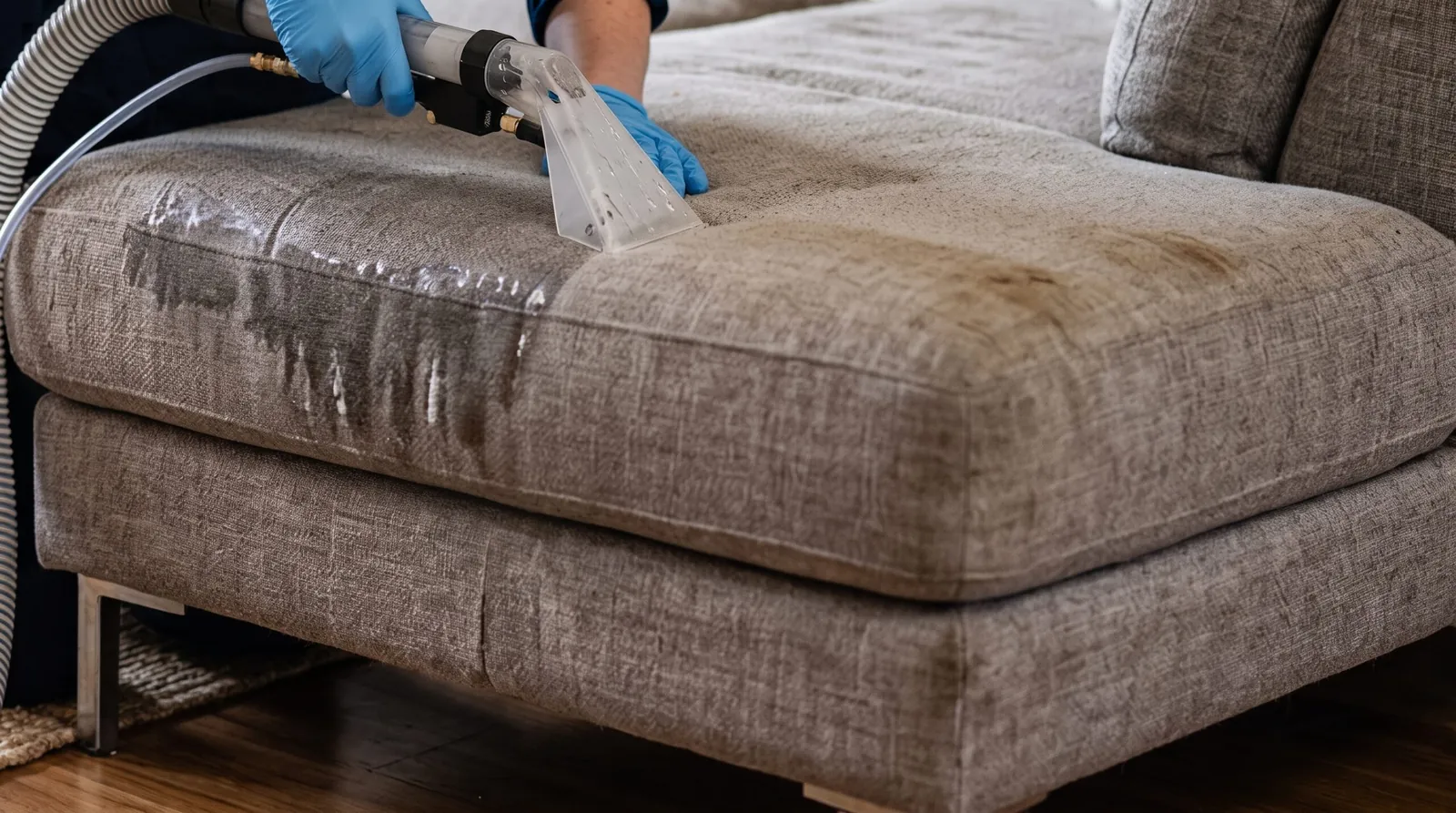
Most sofa damage we are called to fix was not caused by dirt — it was caused by the cleaning attempt. Too much water, the wrong chemistry for the fiber, or scrubbing that fuzzes the nap. Here is the order of operations we use, and the parts worth doing yourself.
By Go4Cleaning Team · Updated August 26, 2026 · 5 min read
Quick answer
A couch is deep cleaned, not sanitized — check the fabric's cleaning code (W, S, WS or X), vacuum dry soil first, test any product in a hidden spot, and use only light, controlled moisture with a fabric-appropriate cleaner. Unknown or delicate fabrics, an X code, or existing damage call for a professional rather than home chemistry.
Start with the cleaning code on the tag
The tag is usually under a cushion or on the deck of the frame. If there is no tag, treat the piece as unknown and test before anything else — that is exactly the situation where DIY goes wrong.
- W — water-based cleaners are acceptable.
- S — solvent only; water can leave rings or shrink the fabric.
- WS — either, with care and controlled moisture.
- X — vacuum only; no liquid cleaning at home.
Dry soil first, always
Vacuum the whole piece with an upholstery tool: cushions on both sides, the deck under them, the crevices, the back and the skirt. Adding liquid to dry grit turns it into mud inside the fabric.
Brush pet hair off with a rubber brush or slightly damp glove before vacuuming; suction alone rarely lifts woven-in hair.
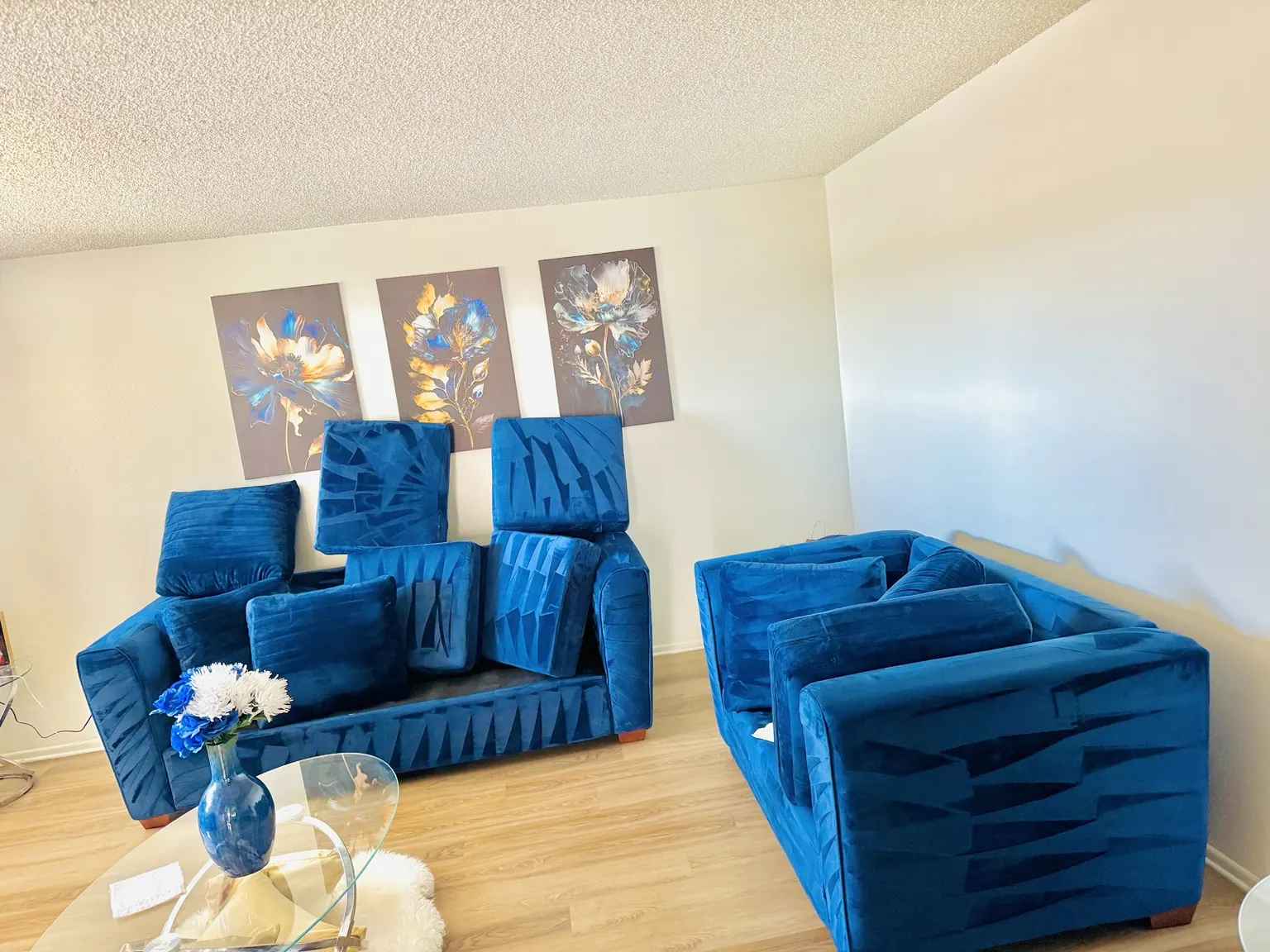
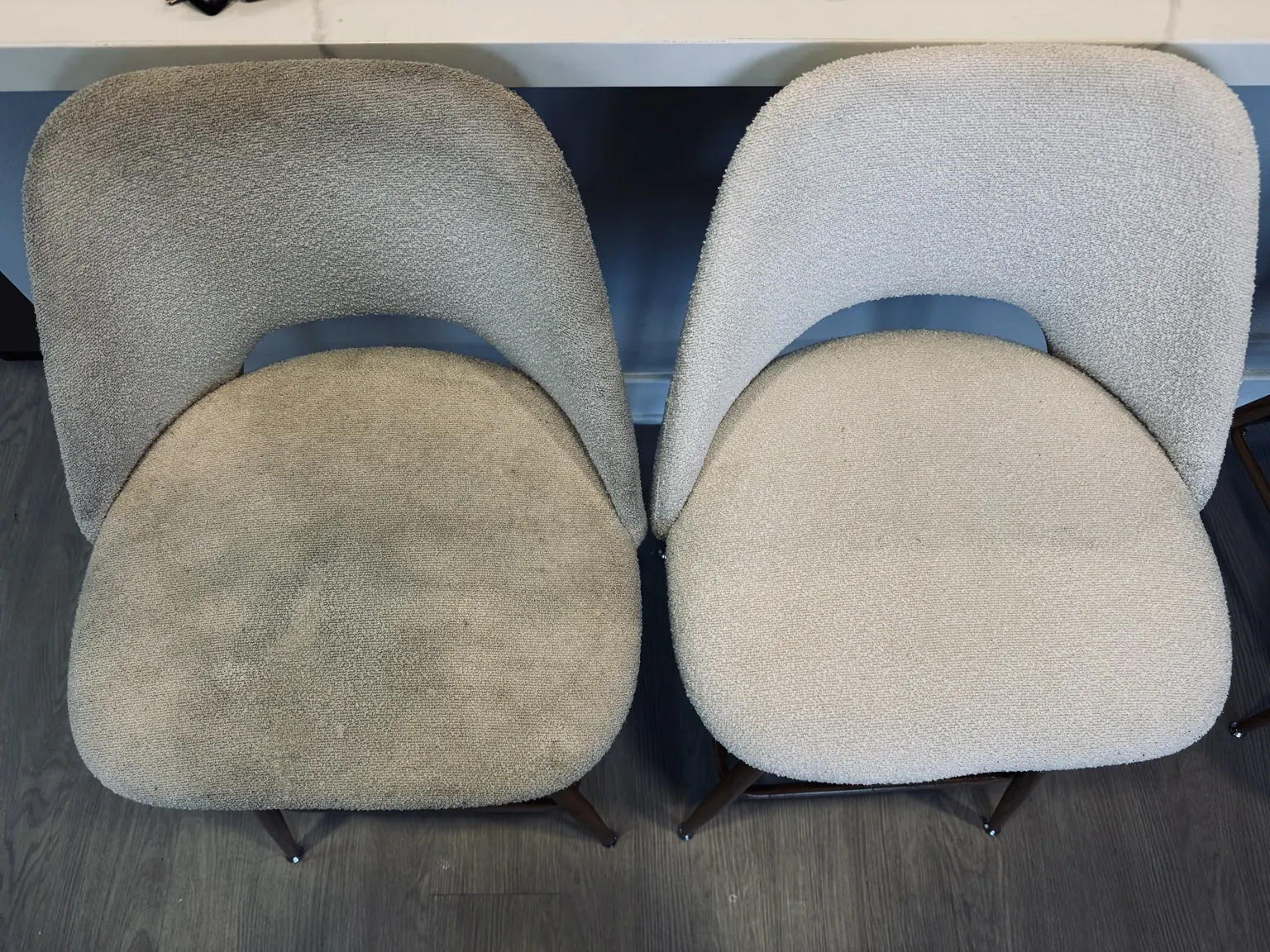
Control moisture — this is what prevents water marks
- Work a whole panel at a time, seam to seam, so any drying edge falls on a seam instead of the middle of a cushion.
- Use the smallest amount of liquid that does the job; damp, not wet.
- Blot, do not scrub. Scrubbing distorts the weave and fuzzes velvet, chenille and bouclé permanently.
- Get air moving across the piece immediately — a fan will do — and keep people off it until it is dry to the touch.
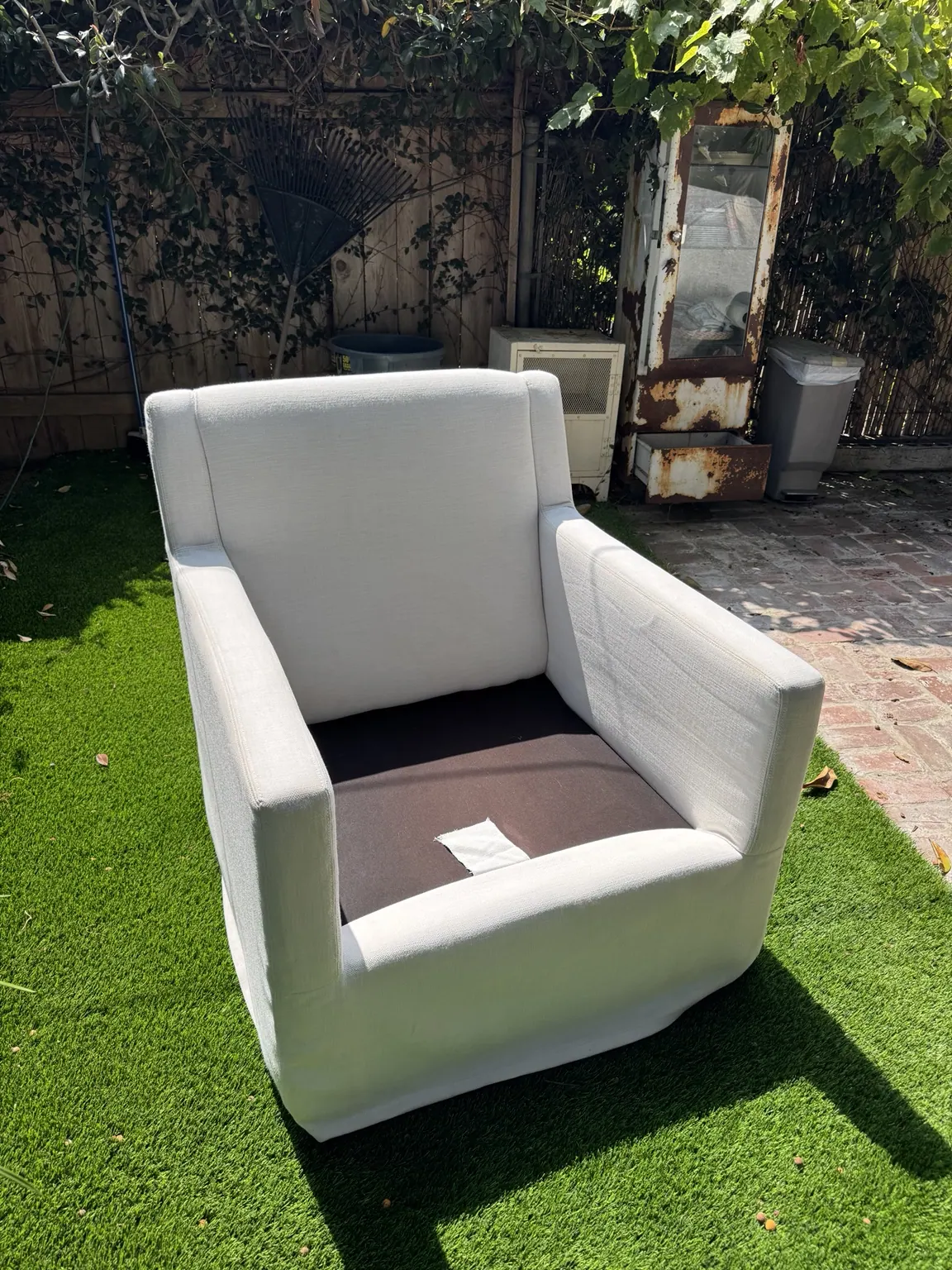
When to hand it to us instead
Silk, viscose, linen blends, velvet, bouclé, an X-code tag, unknown antiques, or anything with existing rings or urine contamination are all worth a professional pass. We match chemistry to the fiber, use controlled moisture with proper recovery, and dry the piece deliberately.
We do not use the words sanitize or disinfect for upholstery work, because we are a cleaning company and those are claims we would have to substantiate.
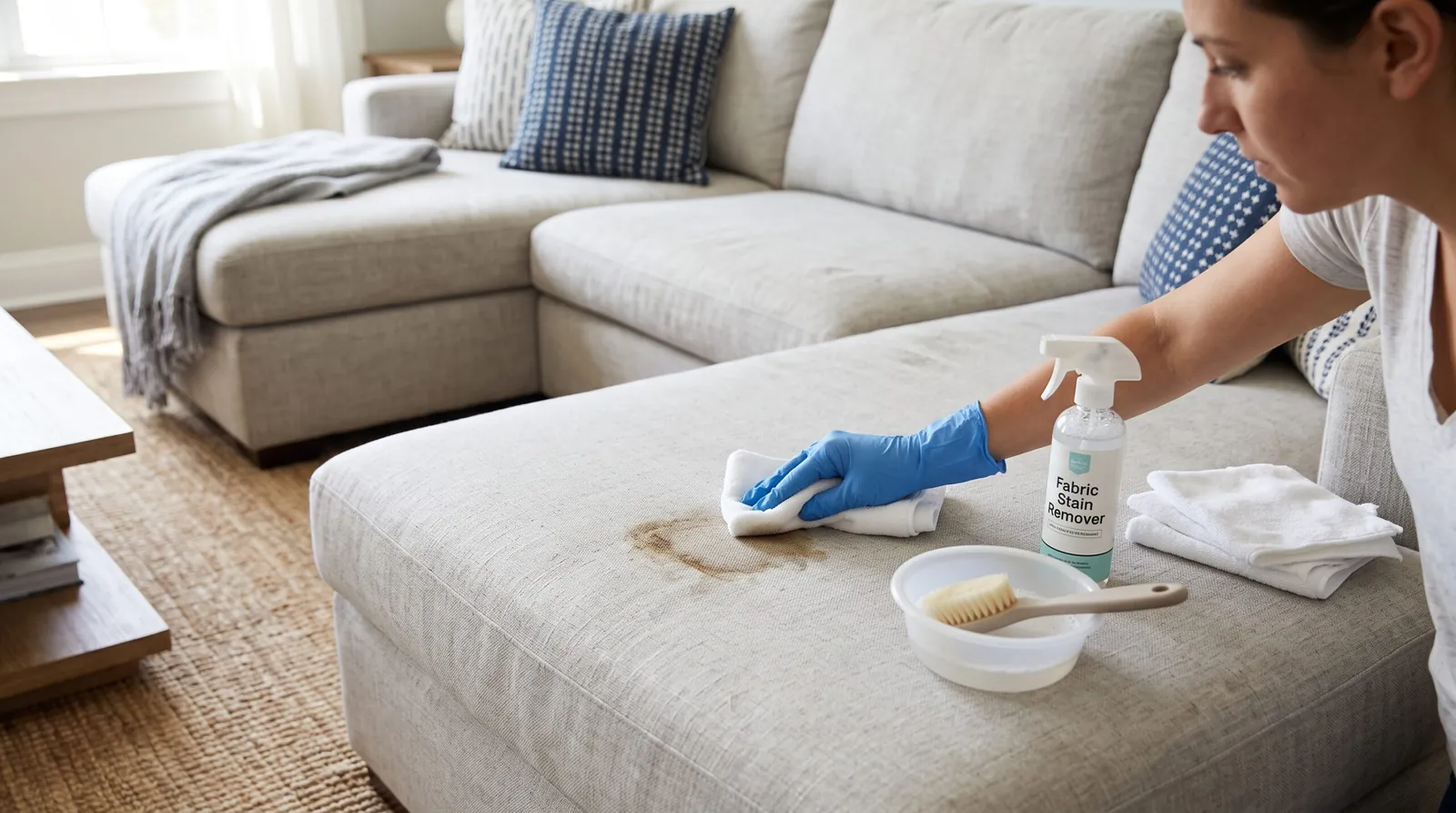
Background from the original guide
Before you grab any cleaner or spray, flip over one of your couch cushions and look for a tag. This is called the cleaning code, and it tells you exactly what you can safely use.
S means solvent-based cleaners only — no water
X means vacuum only — no liquids at all
Skipping this step is how people accidentally damage their upholstered furniture. Different types of couches — microfiber, linen, suede, chenille, and faux leather — respond differently to moisture and cleaning products. Knowing your type of fabric first saves you from an expensive mistake.
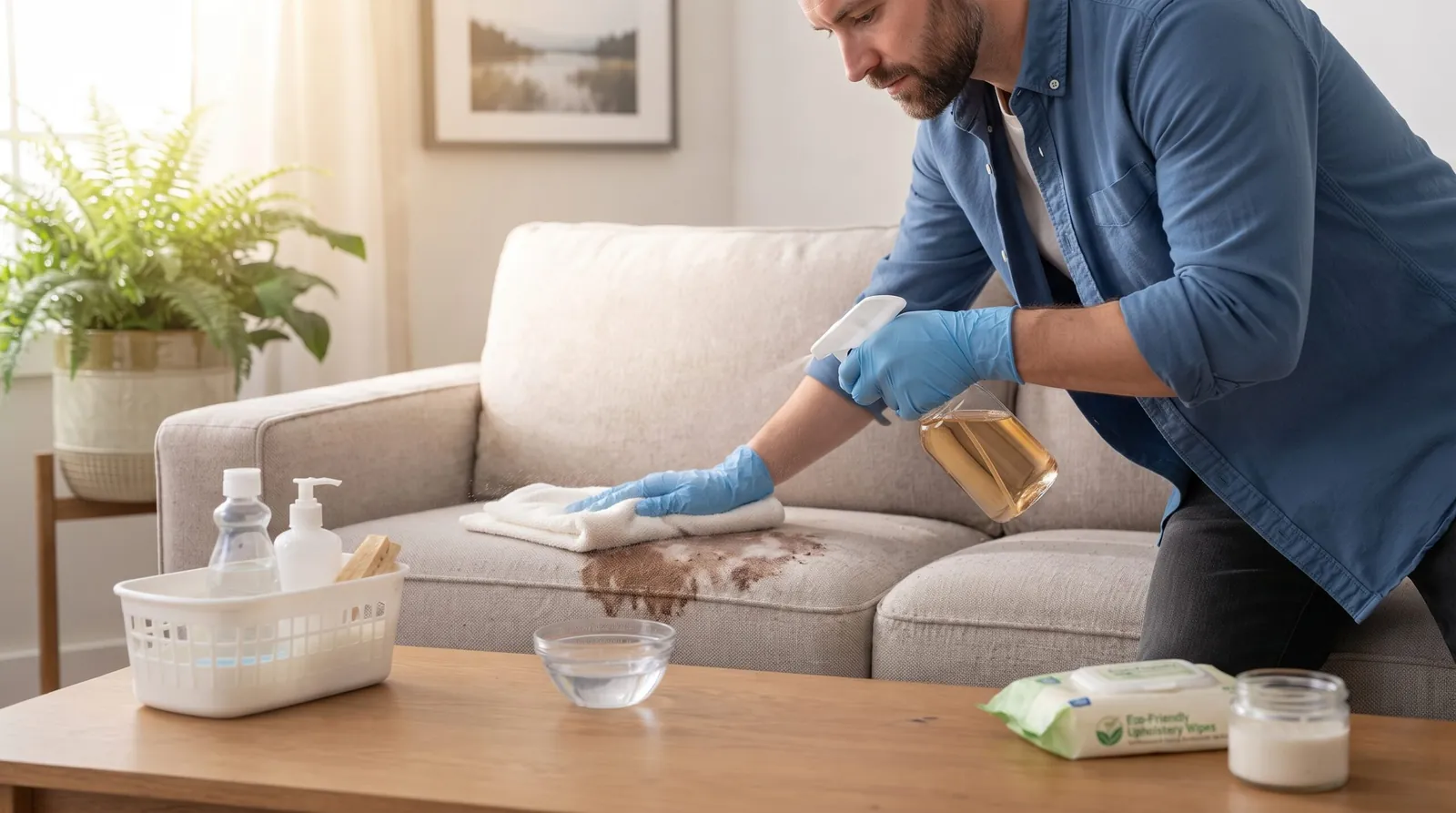
Vacuuming safely
Use a vacuum cleaner with an upholstery attachment to go over every surface. Work in slow, overlapping strokes. Get into every crevice between the cushions, along the arms, and underneath any throw pillows or removable pillow covers.
If you notice a lot of pet hair, a rubber glove or lint roller can help lift it before you vacuum. The goal here is to remove as much dirt and debris from the surface as possible so your cleaning solution actually reaches the fabric fibers — not just the surface grime.
Vacuum regularly between deep cleans to prevent buildup from getting out of hand.
Step 4 — Deodorize the Couch
Once your couch is clean, you may still notice a faint odor lingering. Baking soda — also known as sodium bicarbonate — is the easiest fix for this.
Sprinkle it lightly over the entire surface, let it sit for 15 to 20 minutes, then vacuum it up. It absorbs odors naturally and is completely safe for almost every type of fabric. For a pleasant scent, a few drops of lavender essential oil mixed into your spray bottle solution before misting can help get rid of odors while leaving the fabric smelling fresh.
Drying and residue
This part matters more than most people realize. Moisture trapped in upholstery can lead to mildew growth, which creates a whole new problem.
After cleaning, open windows, use a fan, or run your air conditioning to help the couch dry completely before anyone sits on it. Avoid the temptation to pile cushions back on or throw blankets over it while it is still damp.
When DIY Is Not Enough
Deep-set stains, odors that have soaked into the cushion padding, or fabric with durability concerns after repeated DIY attempts — these are signs that professional upholstery cleaning is the smarter call.
When to call a professional
Some sofas need more than a DIY treatment. Consider professional upholstery cleaning if you notice deep-set stains, persistent odors that seem to come from inside the cushions, heavy pet contamination, or fabric that has become delicate after repeated DIY attempts.
Professional equipment can remove embedded soil and moisture more effectively and often extends the life of the furniture.
Related service
Upholstery cleaningFamily-owned, based in Beverly Hills, serving Los Angeles County and approved Orange County communities.
Recent Go4Cleaning work
Photos from Go4Cleaning jobs, taken by our own crew.
Common questions
Can I use a steam cleaner on my couch?
Only on fabrics rated for water, and only with real recovery. Steaming without extracting leaves moisture in the foam, which is how couches end up smelling musty.
Does baking soda clean a sofa?
It absorbs some odour on the surface and vacuums out, which can help between cleanings. It does not remove soil bonded to the fibers.
How long does a professionally cleaned sofa take to dry?
Typically a few hours with airflow, longer for dense foam or a humid coastal day. We will tell you what to expect before we start.
Want this handled properly?
Call or text (866) 631-2244 for a straightforward quote, or send photos with your request.
Cleaning appointments 8:00 a.m. – 8:00 p.m. daily. Calls, messages and scheduling 24/7.